
Parents' Column | Art
Children's Drawing & Art Classes:
What Grows When They Attend?
“Will art lessons really be useful later?” “My child isn't good at drawing.” What grows in an art class is not just drawing skill. The skills that grow, how to choose a class, which children it suits, and “art philosophy dialogue” — looking at famous paintings and talking about them — from our classroom experience.

Art and craft time at school is only about 1–2 hours a week. There are not many chances to take time and really engage with a single piece of work. Some children also start avoiding drawing after feeling “I can’t draw well” in art class at school. For those children too, an art class becomes a place where they can move their hands without worrying about the right answer.
5 skills that grow in an art class
- The ability to express yourself
A white sheet of paper has no right answer. The experience of turning “I like this” and “I want to do it this way” into colors and shapes is practice in letting your feelings out. The harder it is for a child to put things into words, the more drawing and crafts become their “way of communicating.”
- The ability to look closely (observation)
How petals overlap, how the color of the sky changes. When they try to draw something, children start looking carefully at what they usually overlook. This skill also helps with observation in science and more.
- The ability to think and find a way
When it doesn’t come out the way they imagined, they try layering colors or changing materials. Try, fail, think again. They grow the ability to face problems that have more than one answer.
- The ability to communicate, and to find the good in others
Showing each other their work and saying “this is what I worked on.” Finding the “good points” in a friend’s work. The experience of accepting expression that differs from your own also connects to how children relate to people.
- The confidence that “the way I feel is fine”
Being told “that color is so you” grows a confidence that is different from being judged on “good or bad.” This becomes the foundation of self-esteem (a sense of “I can do it”).
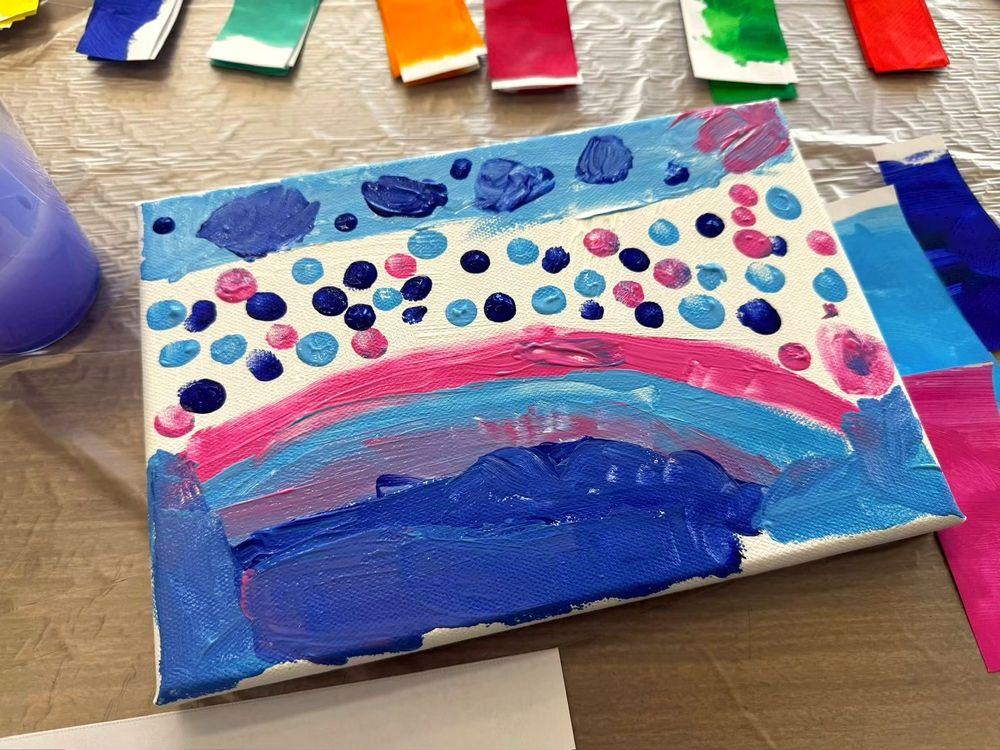
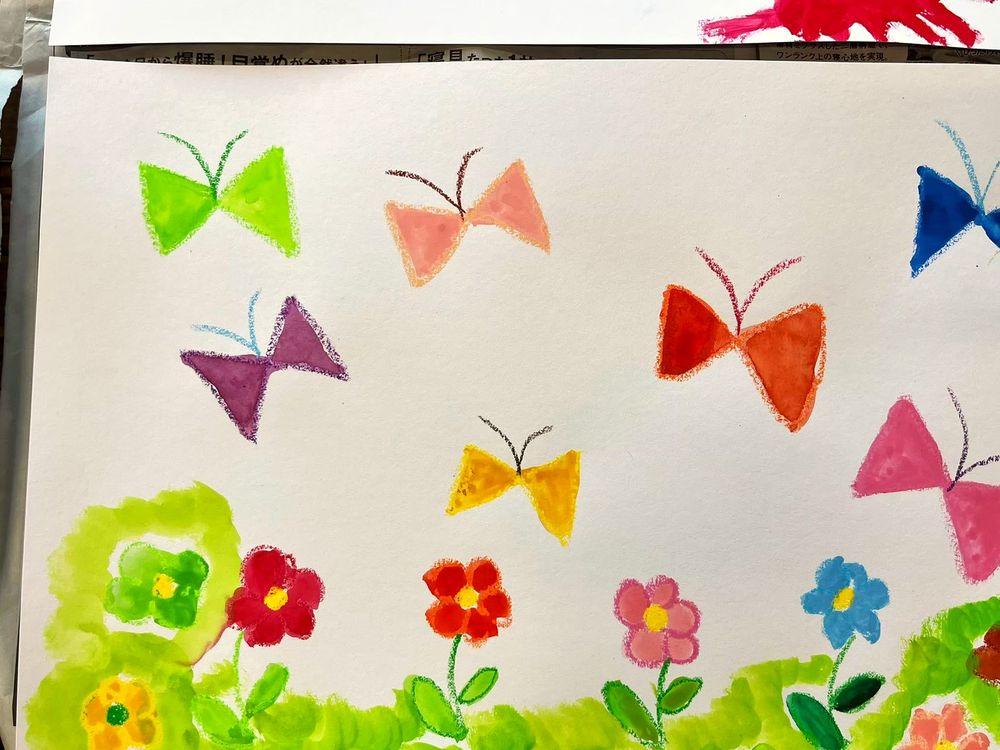
“Classes that teach technique” and “classes that value expression”
“Drawing class” and “art class” can mean many different things. It is not that one is better than the other; choose by whether it matches your child’s purpose.
| Classes that teach technique | Classes that value expression | |
|---|---|---|
| Purpose | Building drawing and sketching skills, art school entrance exams | The joy of expression, ideas, confidence |
| How lessons go | Children are taught how to draw step by step, following set assignments | There is a theme, but children decide the colors and the way they draw |
| Children it suits | Children who already love drawing and want to get better / children who want to go into art | Children who can’t draw or lack confidence / children who find it hard to put feelings into words / children who want to find something they love |
Kodomo School’s art class is a class that values expression. “Draw yourself” rather than “draw well.” Beyond drawing, children try many forms of expression: crafts, paper clay, seasonal projects, and looking at famous paintings. If your goal is drawing technique or exam preparation, a class that teaches technique is a better fit.
Children it suits (including those who can’t draw)
- Loves drawing and crafts: they can spend plenty of time on what they love.
- Finds it hard to put their thoughts into words: they can express them in colors and shapes before words.
- You want them to build up experience presenting in front of others, little by little: having a piece of work as a “starting point for talking” makes it easier to speak.
- You want them to gain confidence: they are recognized for what is uniquely theirs, not for how it turned out.
- You want them to become a child who considers others’ feelings: every lesson, they practice finding the good in a friend’s work.
Children who can’t draw are sometimes the ones it suits best. What made them dislike drawing is usually the experience of being compared as “good or bad.” Drawing in a place where no one compares, some children get back the feeling that “drawing is fun.”
“Art philosophy dialogue”: looking at famous paintings and talking
In Kodomo School’s art class, there is time to look at famous paintings by artists such as Van Gogh and Monet and talk slowly about “How did it make you feel?” and “Why do you think so?” We call this “art philosophy dialogue.”
There is no right way to see a famous painting. So children can safely put what they felt into words. Hearing a friend’s opinion brings the discovery that “it’s the same painting, but you see it that way.” The ability to express their own ideas and the ability to accept ideas different from their own grow together.
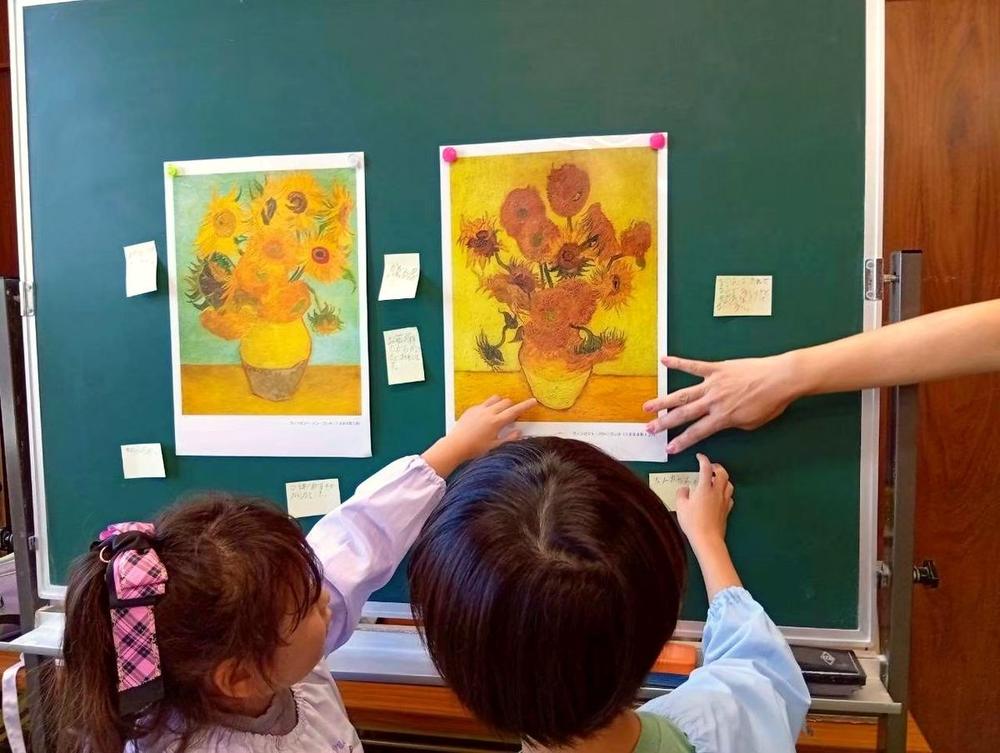
For more on the link between philosophy dialogue and self-esteem, see Education dialogue: philosophy dialogue and self-esteem and Activities that build self-esteem.
Points for choosing a class
- Does the purpose match?: do you want to build technique, or grow the joy of expression and confidence?
- What does the teacher praise?: at the trial lesson, see whether the teacher says not only “that’s good” but also “you worked hard on this part,” putting effort and process into words.
- Is there time to show and talk about the work?: when children don’t just draw and leave but have the experience of communicating, more skills grow.
- Convenience and cost: day, time and place, and whether there are materials fees on top of the monthly tuition.
- Your child’s face at the trial lesson: the most important thing is whether they say “that was fun” on the way home.
| Who | Grades 1–6 (elementary) |
|---|---|
| Lessons | Once a week, 80 minutes (42 lessons a year). First session 16:00–17:20 / second session 17:30–18:50 |
| Monthly tuition | ¥6,500 (tax included). Plus ¥1,500 / month for the facility fee, insurance and materials |
| Classrooms | Okazaki (竜美台 (Tatsumidai), Wednesdays / 針崎 (Harisaki), Thursdays), Toyohashi (牧野 (Makino), Wednesdays), Hamamatsu (広沢 (Hirosawa), Fridays) |
| Trial lesson | 40 minutes, ¥1,000 (nothing to bring). If you apply to join within one week of the trial, we refund the ¥1,000 trial fee |
FAQ
Is it okay if my child isn’t good at drawing?
No problem at all. The goal is not to “draw well”; we value the experience of giving shape to what you feel. This is a class where we especially want children who feel they “can’t draw” to feel safe to try.
From what grade can my child attend?
Kodomo School’s art class is for Grade 1 to Grade 6. Children in the final year of kindergarten can start with the soroban or calligraphy classes.
Can my child take their work home?
Yes. Throughout the year, children take home all kinds of work: paintings, paper clay pieces, seasonal crafts and more. We plan to hold an exhibition of their work once a year.
Can my child attend together with soroban or calligraphy?
Yes. Lessons are once a week, so some children attend alongside other activities. Please feel free to ask us about convenient days and times.
Any color you like, any way you like. Your picture belongs to you alone.

About the author
Taito MoritaFounder & principal of Kodomo School (Morita Group Co., Ltd.)
He carries on the Morita Juku founded in Toyohashi in 1972. Through soroban, calligraphy and art at about 90 classrooms in Aichi and Shizuoka and at our Hanoi school in Vietnam, he helps children build the strength to believe in themselves. He also gives talks and seminars on education.
Message from our founderTalks & seminarsUpdated: October 14, 2026
Parents' Column
More about activities and parenting

Start with a free trial lesson
Soroban and calligraphy trial lessons are free (about 20 minutes; just bring something to write with). The art trial lesson is 40 minutes and costs ¥1,000 (nothing to bring). Come with your child and see the feel of the classroom and how well the teacher suits your child.