
Parents' Column | Soroban
Is soroban good for the brain?
What we know and what we don't
“Soroban makes kids smarter.” “It trains the right brain.” You may have heard claims like these. Here we separate what research has shown from what is still unclear, from the point of view of a soroban school.

You hear it often: “soroban is good for the brain.” Many parents think about it when choosing an activity. But some of what you find on the internet overstates things. Here, we separate what has become clear from what is still uncertain.
What happens in the head during soroban mental math
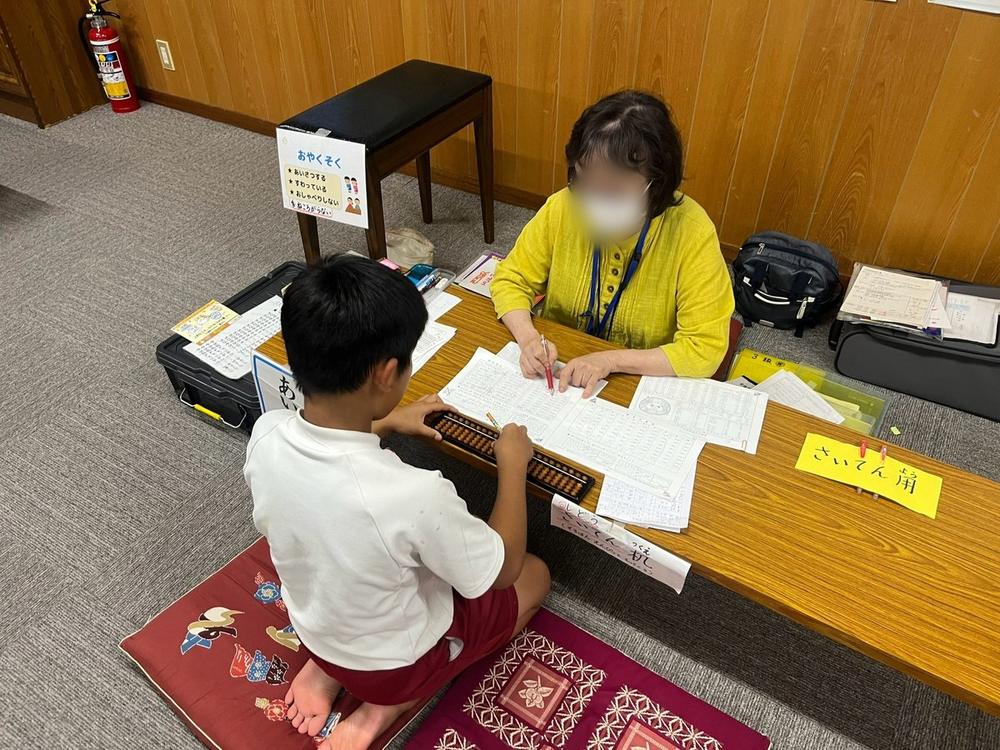
Once children get used to the soroban, they become able to calculate by picturing a soroban in their head, even without one in front of them. This is called “soroban-style mental math (anzan).” Some children’s fingers move slightly while they do it.
In ordinary mental math, we work with numbers as “words” or “digits” in our head. In soroban-style mental math, numbers are pictured as the shape and position of beads, and the answer comes from moving those beads in the mind. The mechanism is explained in detail in How soroban-style mental math works.
What research has found
Research on soroban and the brain has been carried out both in Japan and overseas.
- Advanced learners calculate by picturing bead shapes: There are studies that used brain imaging to look at brain activity while advanced soroban learners did mental math. They report that the brain areas used for picturing the shape and position of objects were very active. So the brain’s activity, too, shows that numbers are being handled as “shapes.”
- Studies with children, too: Overseas, there are also studies in which children practiced soroban-style mental math, and researchers measured calculation skills, the ability to hold numbers in mind, and so on.
Soroban is said to “use the right brain” because of this way of calculating: picturing numbers as shapes.
What is still unclear
- Whether it “makes children smarter”: Many people feel their calculation skills improve, but whether skills beyond calculation improve broadly is still being studied.
- How long you need to continue: Most studies looked at advanced learners who practiced for a long time, or at a limited number of people. How long it takes, and what changes, differs from person to person.
- Individual differences: Progress varies with the age they start, how much they practice, and whether they enjoy it.
Be a little careful with sweeping claims like “if you do soroban, you will surely become ….”
Skills that soroban builds well
Leaving the fine details of the brain aside, there are skills we see growing for certain as we watch children in class every day.
| Skill | Why soroban builds it |
|---|---|
| Speed and accuracy in calculation | Practice every lesson, with answers checked on the spot, builds the habit of calculating correctly and quickly |
| Number sense | Groups of 5 and 10, and place value, are visible in the positions of the beads |
| Focused effort | Working on problems within a set time (each part of the exam is 7 minutes) |
| The confidence of “I did it!” | Progress is visible in concrete ways, such as moving up a kyu |
Read more in The benefits of soroban and Activities that suit children who struggle to concentrate.
What matters more than “good for the brain”
Soroban skills grow in proportion to the time spent enjoying it. Rather than pushing your child “for the brain,” it matters far more that your child can feel their own progress: “You’re faster than yesterday!” “You can do this problem now!” Nor is it true that the earlier the start, the better. Whether they start in the final year of kindergarten or as an elementary or junior high school student, the skills grow properly as long as they enjoy it and keep going.
Frequently asked questions
Does learning soroban make children smarter?
Speed and accuracy in calculation, and number sense, are skills that soroban builds well. But whether skills beyond calculation improve broadly is still being studied, so we can’t say it “definitely makes children smarter.”
Is it true that it “trains the right brain”?
In soroban-style mental math, numbers are pictured as bead shapes. Studies have found that the brain areas used for picturing the shape and position of objects are very active during this, which is why people say “soroban uses the right brain.” How much it is “trained” differs from person to person.
From what age is it good for the brain?
Kodomo School’s soroban classes accept children from the final year of kindergarten. More important than age is whether your child can enjoy it and keep going. For a guide to when to start, see What age is best to start soroban?.
How long does it take to be able to do mental math?
It differs from person to person. First, the bead movements are learned thoroughly on a real soroban; then, little by little, children become able to calculate in their head. See also How soroban-style mental math works.
Is there any point in starting as an adult?
Yes. Some people start as adults, as calculation practice or as time to focus and move their hands. Kodomo School also has an adult soroban course.
Enjoying it and keeping at it is what matters most!

About the author
Taito MoritaFounder & principal of Kodomo School (Morita Group Co., Ltd.)
He carries on the Morita Juku founded in Toyohashi in 1972. Through soroban, calligraphy and art at about 90 classrooms in Aichi and Shizuoka and at our Hanoi school in Vietnam, he helps children build the strength to believe in themselves. He also gives talks and seminars on education.
Message from our founderTalks & seminarsUpdated: October 8, 2026
Parents' Column
More about soroban
Find a classroom
Soroban classes in your city

Start with a free trial lesson
Soroban and calligraphy trial lessons are free (about 20 minutes; just bring something to write with). The art trial lesson is 40 minutes and costs ¥1,000 (nothing to bring). Come with your child and see the feel of the classroom and how well the teacher suits your child.