In short
- Kakizome (書き初め) means “first writing.” On January 2, people write a word or phrase for the year ahead with a brush.
- It began as a court ceremony and reached ordinary families in the Edo period. Today it is winter homework for schoolchildren across Japan.
- You can do it at home with a free sheet: choose a word, write it several times, pick your best, date it, and put it on the wall.
What kakizome is
Kakizome is the first time in the new year that a brush touches paper. Traditionally it is done on January 2, and people write a word or phrase that holds a wish for the coming year: a new spring, the first sunrise, hope, a challenge.
The custom has older names that tell you how people thought of it: 吉書 (kissho, “auspicious writing”), 試筆 (shihitsu, “trying the brush”), and 初硯 (hatsusuzuri, “first inkstone”).
Where it comes from
- 794–1185Heian period
Kakizome is usually traced to a court ritual, the 吉書の奏 (kissho no so), in which officials presented auspicious documents to the emperor at the start of a year or a new era.
- 1185–1573Kamakura and Muromachi periods
The samurai houses took up the ritual as a New Year ceremony called 吉書始 (kissho hajime), “the first auspicious writing.”
- 1603–1868Edo period
As terakoya, the neighborhood schools for reading and writing, spread across the country, the New Year writing became a custom for ordinary families.
People ground their ink with wakamizu, the first water drawn on New Year’s morning, faced the lucky direction of the year, and wrote a Chinese couplet wishing for long life and lasting youth.
- 1960s onThe Nippon Budokan
Tokyo’s martial arts hall has held a kakizome event every January 5 for about sixty years. Several thousand people, from preschoolers to adults, write there at the same time.
- TodayA word, not a poem
Most people write a word or a short phrase rather than a poem, and for every schoolchild in Japan kakizome is part of the winter homework.
How children do it today
Winter homework
Before the winter break, each grade is given its word, usually with a model to copy. Children practice at home over the holidays and bring their clean copy back to school in January.
At our school we tell families not to go straight to the clean copy: twenty minutes a day for several days, single characters first, then the whole sheet, and only then two or three clean copies.
The long paper
Third graders often write on ordinary 半紙 (hanshi, about 33 by 24 cm). From fourth grade many schools use the long kakizome paper, 八つ切り (yatsugiri, about 68 by 17.5 cm), which holds three or four characters in a column and takes a larger brush. Contests for older students use 半切 (hansetsu, about 136 by 35 cm).
The school event in January
In the first weeks of the new term, many schools hold a kakizome meet, 書き初め大会, with a whole grade sitting on the gym floor and writing together in silence. The finished sheets go up on hallway and classroom walls for the other grades to see.
Contests
Schools send their best sheets on to city and prefectural kakizome exhibitions, which open in the middle of January. Each sets its own word for every grade: in 2024, Saitama Prefecture gave third graders せかい (“the world”) and sixth graders 自然の美 (“the beauty of nature”).
At the Nippon Budokan, entrants have 24 minutes and two sheets of hansetsu, no model allowed, and hand in one. The top prize carries the name of the Prime Minister.
Words for each grade
Schools and contests set the words and change them every year, but the pattern is steady: more characters and more kanji as children grow. The linked words have free sheets written by our teachers.
- Preschool and grades 1 and 2, usually in hiragana and often with a pencil or hard-tip pen: ふゆ (winter), ゆめ (dream), そら (sky), ひので (sunrise), おせち (New Year dishes).
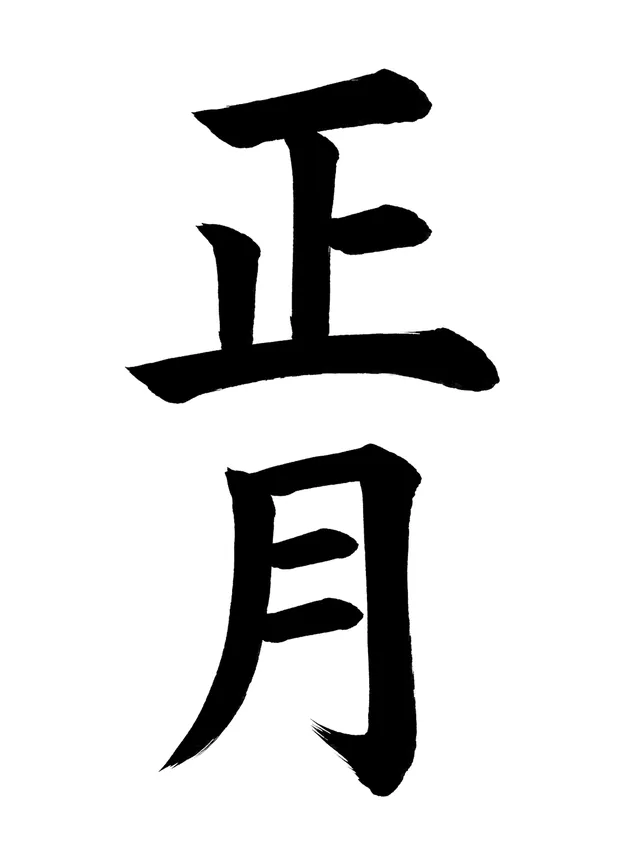
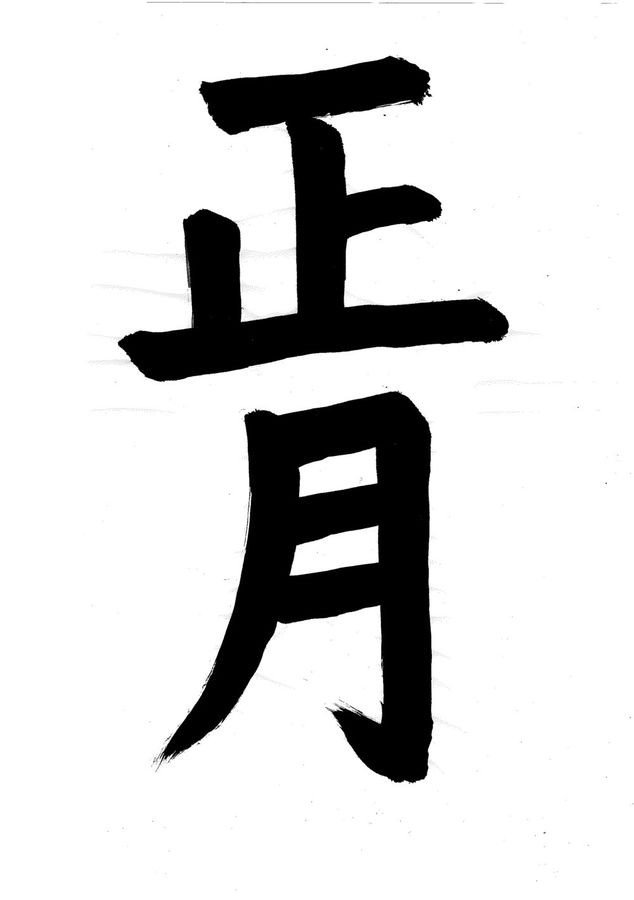
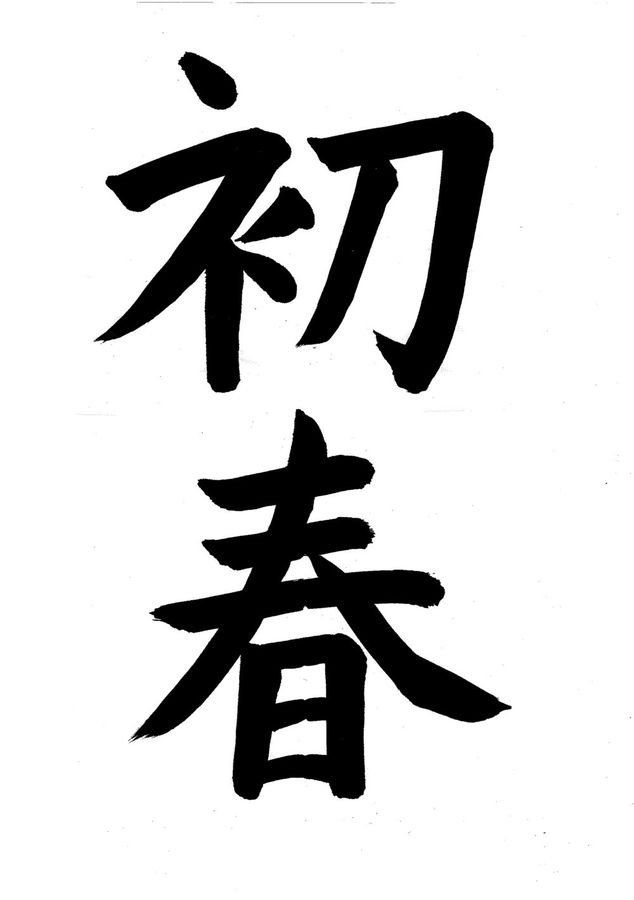
- Grades 3 and 4, two or three characters with the first kanji: 新春 (new spring), 初春 (early spring), 正月 (the New Year), 希望 (hope), 挑戦 (challenge).
- Grades 5 and 6 and junior high, four to six characters: 初日の出 (the first sunrise), 新しい年 (a new year), 希望の光 (the light of hope), 平和の光 (the light of peace), 夢の実現 (making a dream real).
- Adults, often a four-character idiom that sums up a goal: 有言実行 (say it, then do it), 七転八起 (fall seven times, get up eight).
What adults write
For adults, kakizome is a New Year’s resolution in ink. Many choose a four-character idiom, some a short word such as 挑戦 or 感謝, and some write their goal for the year in their own words.
The sheet goes on the wall where it is seen every day. The Nippon Budokan event has divisions for university students and adults, so the custom does not end with school.
How to try kakizome at home
You do not need to wait for January 2: the first days of any year, or of any new lesson, will do.
- Large brush
- Bottled ink
- Hanshi or long paper
- Felt mat and paperweight
- A printed model
- Choose a word
Pick one that means something to you this year. 初日の出, the first sunrise, is the classic; 希望 and 挑戦 are good for a first attempt because they are short.
- Print the sheet
Each free sheet has the model on the first page and a tracing sheet on the second. Put the model to the left of your paper, or to the right if you are left-handed.
- Set the table
Newspaper first, then the felt mat, the paper, and the paperweight at the top. Pour a little ink, and sit square to the paper.
- Write it several times
Three to five sheets of the same word, moving from the arm, each character the full size of the space. Do not go back over a stroke; write the whole sheet again instead.
- Pick one and date it
Choose your best sheet. In small characters down the left side, write the year and your name, the way schoolchildren in Japan sign theirs.
- Display it
Let it dry flat, then put it on the wall. Keep the other sheets in a folder; next year’s kakizome will show how far you have come.
Try it now
Write the first sunrise.
初日の出 (hatsuhinode) is the classic kakizome word. Print the sheet, write it three times with your arm floating, and put the best one on the wall.
Questions
When is kakizome written?
Traditionally on January 2. Schoolchildren write theirs over the winter break as homework, and many schools hold a kakizome event in the first weeks of January.
What do you write for kakizome?
A word or short phrase with a hope for the year: 初日の出 (the first sunrise), 新春 (new spring), 希望 (hope), 挑戦 (challenge). Children write a word set by their school, with more characters as they get older. Adults often write a four-character idiom that sums up a goal.
What is done with the kakizome afterward?
It is displayed at school or at home, and around January 15 many communities burn it with the New Year decorations in a bonfire called dondoyaki or sagicho. If the flames carry the paper high, the saying goes, your handwriting will improve. Keeping it is fine too.