
Shodo / Japan map 書の旅
A calligraphy map of Japan.
Brushes, ink, paper and inkstones each come from towns that have kept their craft for centuries. Add the museums, temples and shrines, and you have a journey. Tap a place on the map to see what is there.
- 20 places20か所Workshops, museums, temples and shrines you can visit
- The four treasures文房四宝Brush, ink, paper and inkstone, each from its own town
- Our hometown豊橋Toyohashi has made brushes by hand since 1804
The map 地図
From Hokkaido to Kyushu, place by place.
Each place is a real address you can visit: a workshop with a museum or shop, a museum devoted to calligraphy, or a temple or shrine tied to one of Japan’s great calligraphers.
Tap a number, or a photo in the strip below
All places, north to southScroll →
All places 一覧
20 places, north to south.
Numbered from Hokkaido down to Kyushu. Open any card for the full story, what to see, and the official website.
How we chose 選び方
Real places, checked one by one.
We chose places a visitor can actually enter: craft towns with a museum, workshop or shop, museums devoted to calligraphy, and temples and shrines tied to the people who shaped Japanese writing.
We checked each entry against its official website in November 2026. Opening days and hours change, so please confirm on the official site before you travel. We have no connection to the places listed, apart from Toyohashi, which is our hometown.
Photographs other than our own come from Wikimedia Commons under open licences; the photographer is credited under each one.
Next つぎの一歩
Begin with the brush.
The large brush in our Toyohashi Set is made by hand in our hometown. See inside the workshop, then print a free practice sheet and write your first character.
Credits 写真と地図
- 01 Hokkaido Museum of Art, Hakodate: 663highland, CC BY 2.5, via Wikimedia Commons
- 02 Ogatsu inkstones: 石巻敎祖, CC BY 4.0, via Wikimedia Commons
- 03 Ryokan Memorial Hall: Suikotei, CC BY 4.0, via Wikimedia Commons
- 04 Hosokawa-shi, Ogawa washi: Qurren, CC BY-SA 3.0, via Wikimedia Commons
- 05 Echizen washi: TR15336300101, CC BY-SA 4.0, via Wikimedia Commons
- 06 Naritasan Calligraphy Museum: 三人日, CC BY-SA 4.0, via Wikimedia Commons
- 07 Taito City Calligraphy Museum: Abasaa, Public domain, via Wikimedia Commons
- 08 Nippon Budokan, New Year calligraphy: Wiiii, CC BY-SA 3.0, via Wikimedia Commons
- 09 Mino washi: おにく, CC0, via Wikimedia Commons
- 10 Amehata inkstones: Sablier de Verrie, CC0, via Wikimedia Commons
- 11 Kasugai City Dofu Memorial Hall: Bariston, CC BY-SA 4.0, via Wikimedia Commons
- 12 Kitano Tenmangu: 663highland, CC BY 2.5, via Wikimedia Commons
- 13 Kyukyodo: Lombroso, Public domain, via Wikimedia Commons
- 14 Toyohashi brushes: Morita Group
- 15 Kobaien, Nara ink: Degueulasse, CC BY 3.0, via Wikimedia Commons
- 16 Kumano brushes: Taisyo, CC BY 3.0, via Wikimedia Commons
- 17 Mount Koya: Drivephotographer, CC0, via Wikimedia Commons
- 18 Akama inkstones: 海獺, CC BY-SA 4.0, via Wikimedia Commons
- 19 Tosa washi: At by At, CC BY-SA 3.0, via Wikimedia Commons
- 20 Dazaifu Tenmangu: redlegsfan21, CC BY-SA 2.0, via Wikimedia Commons
- Map: Natural Earth 10m administrative boundaries (public domain), simplified by Morita Group. Okinawa is shown in the inset; small outlying islands are omitted.
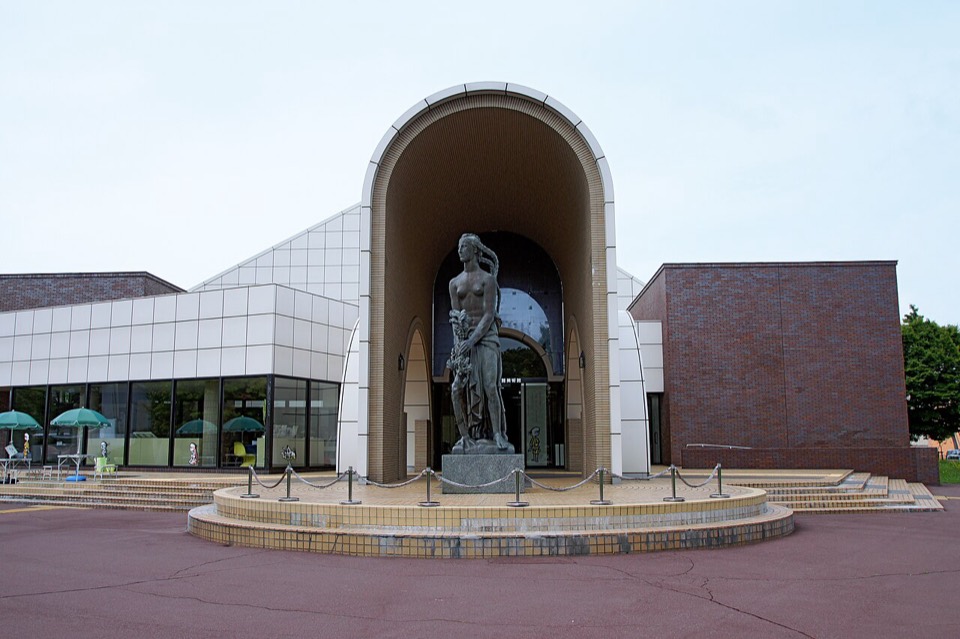
Photo: 663highland · CC BY 2.5 · Wikimedia Commons
01 Museums · Hokkaido 北海道
Hokkaido Museum of Art, Hakodate北海道立函館美術館
The Hokkaido Museum of Art, Hakodate, opened in 1986, builds its collection on three themes, one of them calligraphy and East Asian art. That theme centres on Kaneko Otei, the Hokkaido-born calligrapher who launched the modern-poetry calligraphy movement.
The museum opened in 1986 in Goryokaku-cho, beside the star-shaped Goryokaku fort. Its collection and exhibitions follow three themes: art connected with southern Hokkaido, calligraphy and East Asian art, and contemporary art concerned with letters and signs.
The calligraphy theme centres on Kaneko Otei (1906–2001), born in Matsumae district in Hokkaido. In 1933 he proposed what became the modern-poetry calligraphy movement, writing modern Japanese poems and prose with the brush, and he received the Order of Culture in 1990. The museum's Japanese calligraphy holdings are built around his works, and its East Asian craft collection around pieces he once owned.
It is the northernmost stop on this map, and a reminder that calligraphy in Japan is a living art, not only a classical one.
What to see
- Works by Kaneko Otei and other calligraphers in the collection displays
- East Asian crafts from Otei's former collection
- Contemporary art that plays with letters and signs, shown alongside calligraphy
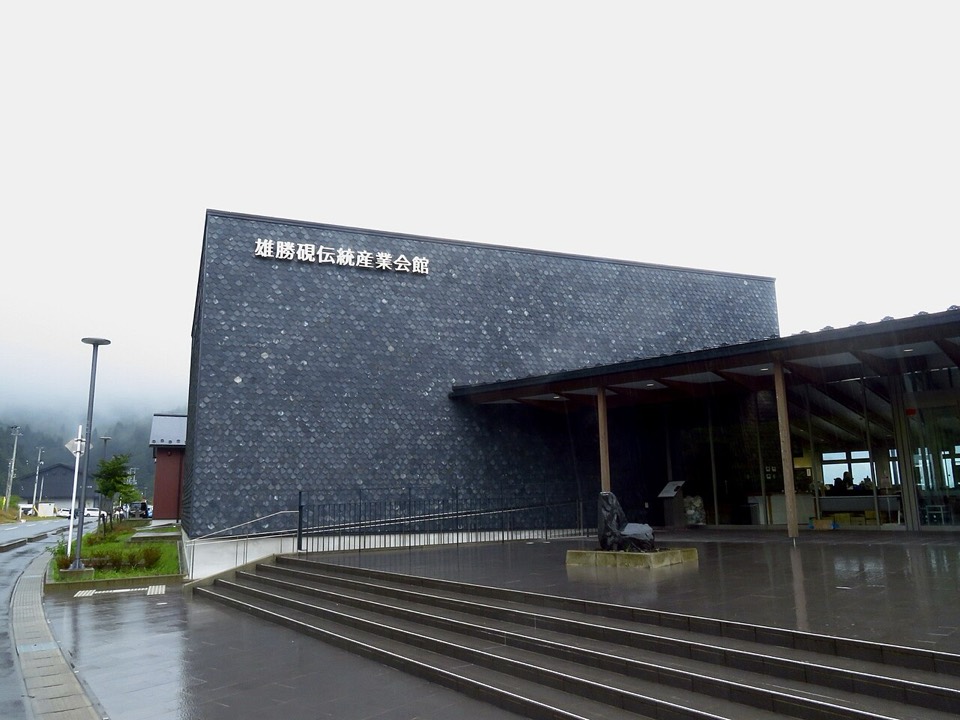
Photo: 石巻敎祖 · CC BY 4.0 · Wikimedia Commons
02 Inkstones · Miyagi 宮城
Ogatsu inkstones雄勝硯
The black slate of Ogatsu, on Miyagi's Sanriku coast, has been cut into inkstones for some 600 years. The hall that shows and sells them was rebuilt after the 2011 tsunami and reopened in 2020.
Ogatsu stone, a hard black slate quarried around Ogatsu Bay in Ishinomaki, is said to have been shaped into inkstones since the Muromachi period. The first written record, from the early 1600s, says the Sendai lord Date Masamune took notice of them. Ogatsu inkstones were designated a Traditional Craft of Japan in 1985.
On 11 March 2011 the tsunami of the Great East Japan Earthquake wrecked the centre of Ogatsu. Workshops were damaged and some craftsmen left, but the cooperative regrouped, and black slate tableware now sells alongside inkstones.
The Ogatsu Inkstone Traditional Industry Hall was rebuilt beside the sea wall and reopened in 2020 inside the Kenjo-no-sato Ogatsu roadside station. Its exhibition room tells the story of the craft, and the gallery sells inkstones you can pick up and compare.
What to see
- The exhibition room on the history of Ogatsu inkstones (closed Tuesdays)
- The gallery where you can handle and buy inkstones and slate tableware
- The hall itself, clad in Ogatsu slate
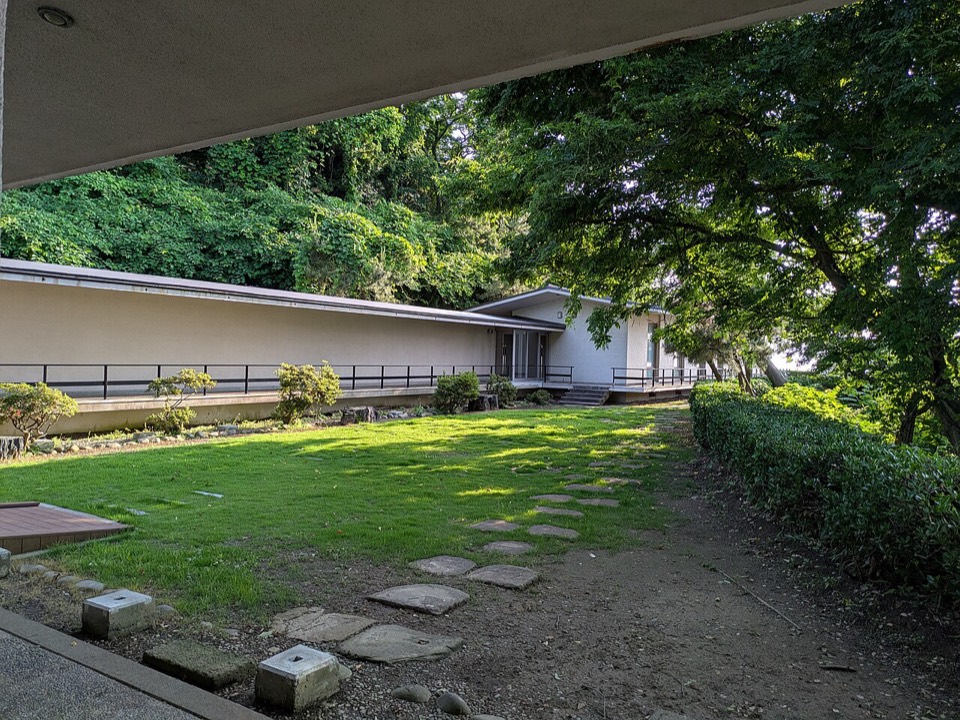
Photo: Suikotei · CC BY 4.0 · Wikimedia Commons
03 Museums · Niigata 新潟
Ryokan Memorial Hall良寛記念館
Ryokan (1758–1831), the beloved Zen monk, poet and calligrapher, was born in Izumozaki on the Sea of Japan coast. The Ryokan Memorial Hall, opened in 1965 for the 200th anniversary of his birth, shows his calligraphy facing the sea and Sado Island.
Ryokan was born in 1758 in Izumozaki in Echigo, today's Niigata, and died in 1831. A Zen monk who lived simply and played with the village children, he is remembered as one of Japan's finest Edo-period poets and calligraphers, and his free, unforced brushwork is admired to this day.
The memorial hall was built in 1965 as a 200th-birth-anniversary project, on a hill near the site of his family home, and was designed by the architect Taniguchi Yoshiro. The building was registered as a national tangible cultural property in 2016.
Crossing the long corridor to the exhibition hall, visitors look out over the Sea of Japan to Sado Island. Inside are his Chinese poems, waka, Buddhist phrases and letters, including a Heart Sutra and a 'Namu Amida Butsu' written the year before he died.
What to see
- Ryokan's own calligraphy: poems, letters, a Heart Sutra and the six-character 'Namu Amida Butsu'
- The corridor with its view across the Sea of Japan to Sado Island
- A hut modelled on Ryokan's Gogo-an hermitage, the garden, and his family grave behind the hall
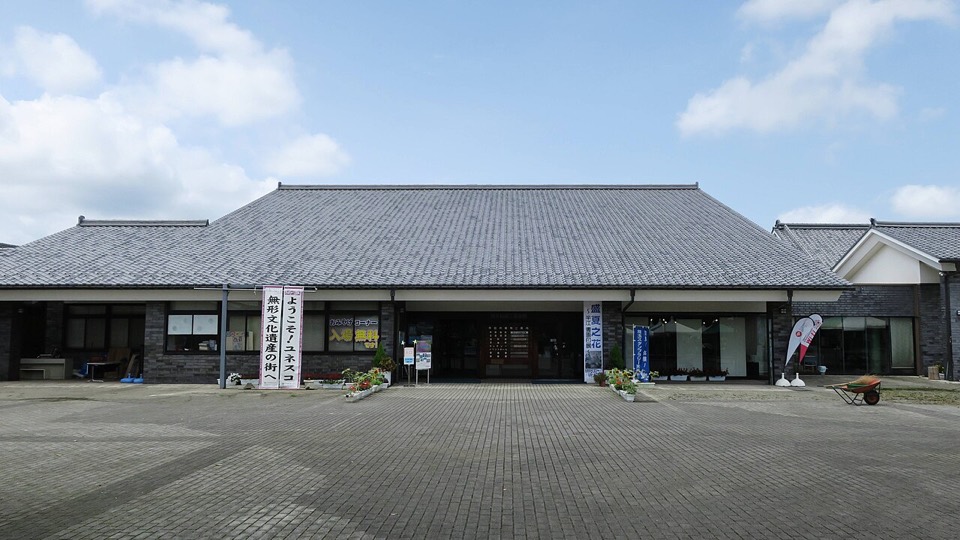
Photo: Qurren · CC BY-SA 3.0 · Wikimedia Commons
04 Paper · Saitama 埼玉
Hosokawa-shi, Ogawa washi細川紙(小川和紙)
Hosokawa-shi is a tough paper made only from kozo in Ogawa town and Higashichichibu village, north-west of Tokyo. An Important Intangible Cultural Property since 1978 and on UNESCO's list since 2014, it is the closest UNESCO washi to the capital.
The Ogawa area is said to have made paper for some 1,300 years. In the Edo period the technique of Hosokawa-hosho paper was brought here, close to the capital, and the paper made in Ogawa became Hosokawa-shi. Made only from kozo, it is strong and is used today for Japanese-bound books, printmaking and the repair of cultural properties.
Hosokawa-shi was designated an Important Intangible Cultural Property in 1978 and was inscribed by UNESCO in 2014 together with Sekishu-banshi and Hon-minoshi.
The traditional crafts hall inside the Ogawamachi roadside station, renewed in 2025, has an exhibition room on washi, a shop for Ogawa paper, and a workshop where you can watch Hosokawa-shi being made and try it yourself.
What to see
- Watch a Hosokawa-shi demonstration and make your own sheet (workshop closed Mondays)
- The exhibition room on washi and the shop for Ogawa paper
- Washi no Sato in Higashichichibu, a few kilometres west, with old paper-making houses
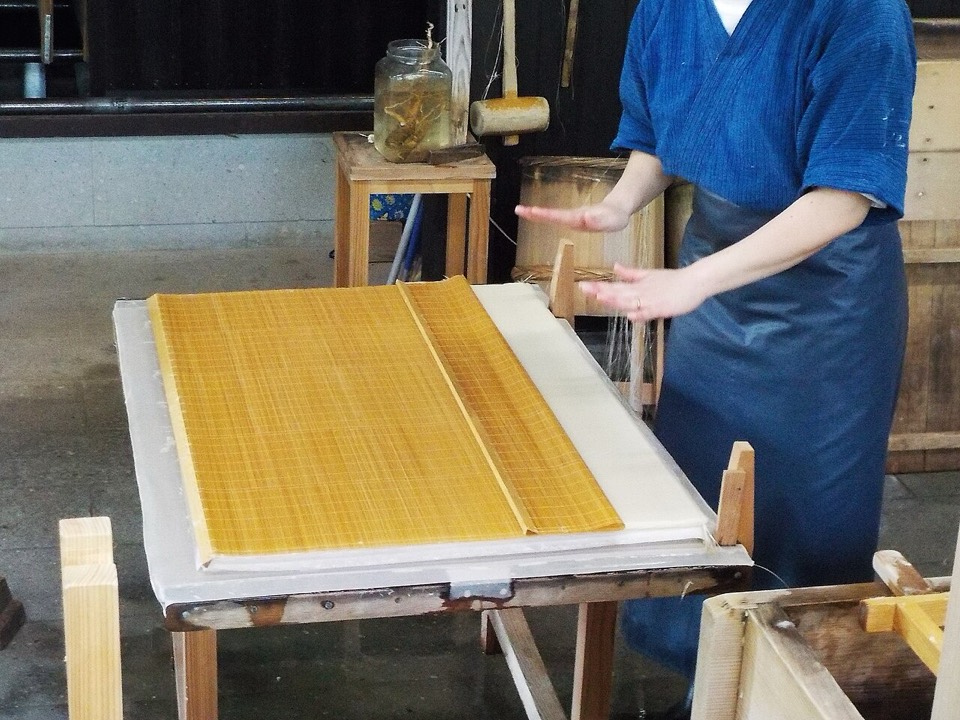
Photo: TR15336300101 · CC BY-SA 4.0 · Wikimedia Commons
05 Paper · Fukui 福井
Echizen washi越前和紙
Echizen washi has been made in the Goka villages of Echizen for about 1,500 years. Legend says the paper goddess Kawakami Gozen taught the craft, and in 2025 Echizen torinoko paper joined the UNESCO list of Japanese hand-made papers.
Legend says that about 1,500 years ago a beautiful woman appeared upstream on the Okamoto River and taught the villagers to make paper. She is worshipped as Kawakami Gozen, the goddess of paper, at Okamoto-Otaki Shrine, and the village holds a festival for her every May.
Paper is still made in the five Goka villages. Echizen washi was designated a Traditional Craft in 1976, and in December 2025 Echizen torinoko paper was added to the UNESCO Intangible Cultural Heritage element for Japanese hand-made paper, alongside Sekishu-banshi, Hon-minoshi and Hosokawa-shi.
At Echizen Washi Village you can watch papermaking in a relocated Edo-period house at the Udatsu Paper & Craft Museum, make your own sheet at the Papyrus House, and learn the history at the Paper & Culture Museum.
What to see
- Watch craftspeople make paper in an Edo-period house at the Udatsu Paper & Craft Museum
- Make your own sheet of Echizen washi at the Papyrus House
- Walk to Okamoto-Otaki Shrine, home of the paper goddess
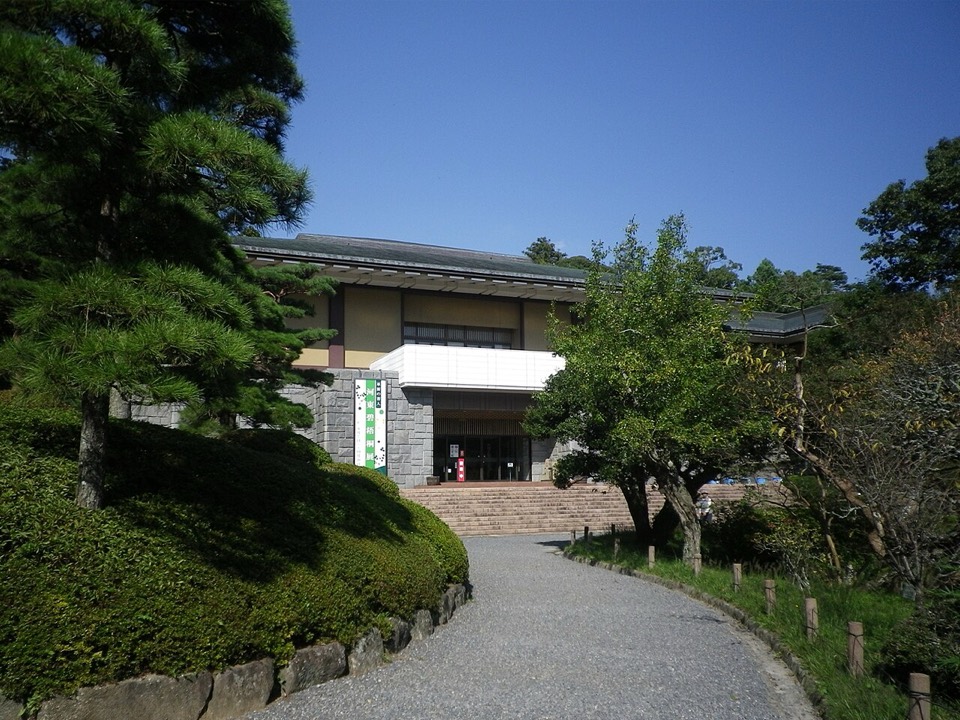
Photo: 三人日 · CC BY-SA 4.0 · Wikimedia Commons
06 Museums · Chiba 千葉
Naritasan Calligraphy Museum成田山書道美術館
Opened in 1992 beside a pond in Naritasan Park, behind Naritasan Shinshoji temple, this is a museum devoted entirely to calligraphy. Its collection of Japanese and Chinese works gives special weight to the Edo period and the modern era.
The Naritasan Calligraphy Museum opened in 1992 and is run by the Naritasan Culture Foundation. It stands on the bank of Sannoike pond in Naritasan Park, the wooded park that spreads out behind the Great Main Hall of Naritasan Shinshoji temple, a short train ride from Narita Airport.
The collection covers Japanese and Chinese calligraphy from ancient times to the present. The museum describes its particular focus as masterpieces from the Edo period to today, an era that had often been passed over, and exhibitions change through the year.
If you are flying in or out of Narita, this is the easiest calligraphy museum in Japan to fit into a trip.
What to see
- Changing exhibitions of calligraphy from the Edo period to today (closed Mondays)
- Japanese and Chinese calligraphy from earlier periods in the collection
- The quiet pond-side setting in Naritasan Park, after visiting Shinshoji temple
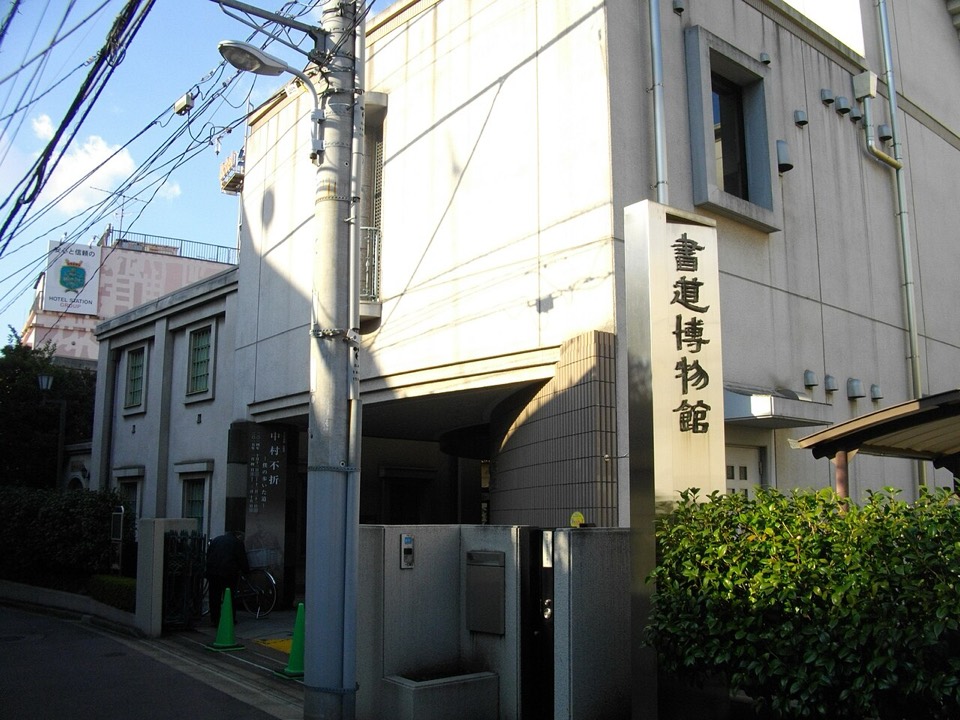
Photo: Abasaa · Public domain · Wikimedia Commons
07 Museums · Tokyo 東京
Taito City Calligraphy Museum台東区立書道博物館
The Calligraphy Museum in Negishi, Tokyo, holds the collection of Chinese and Japanese calligraphy that the painter and calligrapher Nakamura Fusetsu gathered over forty years. Opened in 1936 and reopened by Taito City in 2000, it includes Important Cultural Properties.
Nakamura Fusetsu, a Western-style painter who was also a calligrapher, opened the Calligraphy Museum with his own money in 1936 and became its first director. The collection, built up over some forty years, is a key resource for the history of calligraphy in China and Japan and includes pieces designated Important Cultural Properties.
The museum closed in 1995 and was donated to Taito City, which reopened it in 2000. Visitors see both the original 1936 building and the Nakamura Fusetsu Memorial Museum built in 2000, where special exhibitions on the history of calligraphy are held.
The museum is a five-minute walk from JR Uguisudani Station. Across the lane stands Shiki-an, the restored last home of the haiku poet Masaoka Shiki, who was Fusetsu's friend.
What to see
- Important Cultural Property calligraphy and rubbings from China and Japan in the 1936 building
- Special exhibitions on the history of calligraphy in the Memorial Museum (closed Mondays)
- Shiki-an, the home of the poet Masaoka Shiki, across the lane
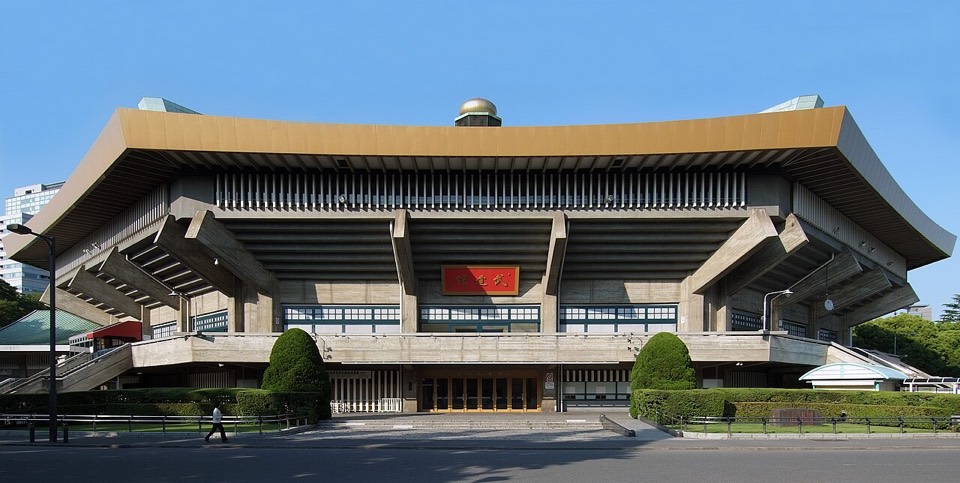
Photo: Wiiii · CC BY-SA 3.0 · Wikimedia Commons
08 Events · Tokyo 東京
Nippon Budokan, New Year calligraphy日本武道館 書初め大展覧会
Every 5 January the Nippon Budokan hosts the on-site writing contest of the All-Japan New Year Calligraphy Exhibition, held since the hall opened in 1964. More than 15,000 works are entered in a typical year.
The Nippon Budokan, the martial-arts hall in Kitanomaru Park, opened in 1964. Besides martial arts, the Nippon Budokan Foundation promotes calligraphy, and it has run the All-Japan New Year Calligraphy Exhibition since the hall opened.
In the on-site writing contest, held every 5 January in the main arena, entrants from preschool children to adults write a set phrase on two half-size sheets within a time limit and without a model. An open-entry section is judged alongside it, and in a typical year more than 15,000 works are entered.
The 63rd contest is on 5 January 2027, and the awards ceremony and exhibition of winning works follow on 28 February 2027. Entry is by advance application; check the official page for deadlines and visitor access.
What to see
- The on-site writing contest on 5 January (entry by advance application)
- The awards ceremony and exhibition of winning works on 28 February 2027
- The Budokan itself, a 1964 landmark in Kitanomaru Park
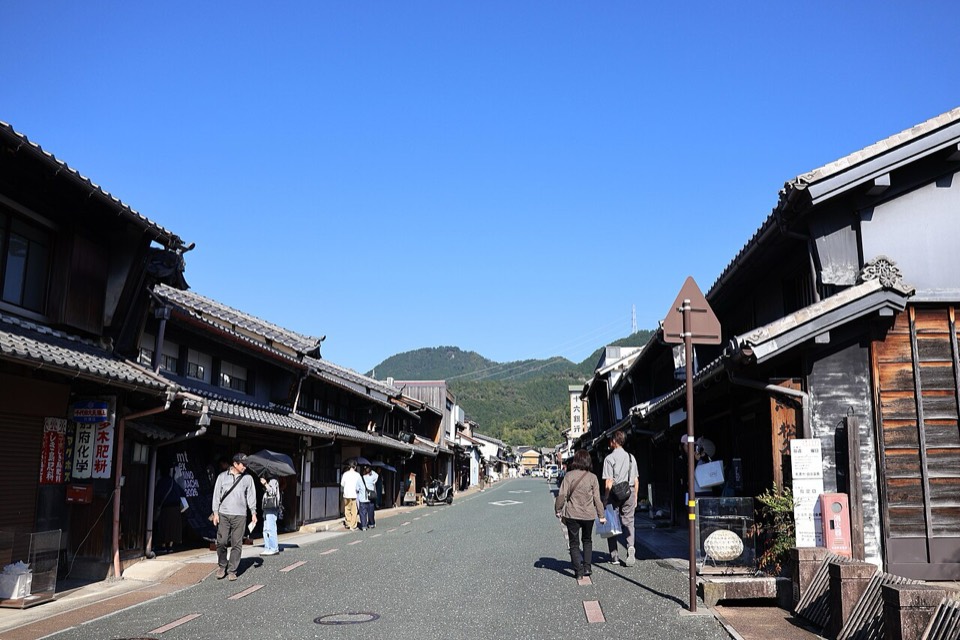
Photo: おにく · CC0 · Wikimedia Commons
09 Paper · Gifu 岐阜
Mino washi美濃和紙
Mino paper is recorded in documents of 702 kept at the Shosoin treasury, and Hon-minoshi, its finest kozo paper, joined the UNESCO list in 2014. Thin, even and strong, it is a classic paper for shoji screens, lanterns and fine paper crafts.
Mino, on the Nagara River in Gifu, has made paper since the Nara period. Household-register paper from Mino dated 702 survives in the Shosoin treasury in Nara. In the Edo period the paper trade made the town rich, and its merchants built houses with udatsu, decorative fire walls on the roof, which still line the old town.
Mino washi was designated a Traditional Craft in 1985. Hon-minoshi, kozo paper made by the traditional technique, has been an Important Intangible Cultural Property since 1969 and was inscribed by UNESCO in 2014 together with Sekishu-banshi and Hosokawa-shi.
The Mino-Washi Museum in Warabiu, north of the town, exhibits the paper and offers paper-making sessions in which you make your own sheet or postcards.
What to see
- Make a sheet of Mino washi or postcards at the Mino-Washi Museum (closed Tuesdays)
- Exhibitions of Mino paper, including the annual national washi art exhibition
- The Udatsu townscape of old paper merchants' houses in the town centre
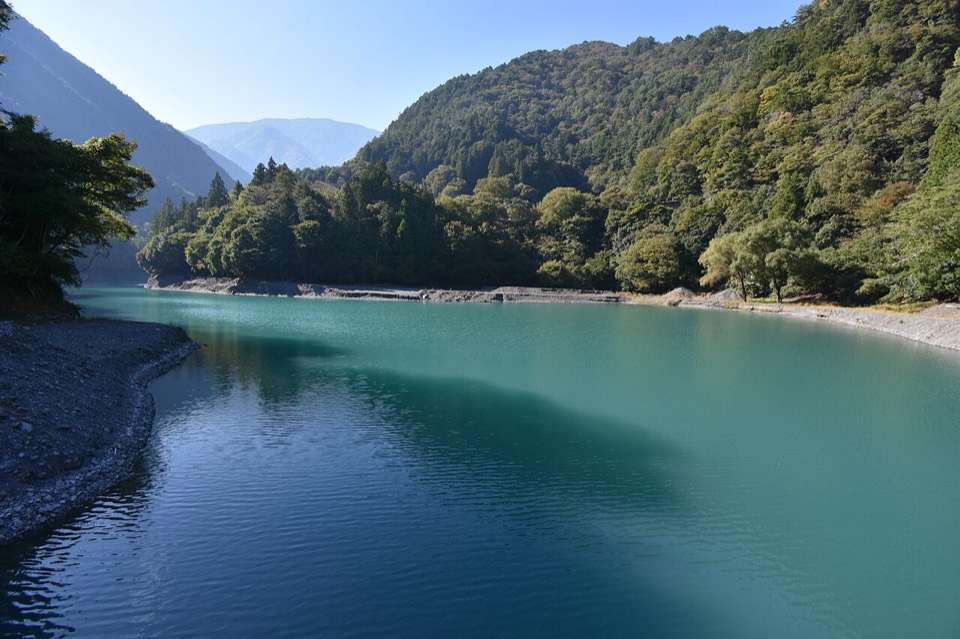
Lake Amehata, in the inkstone village · Photo: Sablier de Verrie · CC0 · Wikimedia Commons
10 Inkstones · Yamanashi 山梨
Amehata inkstones雨畑硯
Amehata inkstones are carved from a fine black slate quarried in the mountain village of Amehata in Hayakawa, Yamanashi, a craft said to go back more than 700 years. At Kenshoan you can see master-carved inkstones and carve a small one yourself.
Amehata inkstones are cut from a dense black slate quarried in the upper Amehata River valley, deep in the mountains of Yamanashi. Local tradition says the stone was discovered in 1297 by the monk Nichiro, a disciple of Nichiren, who found a blue-black stone in the riverbed. In the Edo period an inkstone was presented to the shogun, and production spread.
In 2023 the craft was designated an intangible cultural property of Yamanashi Prefecture.
Kenshoan, the Amehata Inkstone Village centre, has an exhibition hall of hand-carved inkstones and old documents on quarrying, a workshop where visitors can try carving, and a shop selling inkstones, paper, ink and brushes. Carving sessions take about two hours and need a reservation by telephone.
What to see
- The exhibition hall of master-carved Amehata inkstones
- Carve and polish your own small inkstone in the workshop (reservation by phone; closed Tuesdays and Wednesdays)
- The shop and the small cafe facing the mountains
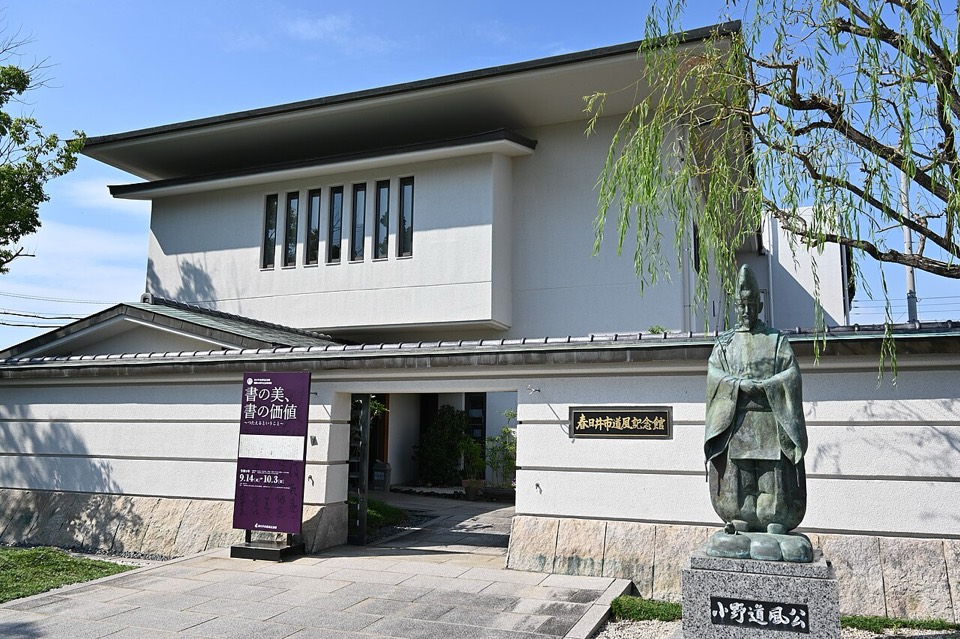
Photo: Bariston · CC BY-SA 4.0 · Wikimedia Commons
11 Museums · Aichi 愛知
Kasugai City Dofu Memorial Hall春日井市道風記念館
A city museum devoted entirely to calligraphy, on the spot where Ono no Michikaze (894–966), one of Japan's three great calligraphers of the Heian court, is said to have been born. Changing exhibitions show historic and modern brushwork.
Ono no Michikaze (894–966) was a court calligrapher of the Heian period. With Fujiwara no Sukemasa and Fujiwara no Yukinari he is counted among the Sanseki, the three masters who gave Japanese calligraphy a style of its own. Tradition holds that he was born at Matsukawado, in what is now Kasugai, north of Nagoya.
On that site the city opened the Dofu Memorial Hall in 1981. It is one of very few museums in Japan devoted only to calligraphy. A permanent display introduces Heian-period calligraphy through replicas and panels, and special exhibitions change through the year.
A statue of Michikaze and a stone marking his birthplace stand in the grounds. Kasugai is just north of Nagoya, in the same prefecture as Toyohashi, our hometown.
What to see
- The permanent display on Heian-period calligraphy and Michikaze
- Special exhibitions from the museum's own collection
- The statue of Michikaze and the birthplace stone in the garden
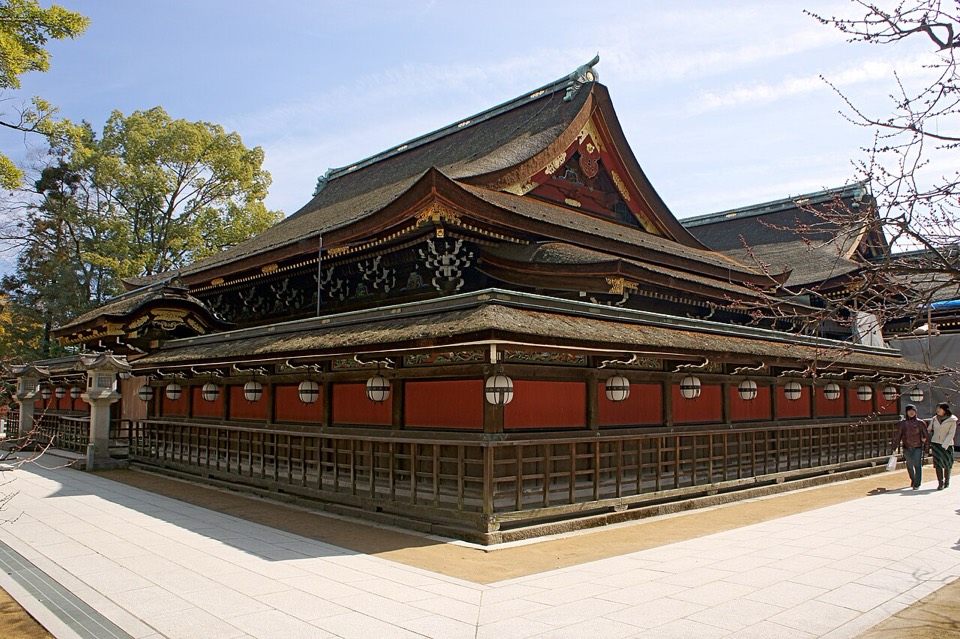
Photo: 663highland · CC BY 2.5 · Wikimedia Commons
12 Temples & shrines · Kyoto 京都
Kitano Tenmangu北野天満宮
Kitano Tenmangu, founded in 947, enshrines Sugawara no Michizane (845–903), the scholar-poet revered as Tenjin, god of learning. Each 2 January the shrine offers his writing tools in the Fude-hajime-sai, followed by the Tenman-gaki, the New Year's first-writing event.
Kitano Tenmangu was first built in 947 to appease the spirit of Sugawara no Michizane (845–903), a scholar, poet and statesman who died in exile and was later deified as Tenjin. The shrine calls itself the head shrine of about 12,000 Tenmangu and Tenjin shrines across Japan.
Michizane is also honoured as a master of the brush. On 2 January the Fude-hajime-sai offers his calligraphy tools before the main hall and prays for the progress of everyone who practises calligraphy. The Tenman-gaki follows: from 2 to 4 January visitors write their first calligraphy of the year at the shrine, and the works are shown from late January.
The main shrine building is a National Treasure, and the plum blossom festival on 25 February marks the day of Michizane's death.
What to see
- The main shrine buildings, a National Treasure
- The Tenman-gaki New Year writing (2–4 January) and the display of entries from late January
- The treasure hall and the plum garden in February
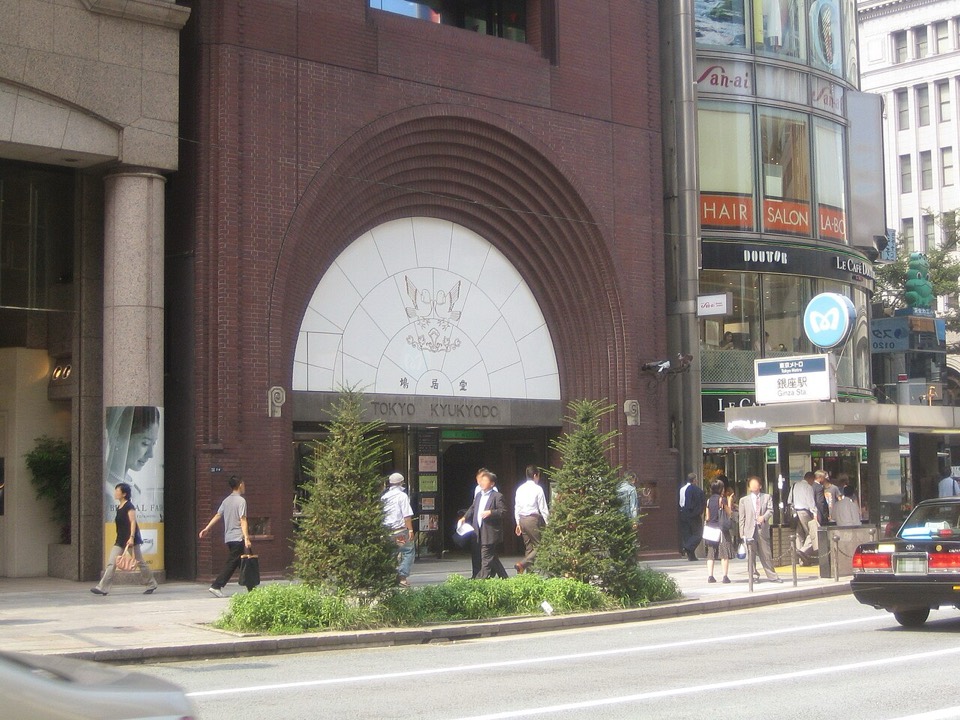
Photo: Lombroso · Public domain · Wikimedia Commons
13 Shops · Kyoto 京都
Kyukyodo鳩居堂
Kyukyodo, founded in Kyoto in 1663, is a long-established specialist in incense, calligraphy and painting supplies, letter paper and other washi goods. The Kyoto main store on Teramachi street and the Tokyo store in Ginza are classic stops for calligraphy supplies.
Kyukyodo opened in 1663 as a pharmacy in front of Honno-ji temple on Teramachi street in Kyoto, and still trades from the same street. The company describes itself as a specialist in incense, calligraphy and painting supplies, postcards, letter paper, gift envelopes and washi products.
The Kyoto main store is in Nakagyo ward, at the corner of Teramachi and Anekoji streets. The Tokyo Kyukyodo store is at Ginza 5-7-4, a landmark on the Ginza main street.
For calligraphers the shops are an easy place to buy paper and other supplies and to browse traditional stationery. The Ginza store also hosts occasional workshops.
What to see
- The Kyoto main store on Teramachi street
- The Tokyo Kyukyodo store in Ginza
- Incense, washi letter papers and calligraphy supplies
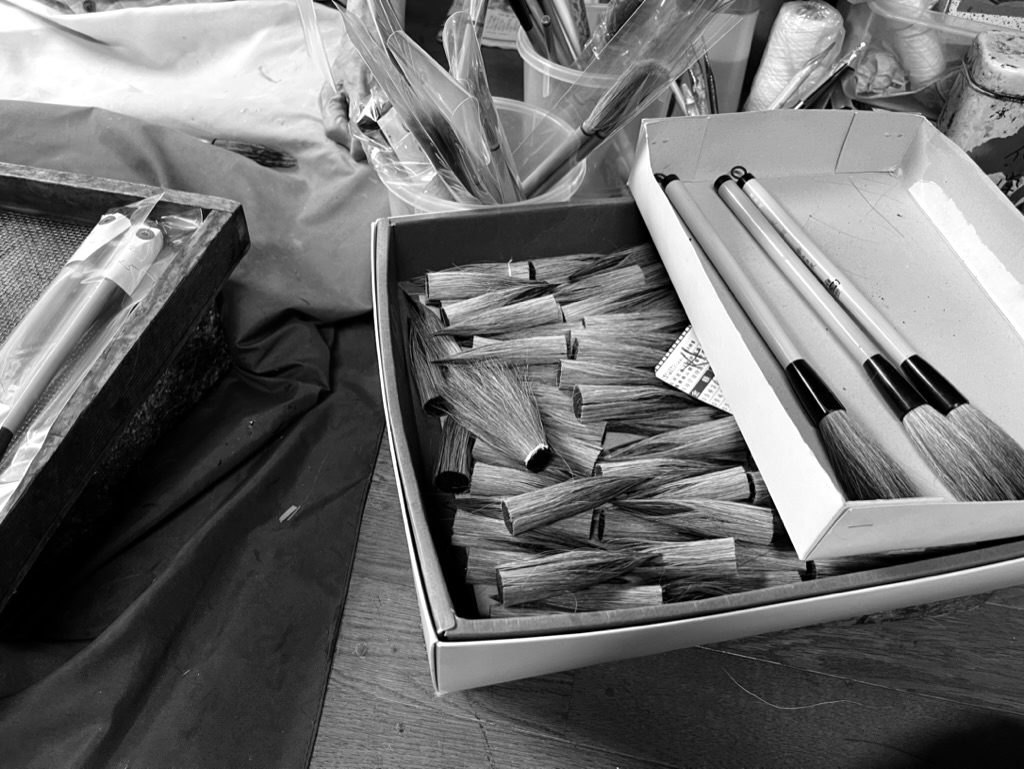
Photo: Morita Group
14 Brushes · Aichi 愛知
Toyohashi brushes豊橋筆
Our hometown has made calligraphy brushes by hand since 1804, and most of Japan's high-grade brushes are made here. We visited the Sakakibara Mofude workshop to see how a brush is made.
In 1804, a brushmaker from Kyoto named Suzuki Jinzaemon was invited to the Yoshida domain, the old name of Toyohashi. The craft took root, and the city has made brushes ever since. Toyohashi brushes were designated a Traditional Craft of Japan in 1976.
Craftsmen mix the hairs by hand in water, a method called neri-maze. It gives the brush an even body that holds ink well and comes back to a fine point. Making one brush takes about 36 steps, all done by hand.
The workshops are working studios rather than shops. Our article takes you inside one of them, with the photographs we took on our visit.
What to see
- Inside the Sakakibara Mofude workshop, in our article with photographs
- The large brush in our Toyohashi Set, made here by hand
- Toyohashi is on the Tokaido Shinkansen line, between Nagoya and Hamamatsu
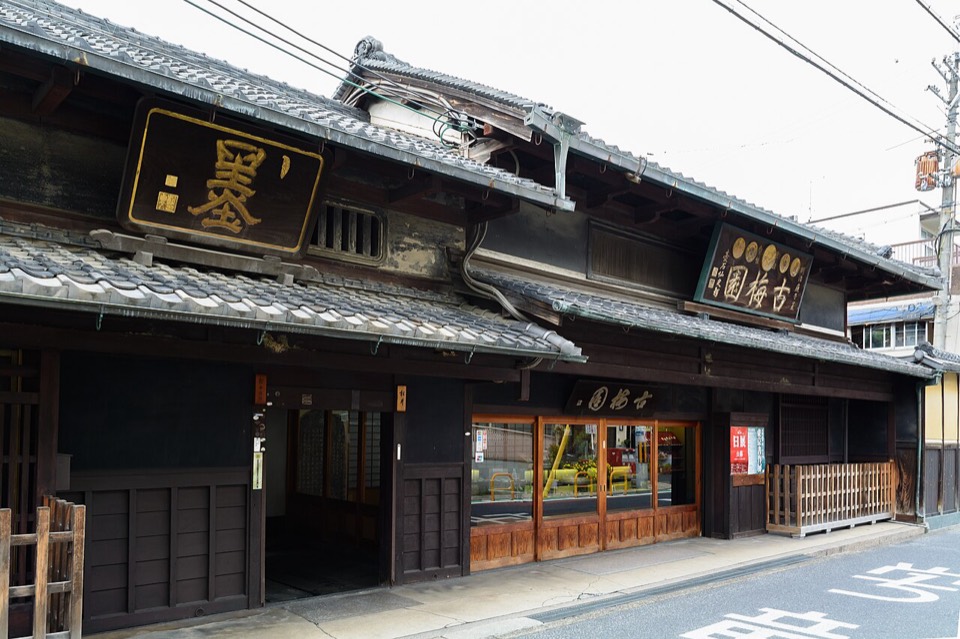
Photo: Degueulasse · CC BY 3.0 · Wikimedia Commons
15 Ink · Nara 奈良
Kobaien, Nara ink古梅園
Kobaien has made ink sticks in central Nara since 1577, collecting soot from oil lamps and kneading it with glue by hand. Its shop sells the ink, and in the cold months visitors can book a look at the workshop.
Nara is famous for its ink sticks, and Kobaien is its best-known house. Founded in 1577, the company still works from its old wooden shop and workshop on Tsubai-cho, a short walk from Kintetsu Nara Station.
The ink is made the traditional way. Vegetable oil burns in small earthenware lamps and the soot is gathered, kneaded with animal glue and fragrance, pressed into carved wooden moulds and dried slowly for months before polishing.
Because heat spoils the work, ink is made only from mid-October to late April. In that season visitors who reserve can watch, and a nigiri-zumi experience lets you squeeze fresh ink into your own stick, which is dried and posted to you.
What to see
- Buy ink sticks and other supplies at the shop (weekdays)
- Reserve to watch ink being made, mid-October to late April
- The nigiri-zumi experience: shape your own ink stick
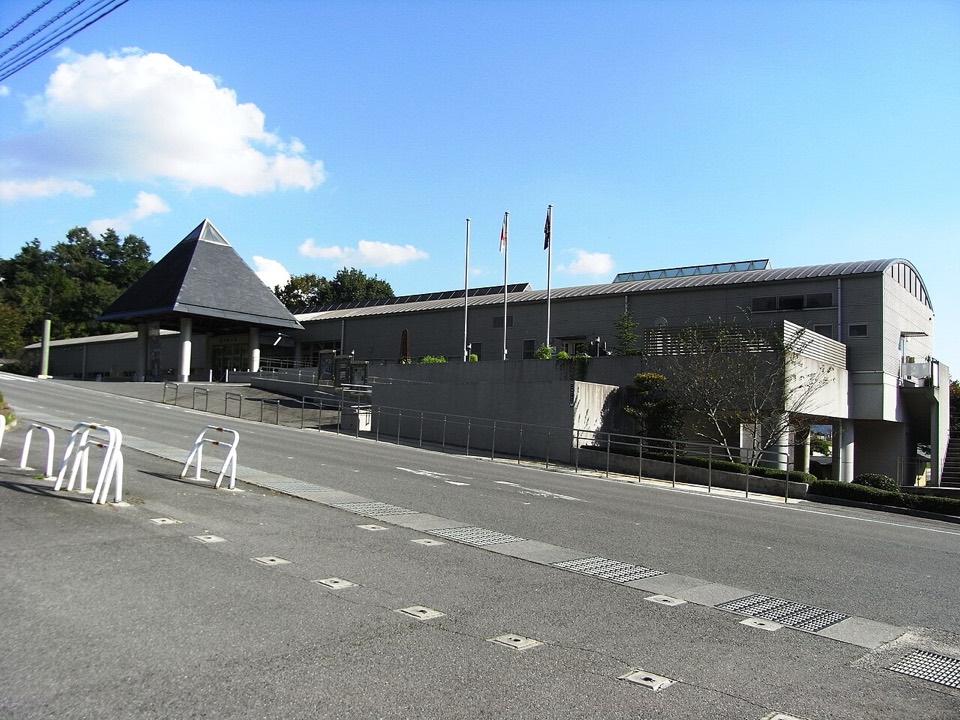
Photo: Taisyo · CC BY 3.0 · Wikimedia Commons
16 Brushes · Hiroshima 広島
Kumano brushes熊野筆
Kumano, a small town in the hills east of Hiroshima, makes more brushes than anywhere else in Japan. Its museum, Fude no Sato Kobo, shows brushes of every kind and lets you watch certified craftsmen at work.
Brush making in Kumano began in the late Edo period, in the 1830s and 1840s, when local people who had learned the craft elsewhere brought it home. Today the town leads Japan in calligraphy, painting and cosmetic brushes, and Kumano brushes were designated a Traditional Craft of Japan in 1975.
Fude no Sato Kobo, the town museum opened in 1994, is built around the brush. It has displays on how a brush is made, a collection of about 1,000 historic brushes, and a giant brush 3.7 metres long. Certified craftsmen demonstrate their work, and the shop sells Kumano brushes.
Every year on Autumnal Equinox Day, around 23 September, the town holds the Fude Matsuri brush festival.
What to see
- Watch certified craftsmen make brushes by hand at Fude no Sato Kobo (closed Mondays)
- The 3.7-metre giant brush and about 1,000 historic brushes
- The Fude Matsuri brush festival on Autumnal Equinox Day
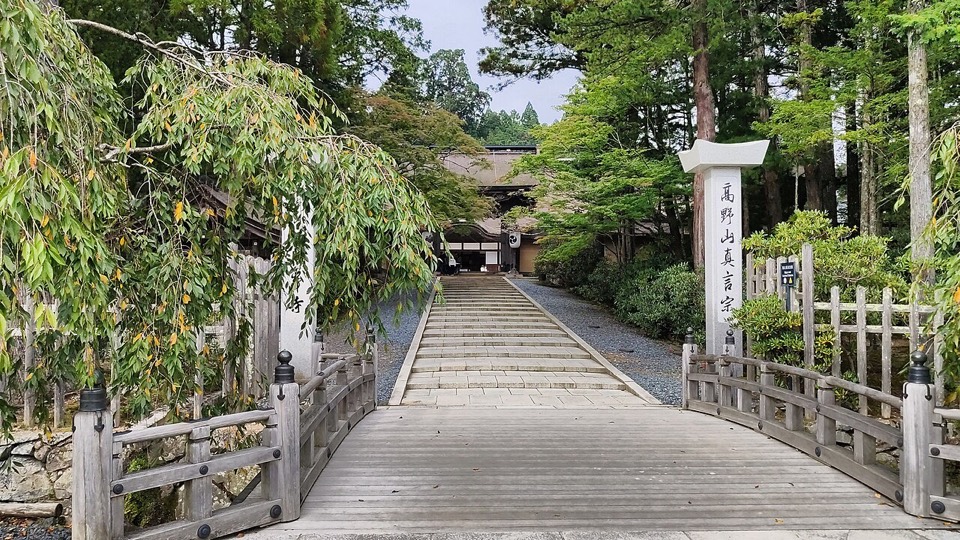
Photo: Drivephotographer · CC0 · Wikimedia Commons
17 Temples & shrines · Wakayama 和歌山
Mount Koya高野山
Mount Koya is the mountain monastery opened by the monk Kukai (774–835), one of Japan's 'Three Brushes'. Its head temple Kongobu-ji and the Reihokan Museum, which holds a National Treasure text in Kukai's own hand, make it a pilgrimage for calligraphers.
In 816 Emperor Saga granted the monk Kukai permission to build a retreat on Mount Koya. Kukai, honoured after his death as Kobo Daishi, is counted among the Sanpitsu, the 'Three Brushes' of the early Heian period, with Emperor Saga and Tachibana no Hayanari.
Kongobu-ji is the head temple of Koyasan Shingon Buddhism, and the mountain is part of the UNESCO World Heritage site 'Sacred Sites and Pilgrimage Routes in the Kii Mountain Range', inscribed in 2004.
The Koyasan Reihokan Museum, opened in 1921, preserves the mountain's treasures, including 21 National Treasures. Its calligraphy holdings include the Roko Shiiki, a two-scroll National Treasure that the museum describes as written in Kobo Daishi's own hand. Displays change with each exhibition, so check what is on view before you travel.
What to see
- Kongobu-ji, the head temple, at the heart of the mountain town
- The Reihokan Museum's calligraphy holdings, including the Roko Shiiki in Kukai's hand (displays rotate)
- The Danjo Garan precinct and the Okunoin cemetery
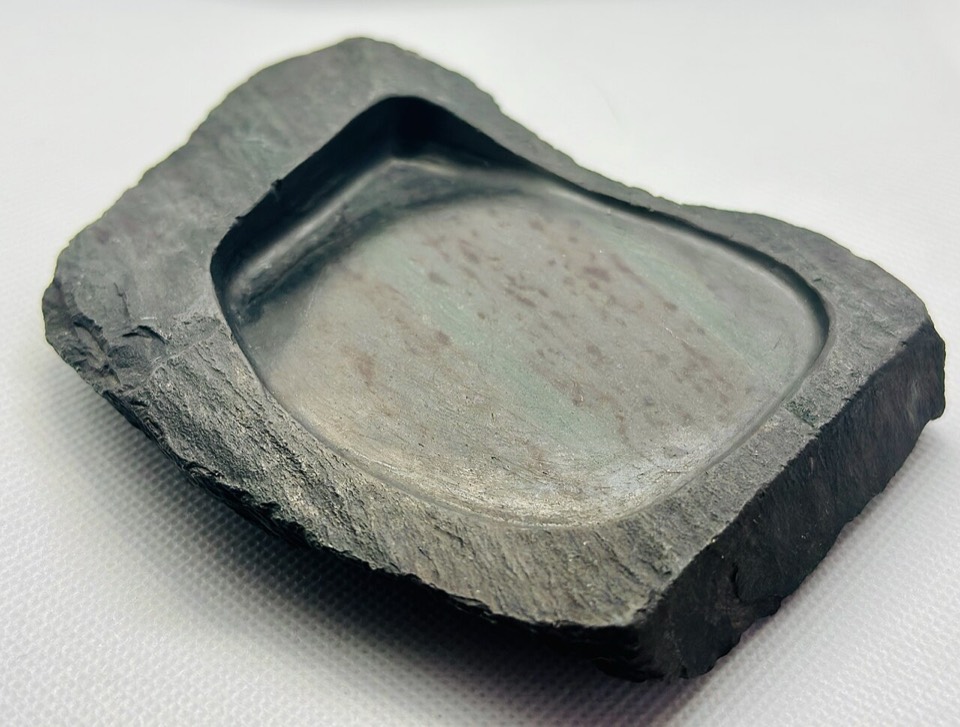
Photo: 海獺 · CC BY-SA 4.0 · Wikimedia Commons
18 Inkstones · Yamaguchi 山口
Akama inkstones赤間硯
Akama inkstones, carved from a rare red-tinted stone in Ube and Shimonoseki, Yamaguchi, were designated a Traditional Craft of Japan in 1976. The fine, slightly sticky stone grinds ink smoothly and allows elaborate carving; the makers' village at Iwataki can be visited by appointment.
Akama inkstones take their name from Akamagaseki, the old name of Shimonoseki. Tradition says one was offered to Tsurugaoka Hachimangu shrine in Kamakura in 1191, and production is confirmed from 1395. Quarrying moved to the mountains of Ube in the 18th century, and today the inkstones are made in Ube and Shimonoseki.
In 1976 the national government designated Akama inkstones a Traditional Craft of Japan, and in 2018 Yamaguchi Prefecture designated the technique an intangible cultural property. The stone is fine-grained and dense, so it grinds solid ink finely, and its slight stickiness allows three-dimensional carving and lidded inkstones.
Akama Inkstone Village in Iwataki, Ube, is run by the makers' cooperative. With an advance reservation, visitors can watch the whole process from raw stone to the finished piece and try carving.
What to see
- Watch craftsmen carve inkstones from raw Akama stone to the finished piece (reservation required)
- Try the hands-on carving corner
- The reddish Akama stone, including lidded and decoratively carved inkstones
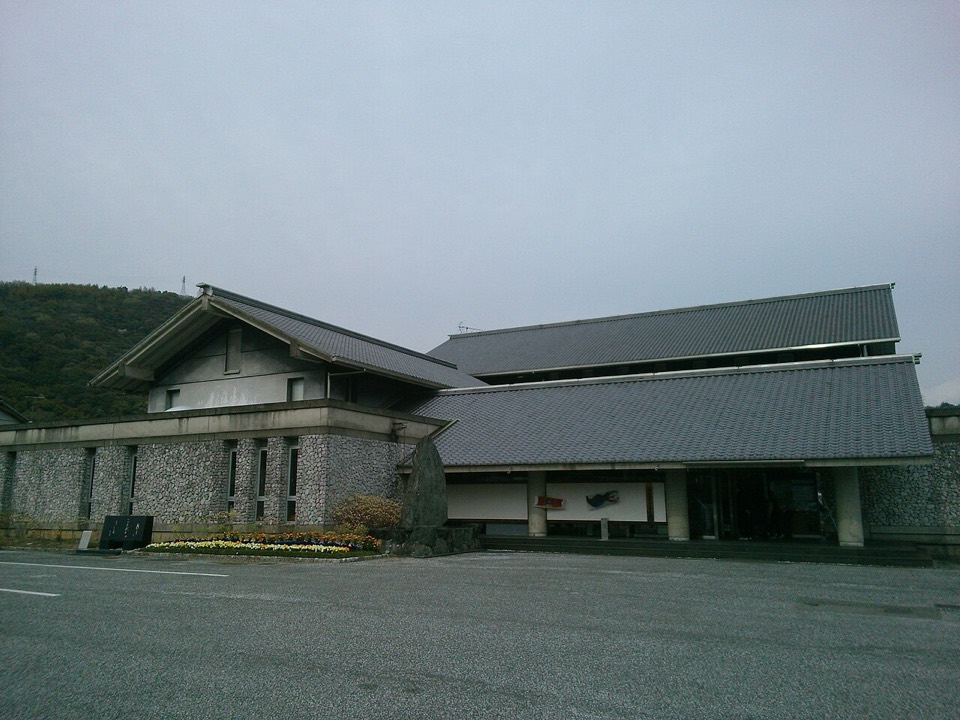
Photo: At by At · CC BY-SA 3.0 · Wikimedia Commons
19 Paper · Kochi 高知
Tosa washi土佐和紙
Tosa paper from Ino on the Niyodo River is first recorded in 927. Tosa tengujo, a kozo paper only about 0.03 mm thick, is called the thinnest hand-made paper in the world and is used to repair cultural treasures.
Ino, on the clear Niyodo River west of Kochi city, has been a paper town for more than a thousand years. The Engishiki of 927 lists Tosa paper, and in the Edo period coloured Tosa papers were presented to the shogunate. In the Meiji era Yoshii Genta improved the tools and devised new papers, among them tengujo.
Tosa tengujo, made from long-fibred Tosa kozo, is about 0.03 mm thick, so fine that it is compared to a mayfly's wing. Conservators around the world use it to repair cultural properties. Tosa washi was designated a Traditional Craft in 1976.
The Ino-cho Paper Museum shows the history, materials and tools of Tosa washi; a papermaker works in the hall, and visitors can make their own sheet. The museum is closed for renovation from 16 November 2026 to 31 March 2027.
What to see
- Exhibits on the history, materials and tools of Tosa washi
- Watch a papermaker at work and make your own sheet
- The museum shop, with ultra-thin tengujo (closed for renovation until 31 March 2027)
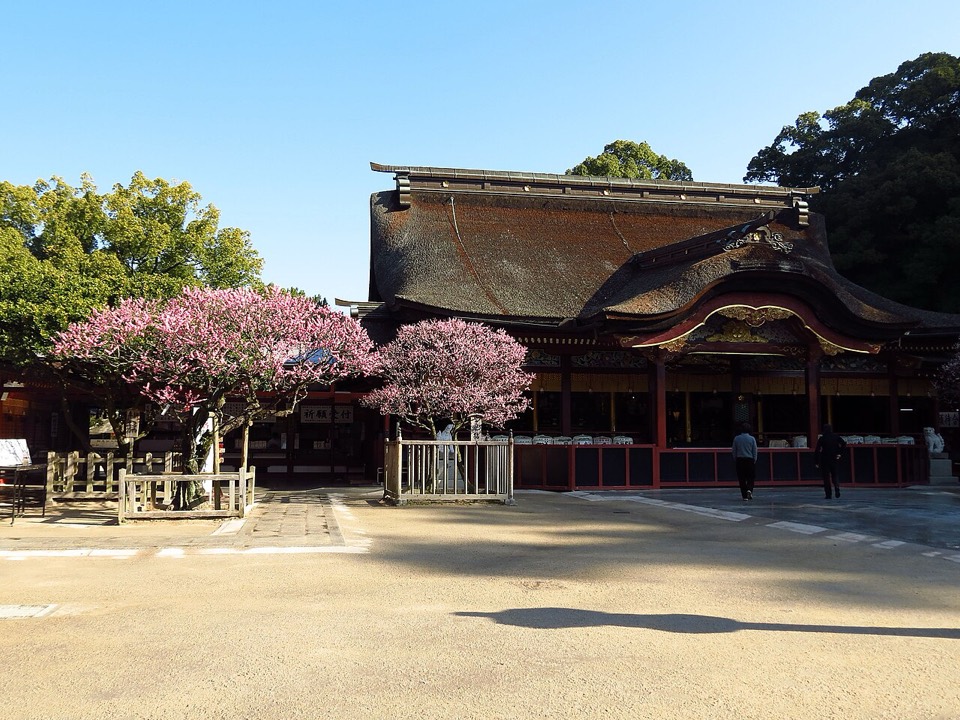
Photo: redlegsfan21 · CC BY-SA 2.0 · Wikimedia Commons
20 Temples & shrines · Fukuoka 福岡
Dazaifu Tenmangu太宰府天満宮
Dazaifu Tenmangu is built over the grave of Sugawara no Michizane, the Tenjin deity of learning, culture and the arts. Its main hall reopened in 2026 after its first major restoration in 124 years.
Sugawara no Michizane died in exile at Dazaifu in 903. A shrine hall was first built over his grave in 905, and the shrine still stands on that spot. Today Dazaifu Tenmangu calls itself the head shrine of the roughly 12,000 Tenjin shrines in Japan, honouring Michizane as the deity of learning, culture and the arts.
The main hall, an Important Cultural Property, had its first major restoration in 124 years from May 2023. The work was completed in May 2026, and in September 2026 the shrine reopened worship at the front of the main hall.
Michizane's link with the brush makes Dazaifu a natural end to a journey that begins at Kitano Tenmangu in Kyoto.
What to see
- The restored main hall, an Important Cultural Property
- The approach with its arched bridges and ponds
- The plum trees beside the main hall, in bloom from late January