
Shodo / Toyohashi fude 豊橋筆
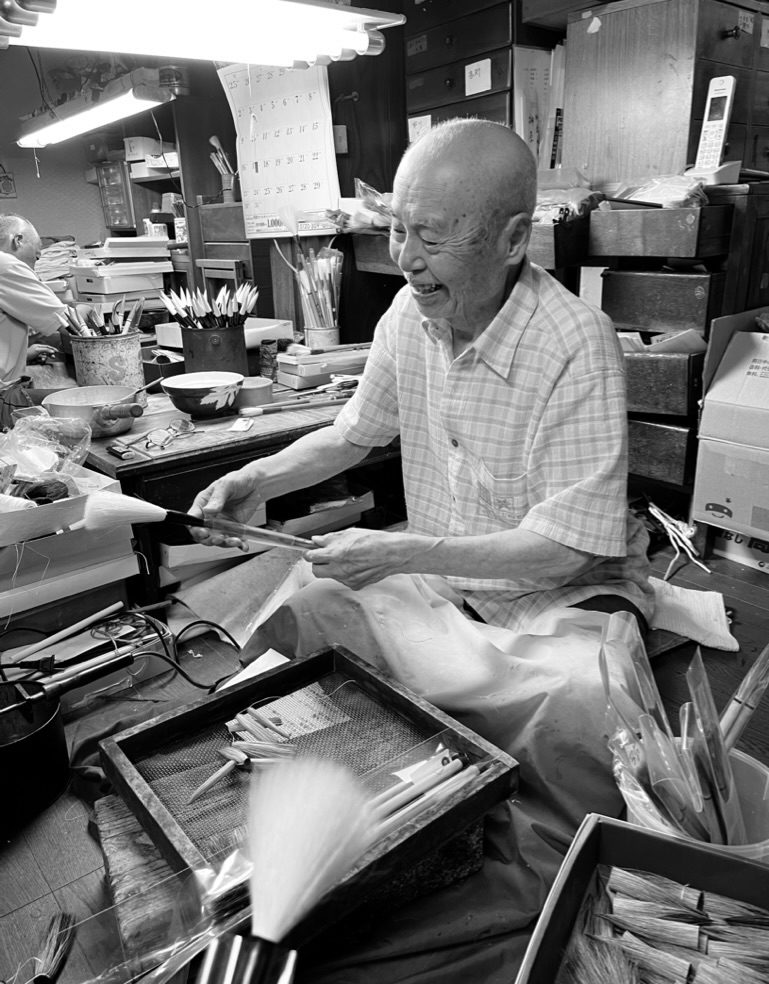
Inside a brush workshop in Toyohashi.
Our hometown has made calligraphy brushes by hand since 1804. We visited Sakakibara Mofude, a brush workshop in Toyohashi, to see how a brush is made.
A craft since 1804
Why Toyohashi makes brushes
In 1804, a brushmaker from Kyoto named Suzuki Jinzaemon was invited to the Yoshida domain, the old name of Toyohashi. The craft took root, and the city has made brushes ever since.
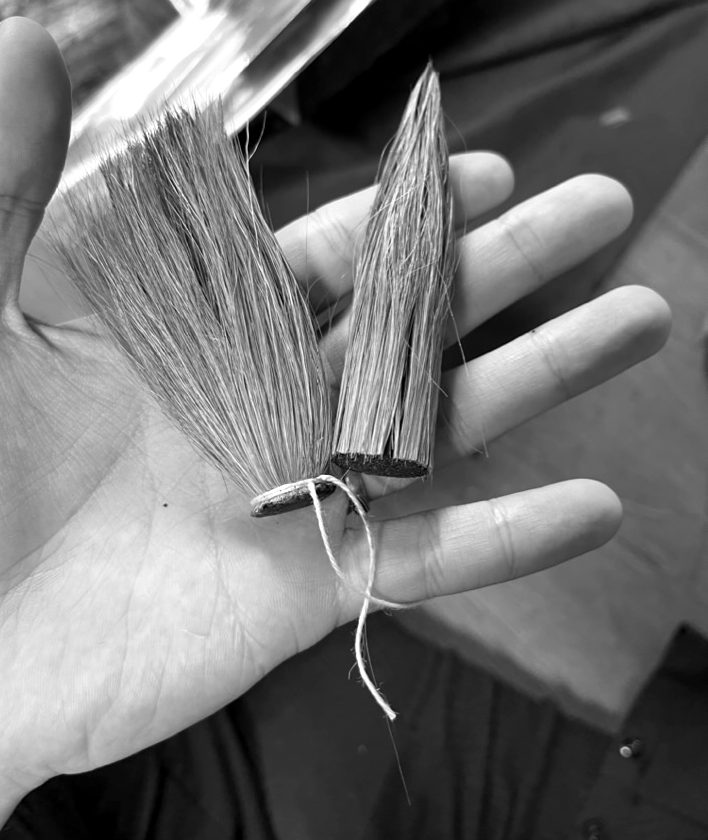
Craftsmen mix the hairs by hand in water, a method called neri-mase. It gives the brush an even body that holds ink well and comes back to a fine point. Making one brush takes about 36 steps, all done by hand.
- 1804Brushmaking begins in Toyohashi
- 1976Designated a Traditional Craft of Japan
- About 36Steps to make one brush, all by hand
- MostOf Japan’s high-grade calligraphy brushes are made here
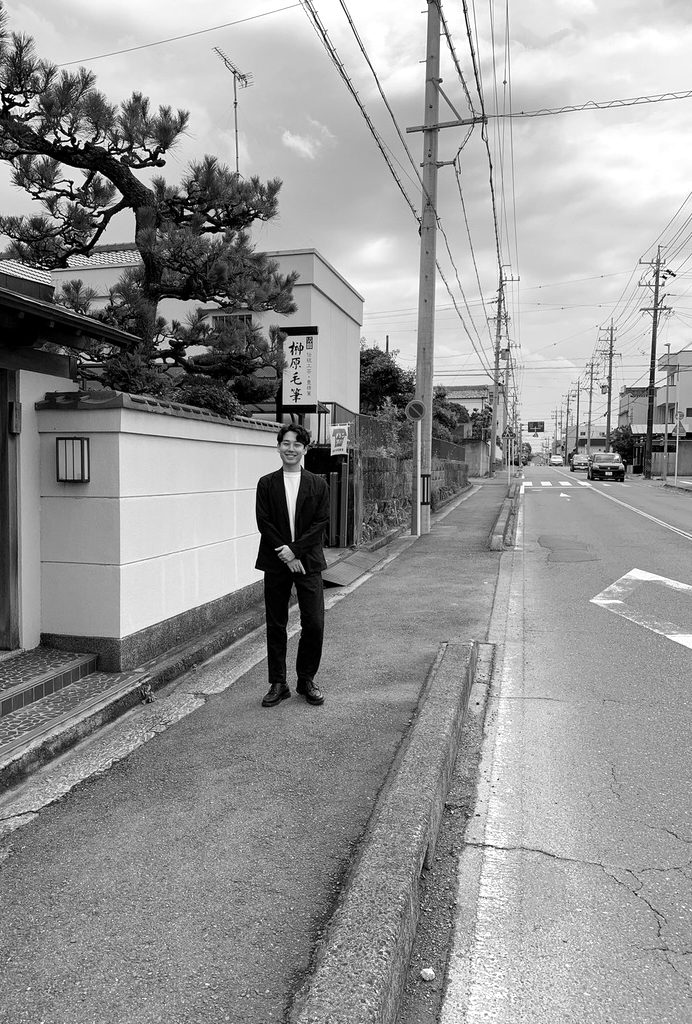
The workshop 榊原毛筆
Sakakibara Mofude
The sign by the gate reads 伝統工芸士・豊橋筆: certified traditional craftsman, Toyohashi brushes.
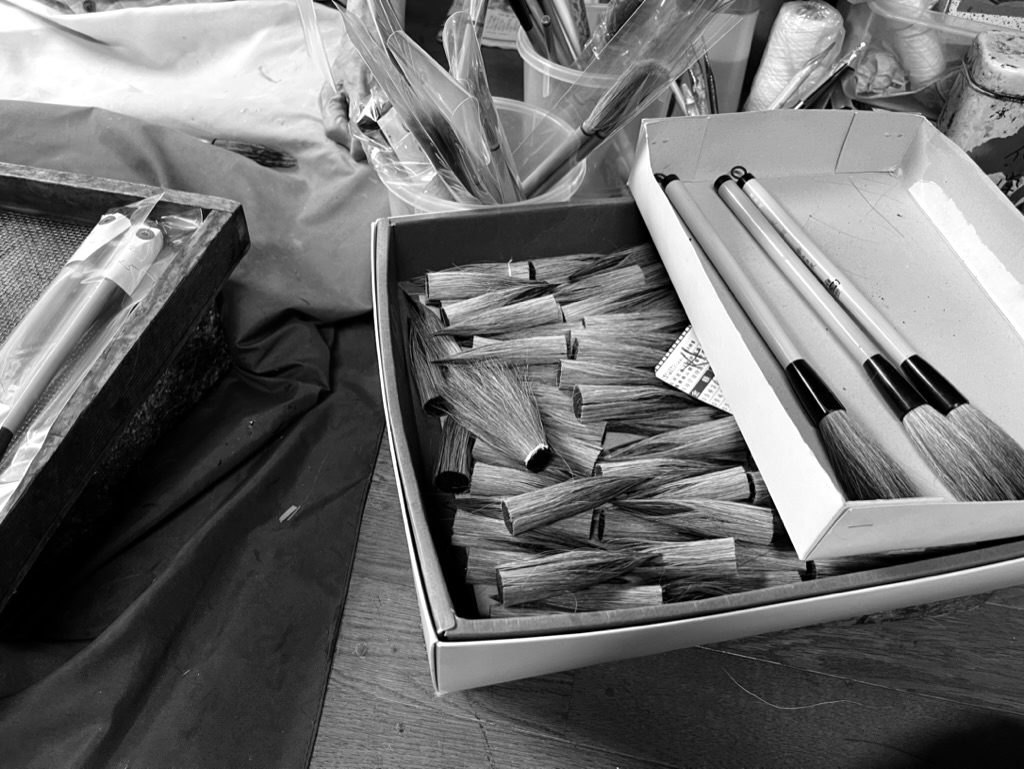
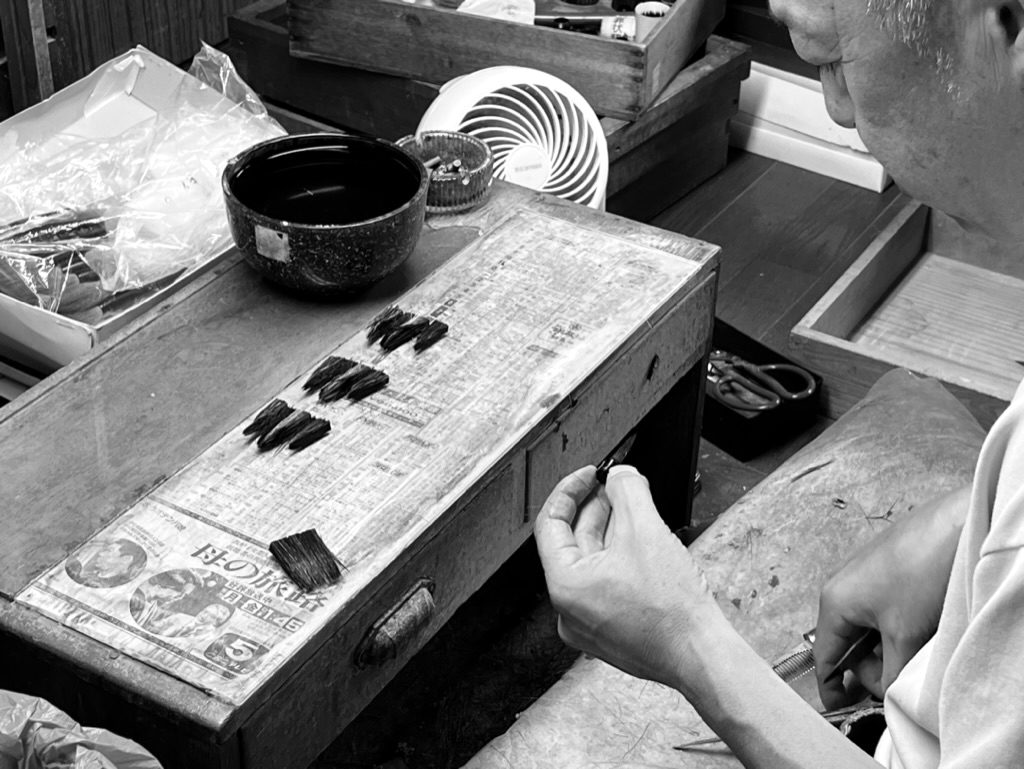
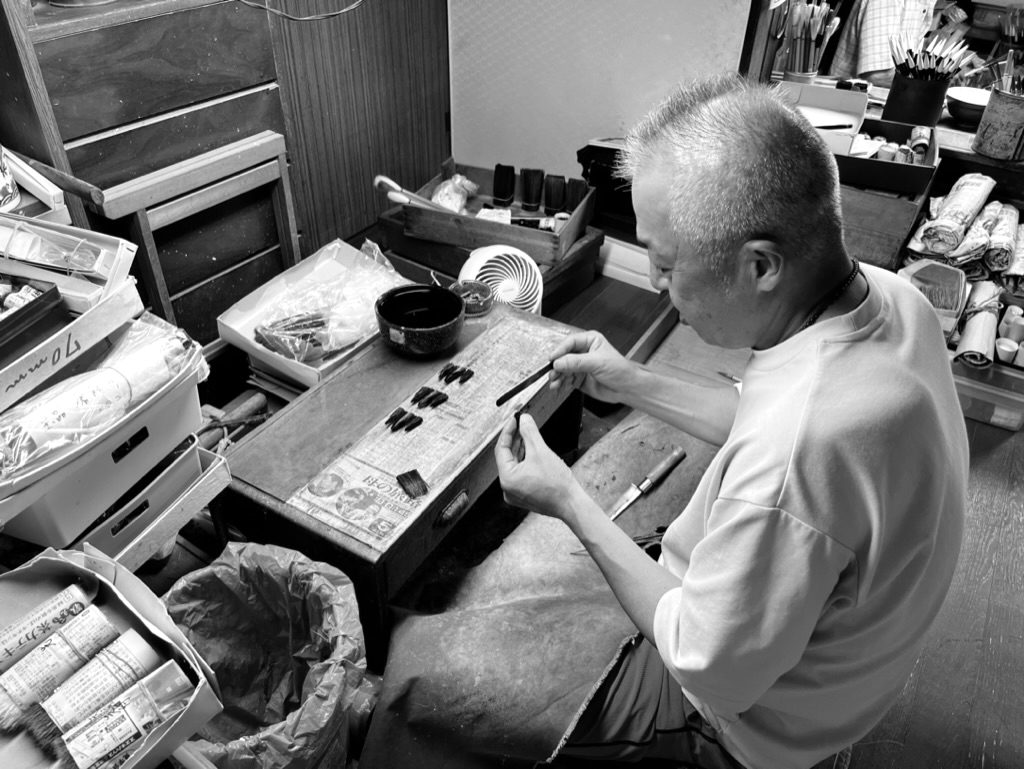
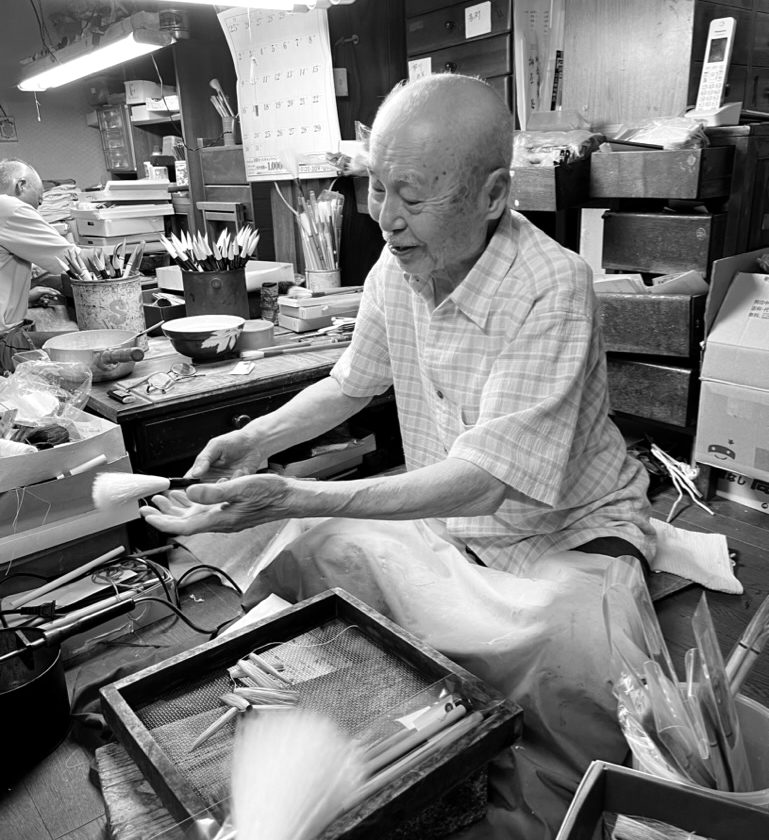
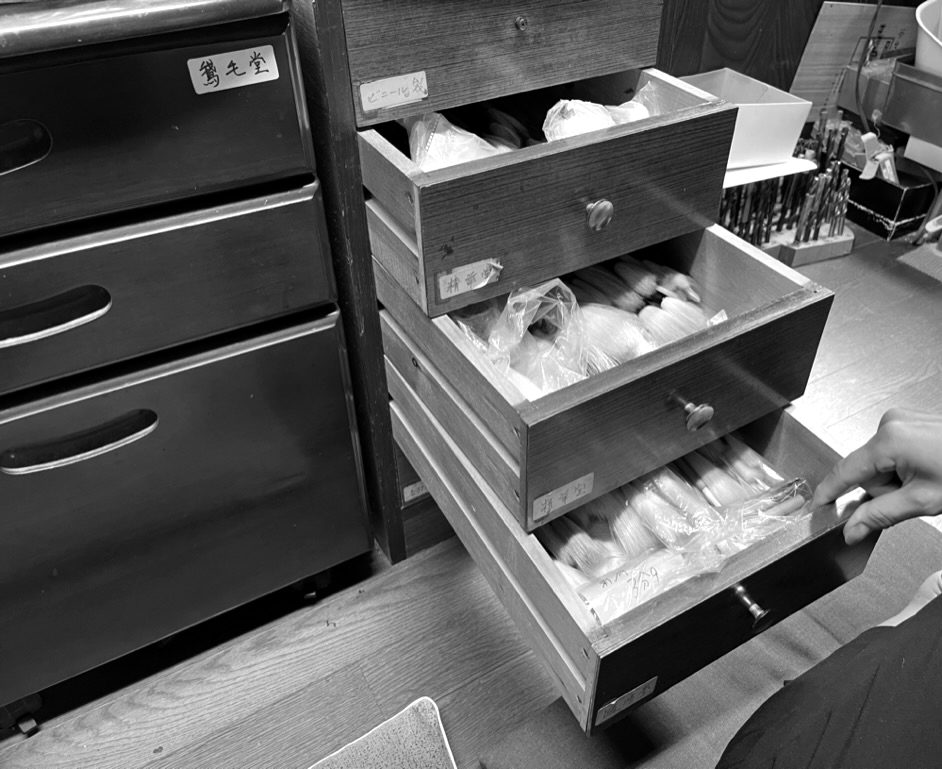
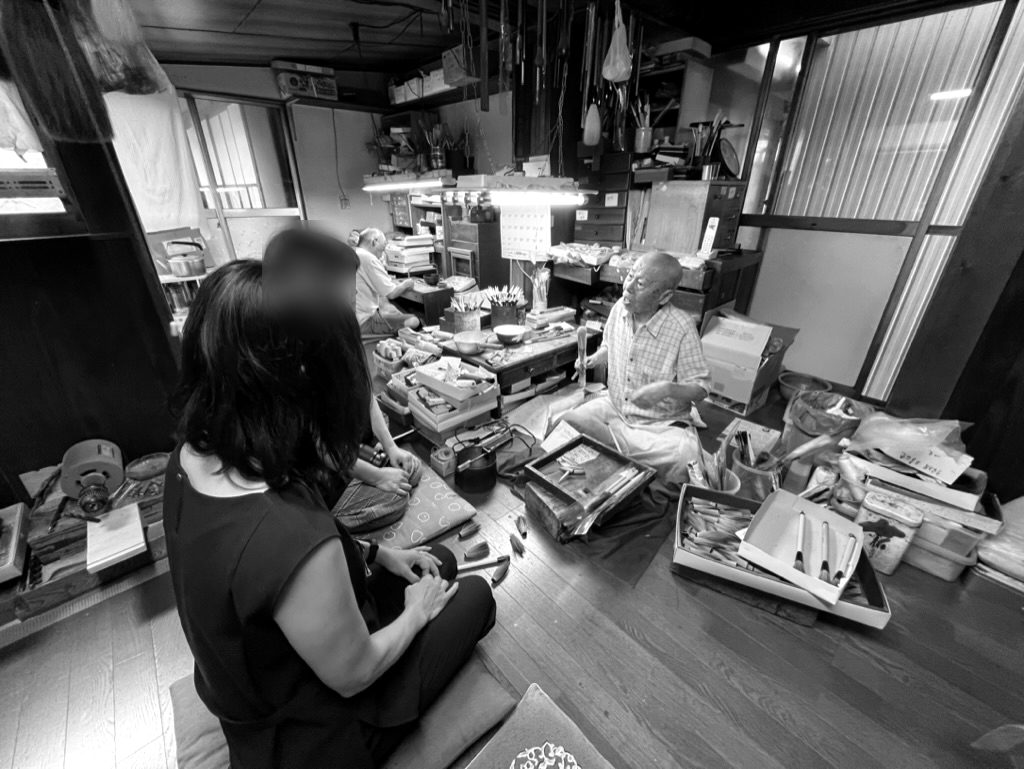
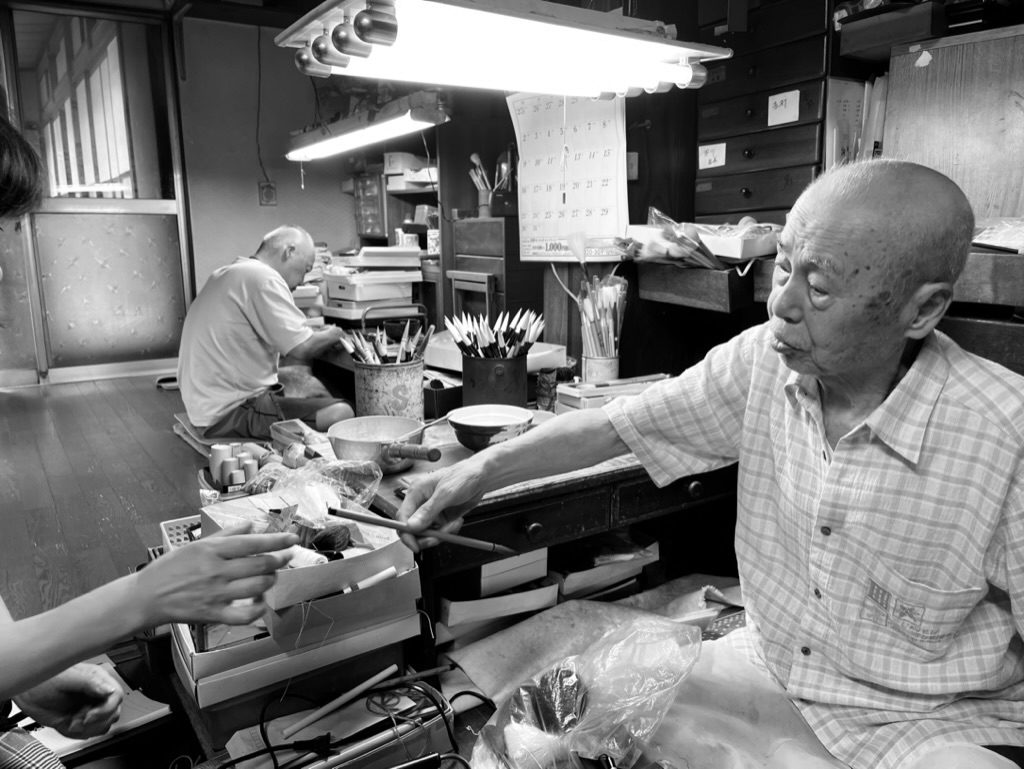
Inside, craftsmen work at low desks on the floor. Brushes hang from the ceiling, finished ones stand in cans on every desk, and brush heads wait in boxes and bags along the walls.
What we saw
From a bundle of hair to a brush
Our visit
Brush after brush, in our hands
We sat on the workshop floor while the senior craftsman talked us through his work. He passed us brush after brush, large and small, and showed us how each one should feel in the hand.
Our teachers use brushes like these every week. Seeing how they are made is part of how we choose the brushes for our sets.
For your practice
Why a good brush matters
A good brush holds ink evenly and springs back to a sharp point after every stroke. That is what lets a beginner feel the difference between pressing, pulling and lifting the brush.
Our Toyohashi Set includes a large brush handmade in Toyohashi. Made-to-order master brushes from Toyohashi craftsmen are coming soon.