
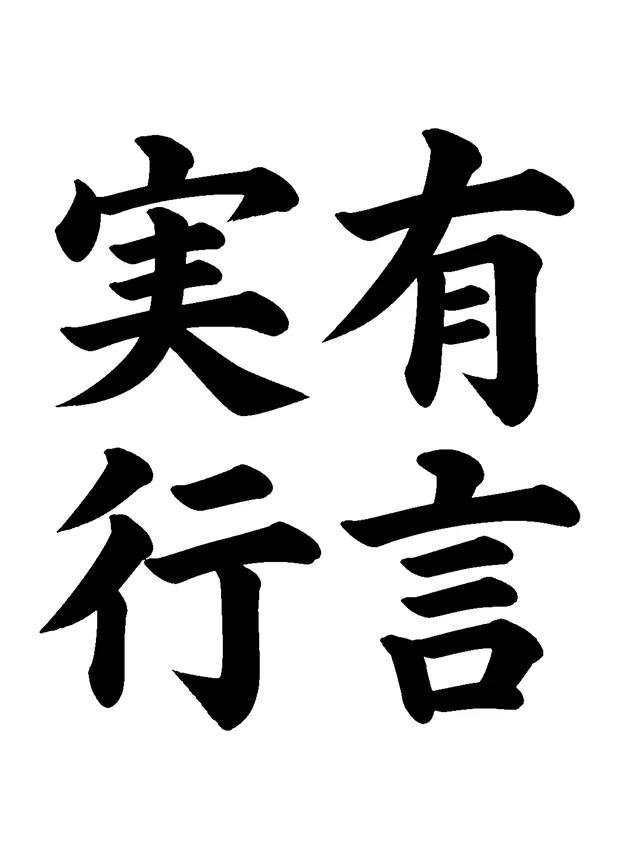
Do What You Say 有言実行
yūgen jikkō4 characters27 strokes
有言実行 (yūgen jikkō) means saying out loud what you will do and then making sure you do it, just as you said.
Free practice sheet
Print at 100%, actual size. Enter your email once and every free sheet downloads right away.
Meaning 意味
What 有言実行 means
A Japanese four-character idiom, yojijukugo, read yūgen jikkō.
LiterallySaying it, carrying it out.
有言実行 means following through on what you have said you will do. You state your goal out loud and then act exactly as you said.
Unlike 不言実行 (fugen jikkō), which means acting quietly without announcing it, this phrase asks you to declare your goal first.
“This year I told everyone I would practice every day, and I am determined to make it yūgen jikkō.”
When people write it in Japan. It fits a New Year resolution you want to announce, or any piece about seeing a decision through to the end.
Japanese children know every kanji here by 3rd grade.
How to write it 書き方
Brush tips for 有言実行
Regular script (kaisho)
- The 1st stroke of 有 is the sweep down to the left, and the horizontal comes after it, the same stroke order as 右. Make that sweep long and free.
- Of the three horizontals at the top of 言, make the highest one the longest. Keep the lower two shorter and space all three evenly.
- In 実, write the roof radical on top (ukanmuri) wide. Extend the final sweep to the right long so it gives the bottom of the character a solid base.
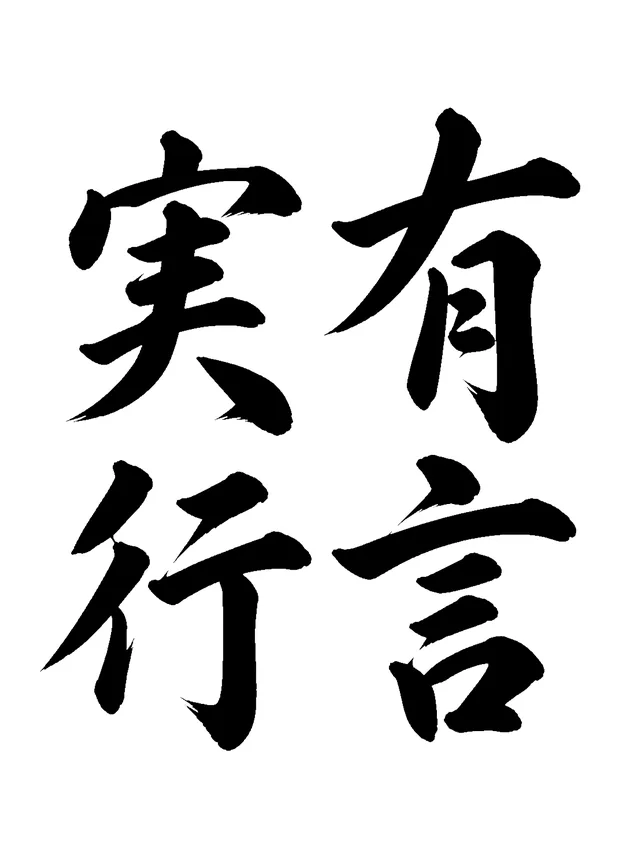
Semi-cursive script (gyōsho)
- In 有, write the 月 at the bottom so its two inner horizontals seem to connect, following the flow of the brush.
- In 言, round the corners of the 口 at the bottom and let it flow from left to right. Do not crowd it against the horizontals above.
- In 行, move the brush from top to bottom on the left side so the strokes feel linked together.
Stroke order
Follow the vermilion stroke, frame by frame.
Stroke order data: KanjiVG by Ulrich Apel, CC BY-SA 3.0.
How to practice 練習
Trace first, then copy
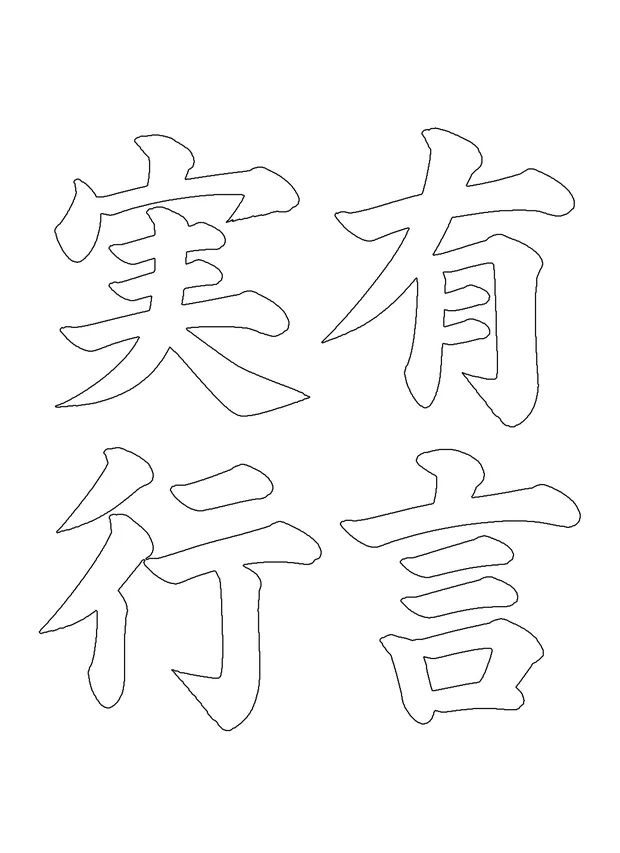
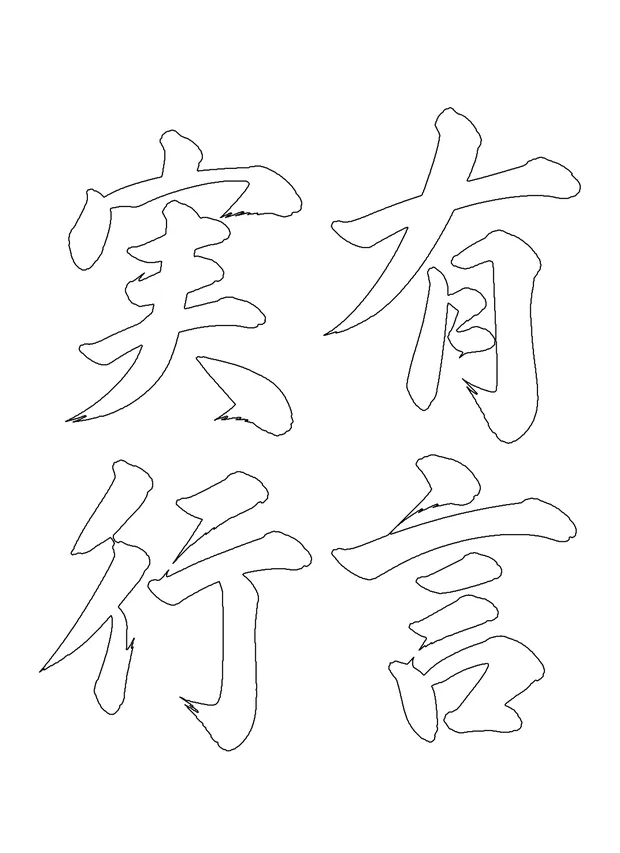
- PrintPrint both pages at actual size, on US Letter or A4. Page 1 is the model. Page 2 is the tracing sheet.
- TraceTrace the outlines with a brush pen. Or lay thin hanshi paper over the page and trace with brush and ink.
- CopySet the model beside your paper and copy it stroke by stroke. Look at the model more than at your own paper.
Free for personal practice and classroom use. Please do not sell or re-post the files. Share a link to this page instead.
More free sheets
Proverbs & idioms
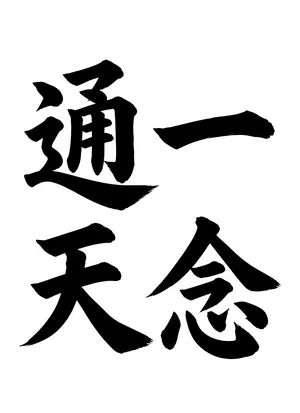 A Strong Will Reaches Heaven一念通天 · ichinen tsūten
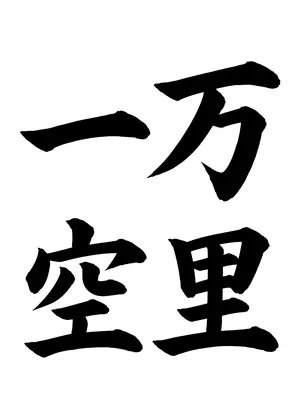 One Sky over Ten Thousand Miles万里一空 · banri ikkū
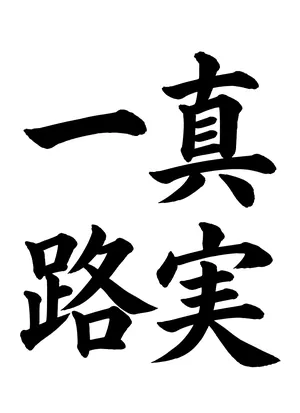 One Straight Path of Truth真実一路 · shinjitsu ichiro+ Semi-cursive
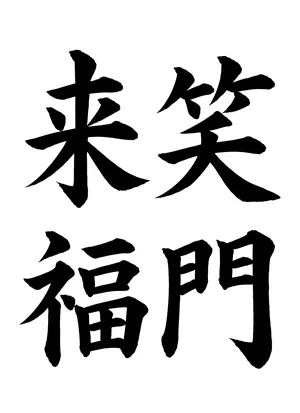 Laughter Brings Good Fortune笑門来福 · shōmon raifuku
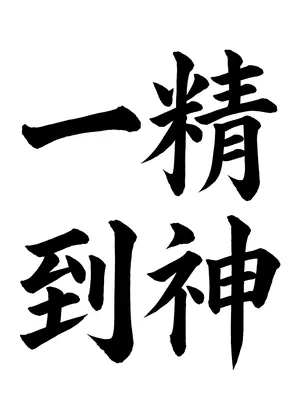 A Focused Mind Achieves Anything精神一到 · seishin ittō
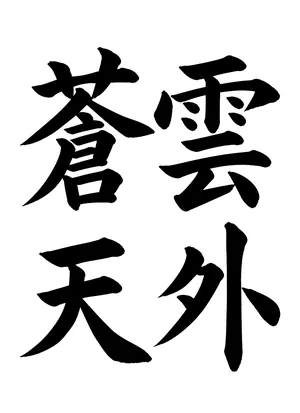 Blue Sky Beyond the Clouds雲外蒼天 · ungai sōten
While the sets are on their way
The book is out now.
Japanese Calligraphy for Beginners takes you from holding the brush to writing whole words, step by step, in English. Every model inside was brushed by our teachers.
Starter Set, $72.99 with the book, brush, ink and paper: coming soon.