
Fall Seven Times, Rise Eight 七転び八起き
nanakorobi yaoki6 characters32 strokes
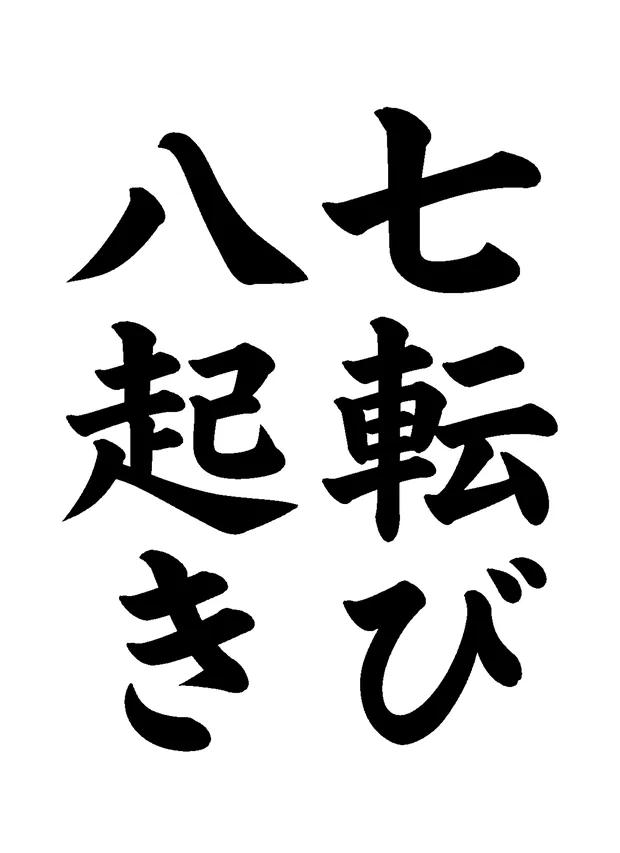
七転び八起き (nanakorobi yaoki) means to fall seven times and get up eight: however often you fail, you rise again and keep going.
Free practice sheet
Print at 100%, actual size. Enter your email once and every free sheet downloads right away.
Meaning 意味
What 七転び八起き means
A Japanese saying, read nanakorobi yaoki.
LiterallySeven falls, eight risings.
七転び八起き is a proverb about never giving up. No matter how many times you fail, you get back up each time and keep trying.
The hiragana び and き complete the words 転び, "falling," and 起き, "rising."
“I have failed the exam twice, but as they say, nanakorobi yaoki, so I am signing up again.”
When people write it in Japan. People in Japan write it to show a resolve to keep going without giving up, often as a goal for the New Year.
Japanese children know every kanji here by 3rd grade.
How to write it 書き方
Brush tips for 七転び八起き
Regular script (kaisho)
- 七 has 2 strokes. The 2nd stroke, a vertical, bends at the bottom, runs to the right, and flicks up.
- In 転, keep the vehicle radical on the left (kurumahen) long and narrow. Leave a little space between it and the part on the right.
- Write the hiragana び and き a little smaller than the kanji. This keeps the column of characters neatly balanced.
Semi-cursive script (gyōsho)
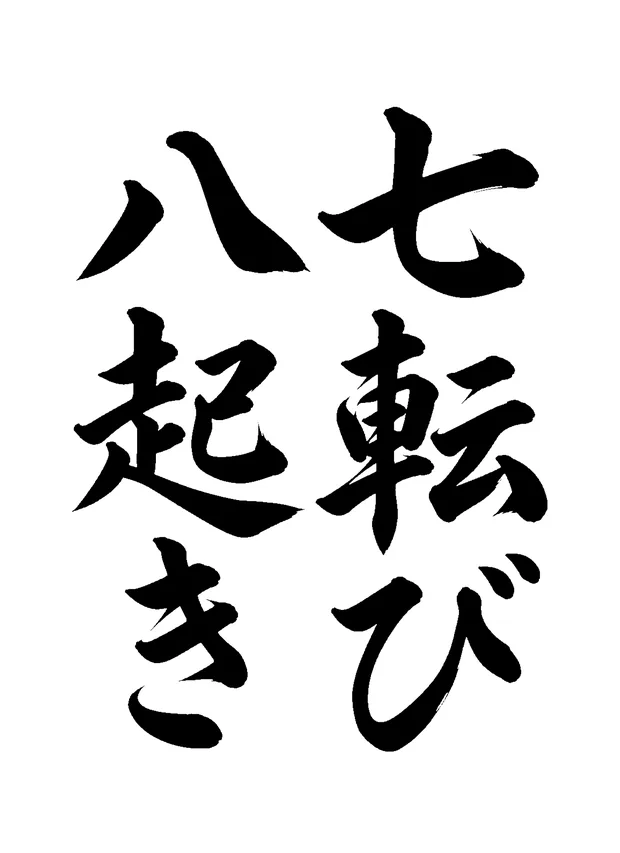
- Write the final bend of 七 large and relaxed, then flick up.
- In 転, write the vehicle radical on the left (kurumahen) long and narrow, linking its strokes as you go.
- In 起, extend the run radical on the left and bottom (sōnyō) long to the lower right so it supports the part above. Keep the hiragana small.
Stroke order
Follow the vermilion stroke, frame by frame.
Stroke order data: KanjiVG by Ulrich Apel, CC BY-SA 3.0.
How to practice 練習
Trace first, then copy
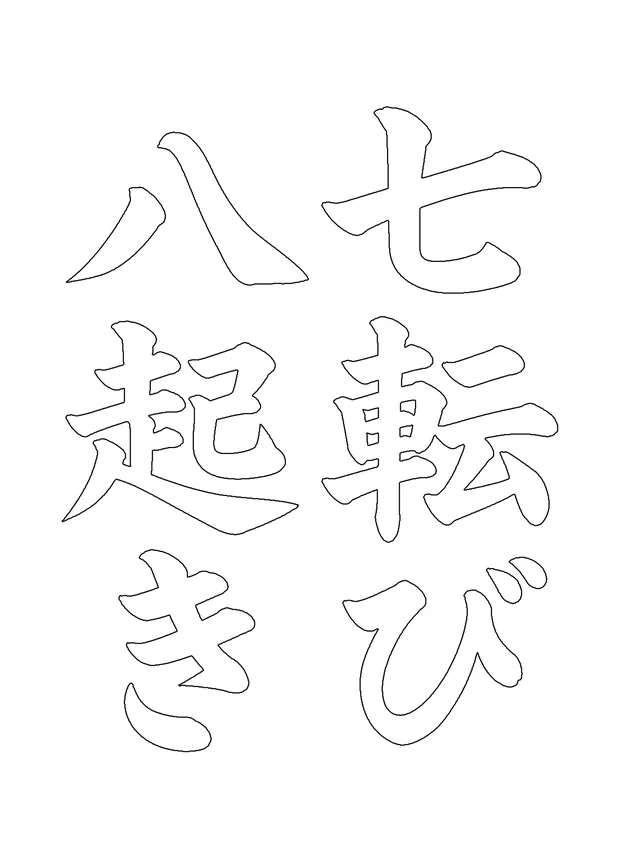
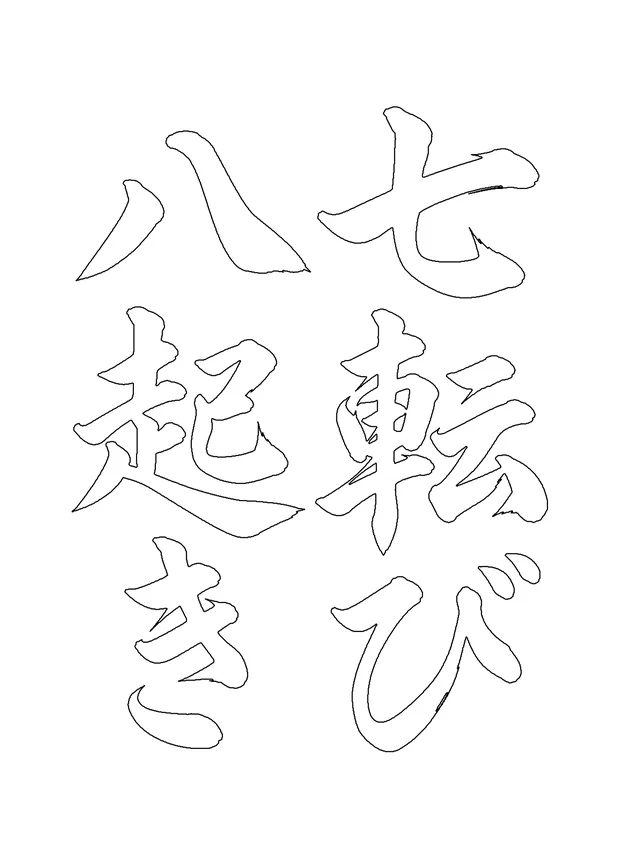
- PrintPrint both pages at actual size, on US Letter or A4. Page 1 is the model. Page 2 is the tracing sheet.
- TraceTrace the outlines with a brush pen. Or lay thin hanshi paper over the page and trace with brush and ink.
- CopySet the model beside your paper and copy it stroke by stroke. Look at the model more than at your own paper.
Free for personal practice and classroom use. Please do not sell or re-post the files. Share a link to this page instead.
More free sheets
Proverbs & idioms
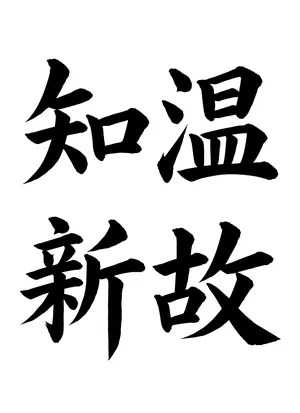 Learn the Old, Know the New温故知新 · onko chishin+ Semi-cursive
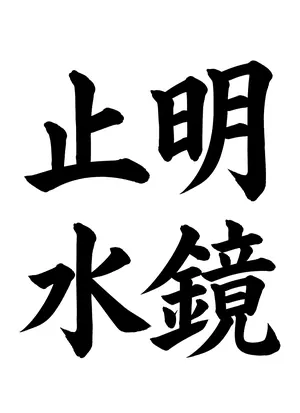 A Clear Mirror and Still Water明鏡止水 · meikyō shisui+ Semi-cursive
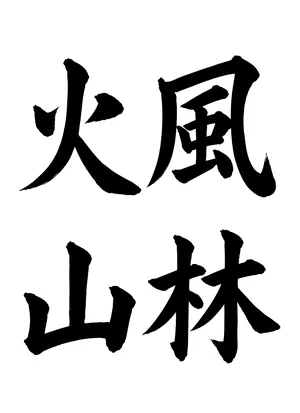 Wind, Forest, Fire, Mountain風林火山 · fūrin kazan
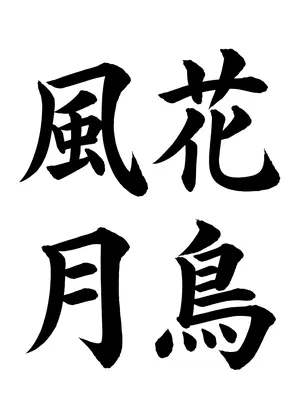 Flower, Bird, Wind, Moon花鳥風月 · kachō fūgetsu+ Semi-cursive
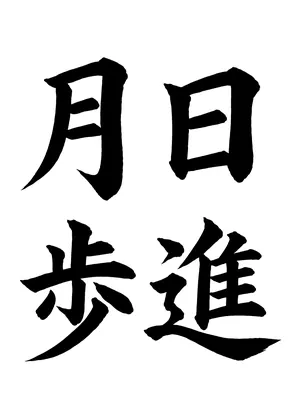 Constant Progress日進月歩 · nisshin geppo+ Semi-cursive
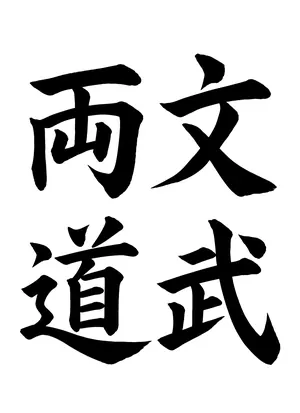 Pen and Sword文武両道 · bunbu ryōdō+ Semi-cursive
While the sets are on their way
The book is out now.
Japanese Calligraphy for Beginners takes you from holding the brush to writing whole words, step by step, in English. Every model inside was brushed by our teachers.
Starter Set, $72.99 with the book, brush, ink and paper: coming soon.