
Learn the Old, Know the New 温故知新
onko chishin4 characters42 strokes
温故知新 (onko chishin) means learning the old to understand the new: study the past well and you will find fresh ideas and wisdom in it.
Free practice sheet
Print at 100%, actual size. Enter your email once and every free sheet downloads right away.
Meaning 意味
What 温故知新 means
A Japanese four-character idiom, yojijukugo, read onko chishin.
LiterallyRevisit the old, know the new.
温故知新 means studying the past carefully and drawing new ideas and wisdom from it. What came before is not left behind; it becomes the ground for new understanding.
Where it comes from. It comes from the Analects of Confucius, in the Wei Zheng chapter: "Review the old and know the new, and you may become a teacher."
“In the spirit of onko chishin, I study classic calligraphy to find ideas for my own work.”
When people write it in Japan. It is a popular choice for New Year goals and for pieces about study, reading or learning of any kind.
Japanese children know every kanji here by 5th grade.
How to write it 書き方
Brush tips for 温故知新
Regular script (kaisho)
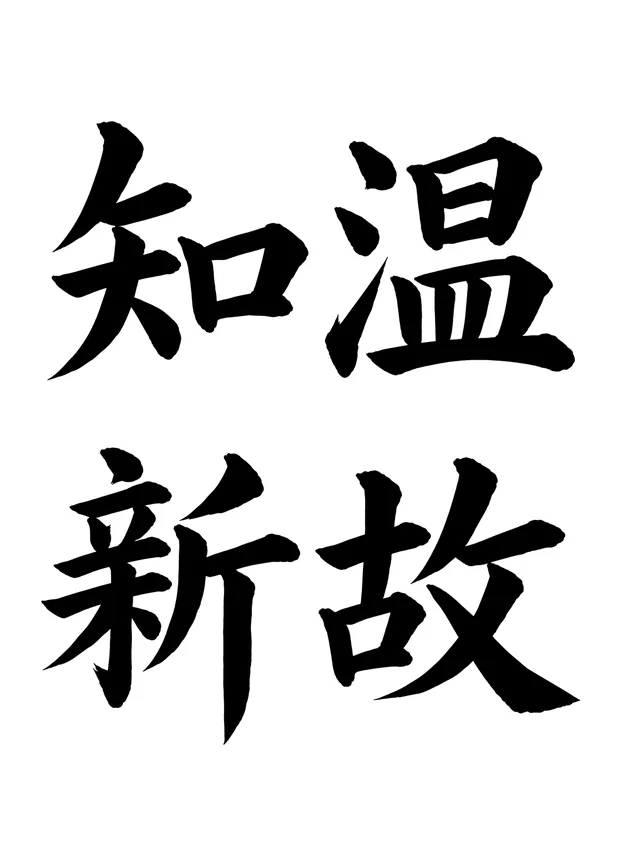
- In 温, write the 皿 at the bottom wide. Make the 12th stroke, its bottom horizontal, the longest so it supports the character.
- In the 攵 on the right of 故 (nobun), sweep the 9th stroke long down to the right.
- In 知, extend the 4th stroke of 矢 on the left, a sweep down to the left. Keep the 口 on the right small and compact.
Semi-cursive script (gyōsho)
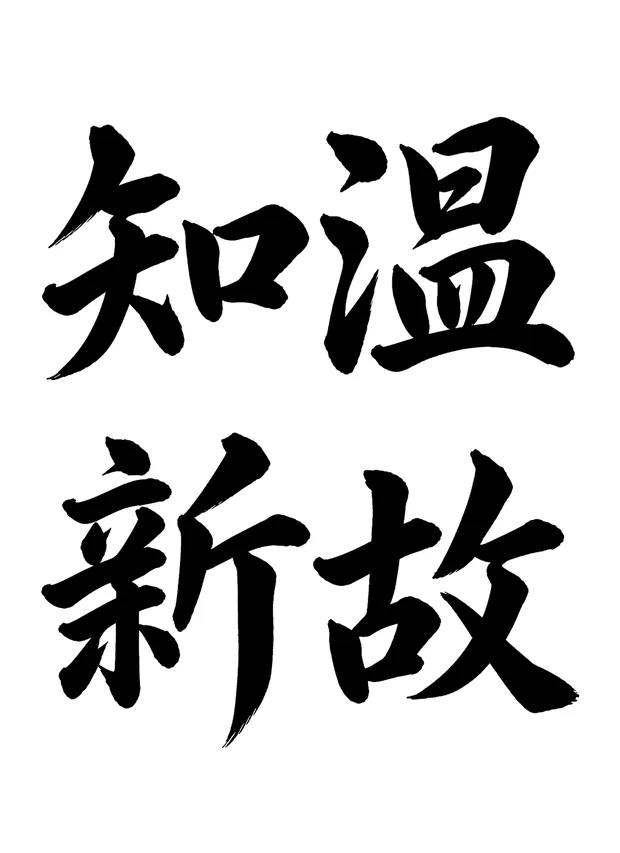
- In 温, the water radical on the left (sanzui) has three dots. The lower two join in one check-mark shape, like the katakana レ, and flick up to the upper right.
- In 故, keep 古 on the left fairly narrow. On the right, let the sweep of 攵 run big and long down to the right.
- In 知, let the sweep to the left in 矢, on the left side, run long. Keep 口 on the right small and set it at mid height.
Stroke order
Follow the vermilion stroke, frame by frame.
Stroke order data: KanjiVG by Ulrich Apel, CC BY-SA 3.0.
How to practice 練習
Trace first, then copy
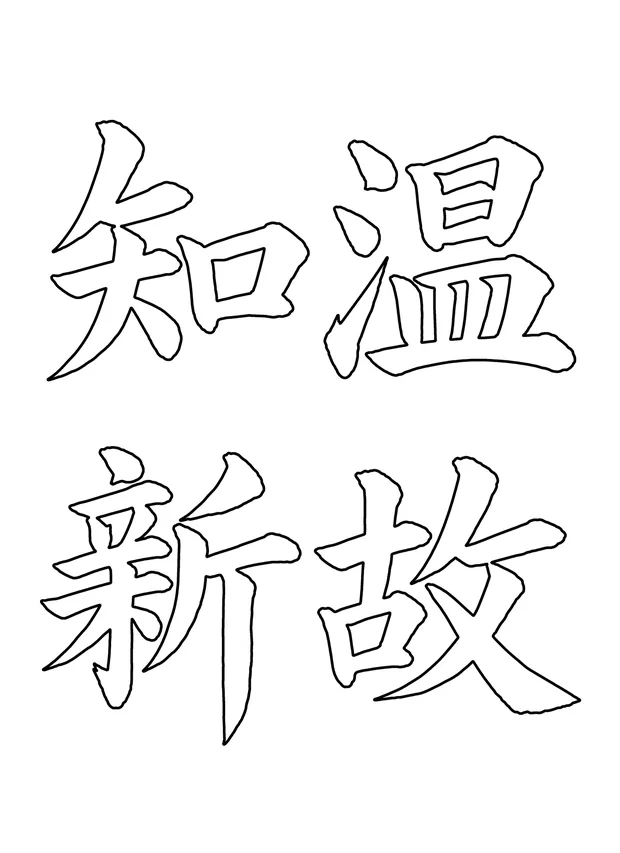
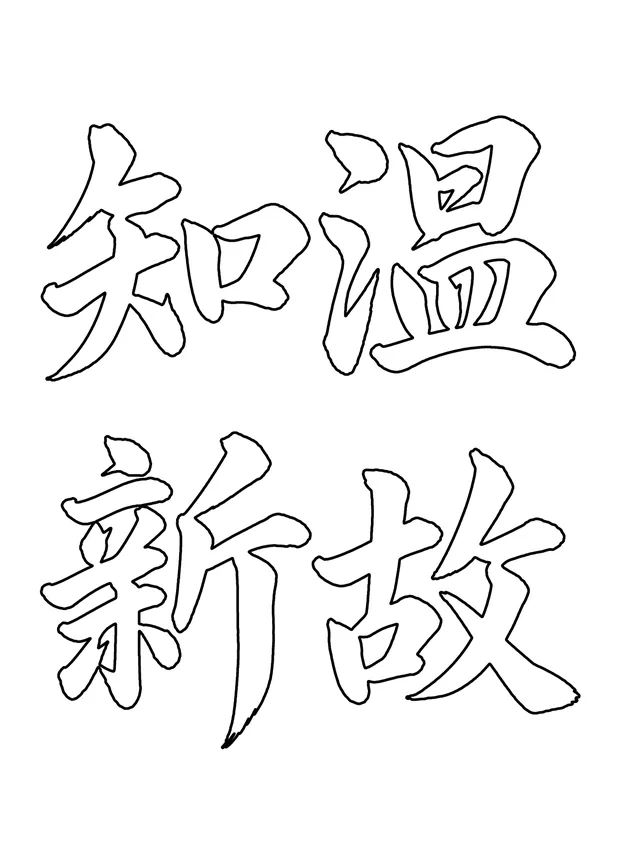
- PrintPrint both pages at actual size, on US Letter or A4. Page 1 is the model. Page 2 is the tracing sheet.
- TraceTrace the outlines with a brush pen. Or lay thin hanshi paper over the page and trace with brush and ink.
- CopySet the model beside your paper and copy it stroke by stroke. Look at the model more than at your own paper.
Free for personal practice and classroom use. Please do not sell or re-post the files. Share a link to this page instead.
More free sheets
Proverbs & idioms
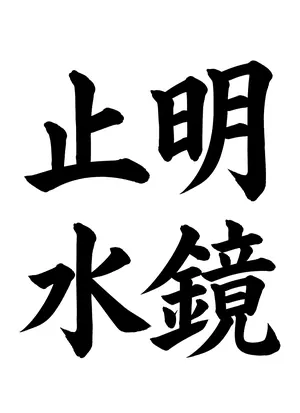 A Clear Mirror and Still Water明鏡止水 · meikyō shisui+ Semi-cursive
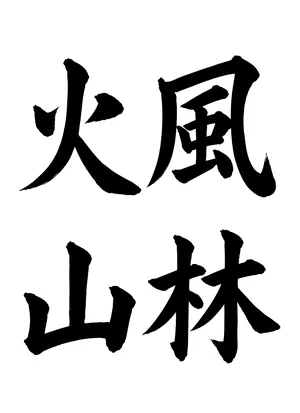 Wind, Forest, Fire, Mountain風林火山 · fūrin kazan
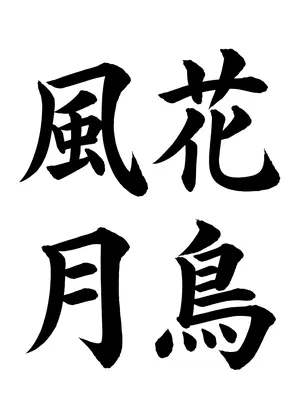 Flower, Bird, Wind, Moon花鳥風月 · kachō fūgetsu+ Semi-cursive
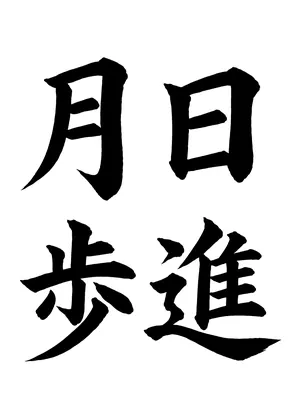 Constant Progress日進月歩 · nisshin geppo+ Semi-cursive
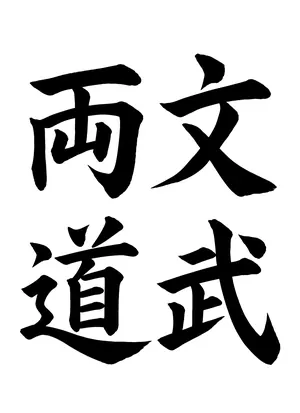 Pen and Sword文武両道 · bunbu ryōdō+ Semi-cursive
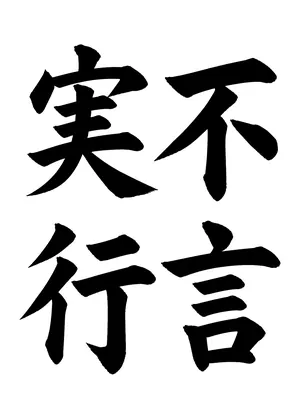 Actions, Not Words不言実行 · fugen jikkō+ Semi-cursive
While the sets are on their way
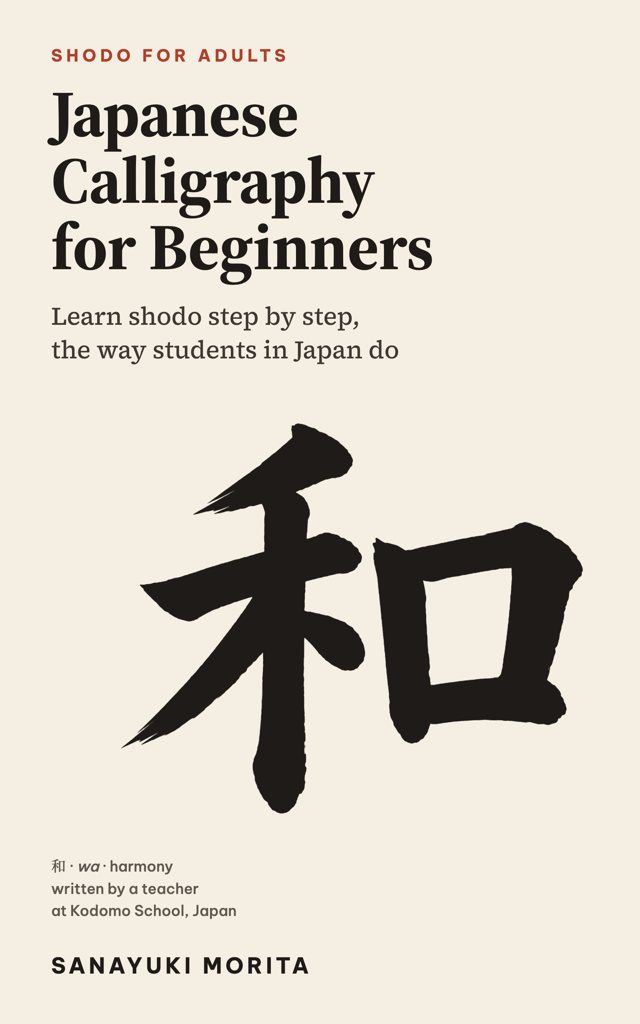
The book is out now.
Japanese Calligraphy for Beginners takes you from holding the brush to writing whole words, step by step, in English. Every model inside was brushed by our teachers.
Starter Set, $72.99 with the book, brush, ink and paper: coming soon.