
Pen and Sword 文武両道
bunbu ryōdō4 characters30 strokes
文武両道 (bunbu ryōdō) means excelling in both scholarship and martial arts; today it also means doing your best at both study and sports.
Free practice sheet
Print at 100%, actual size. Enter your email once and every free sheet downloads right away.
Meaning 意味
What 文武両道 means
A Japanese four-character idiom, yojijukugo, read bunbu ryōdō.
LiterallyLetters and arms, both ways.
文武両道 means being skilled in both learning (文, the pen) and martial arts (武, the sword). Today it is widely used for people who work hard at both their studies and sports.
“My daughter wants to be bunbu ryōdō, keeping up her grades while playing on the soccer team.”
When people write it in Japan. It is a favorite motto for students who want to do well both in class and in sports, and a popular New Year goal.
Japanese children know every kanji here by 5th grade.
How to write it 書き方
Brush tips for 文武両道
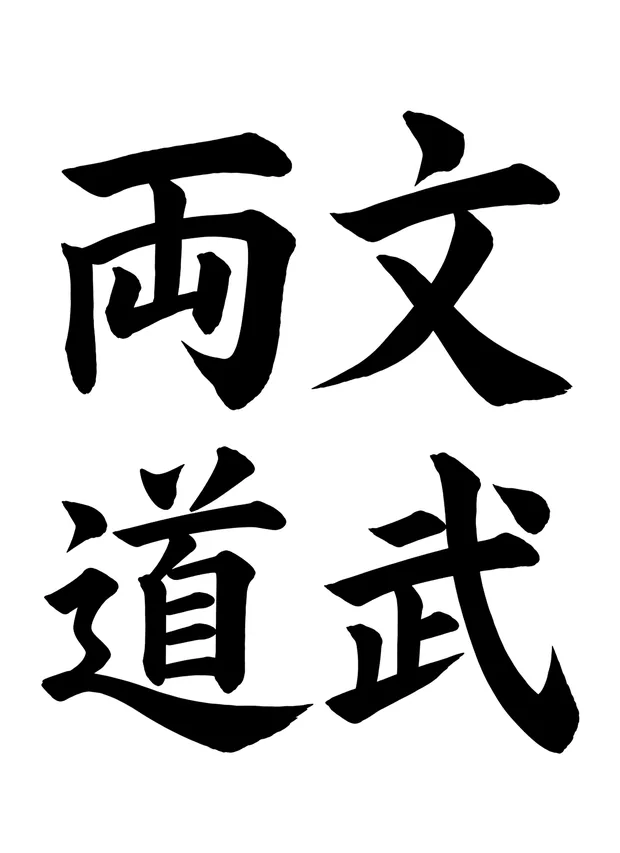
Regular script (kaisho)
- In 文, cross the 3rd stroke, a sweep down to the left, with the 4th stroke, a sweep down to the right. Spread them wide on both sides.
- In 武, the 7th stroke is a bowed, curving stroke (sori). Extend it down to the right and flick up, then place the 8th stroke, the final dot, at the upper right.
- In 道, sweep the 12th stroke, the last stroke of the road radical (shinnyō), long to the right. Let 首 sit on top of it.
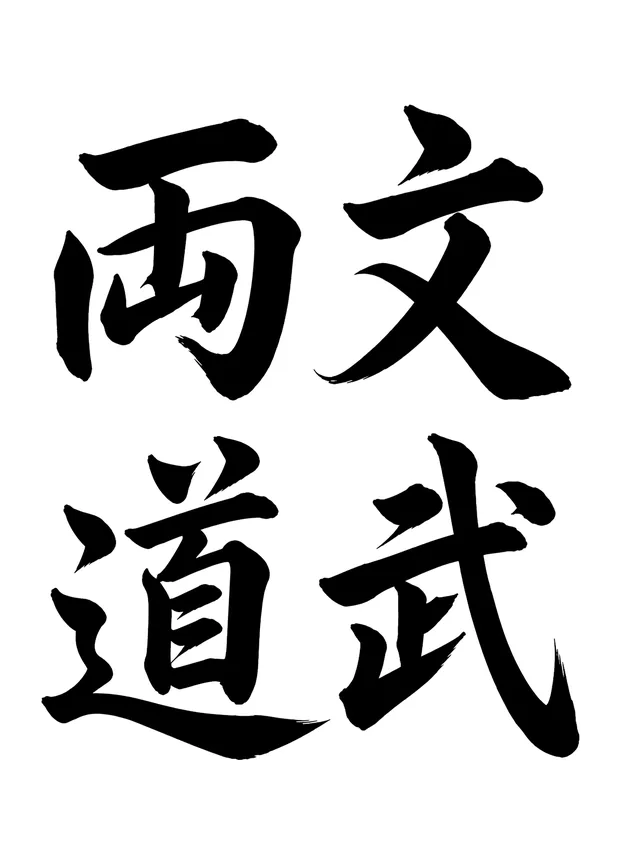
Semi-cursive script (gyōsho)
- In 両, the short verticals on the left and right of the inner part join at the bottom, forming one continuous shape.
- In 道, fold the brush back in a small turn under the dot of the road radical (shinnyō), then extend long to the right. Thin the tip as you lift the brush off.
- In 武, keep the 止 at the lower left small. Leave a wide gap between it and the long curving stroke on the right so the character looks clean.
Stroke order
Follow the vermilion stroke, frame by frame.
Stroke order data: KanjiVG by Ulrich Apel, CC BY-SA 3.0.
How to practice 練習
Trace first, then copy
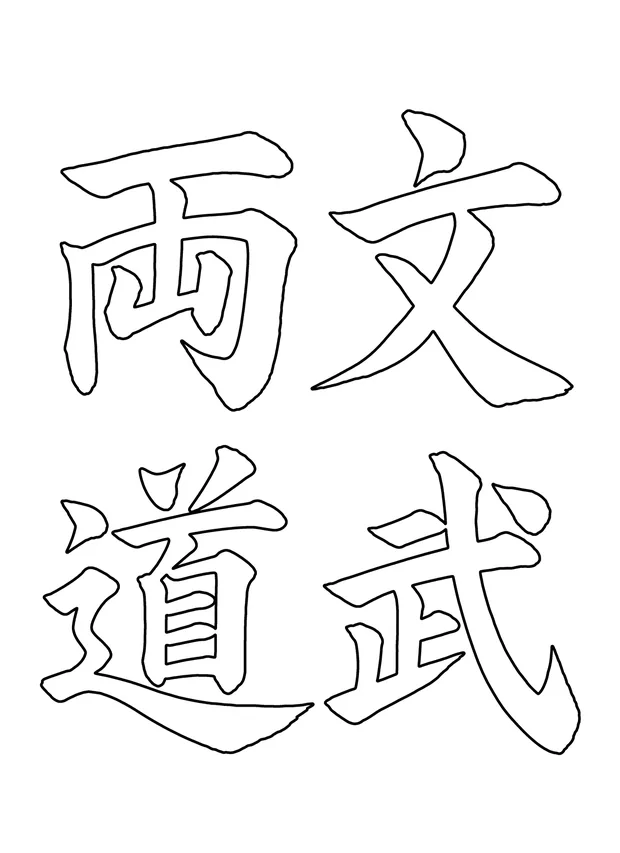
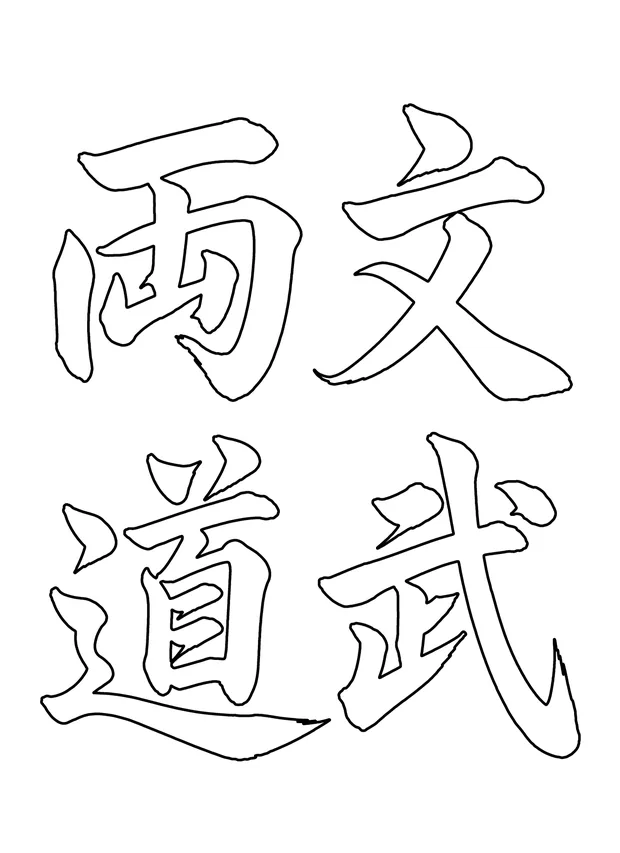
- PrintPrint both pages at actual size, on US Letter or A4. Page 1 is the model. Page 2 is the tracing sheet.
- TraceTrace the outlines with a brush pen. Or lay thin hanshi paper over the page and trace with brush and ink.
- CopySet the model beside your paper and copy it stroke by stroke. Look at the model more than at your own paper.
Free for personal practice and classroom use. Please do not sell or re-post the files. Share a link to this page instead.
More free sheets
Proverbs & idioms
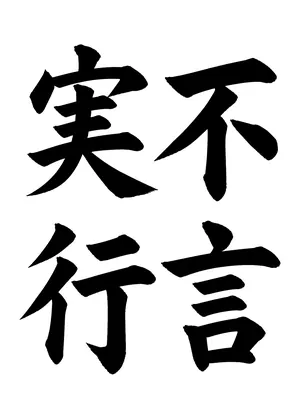 Actions, Not Words不言実行 · fugen jikkō+ Semi-cursive
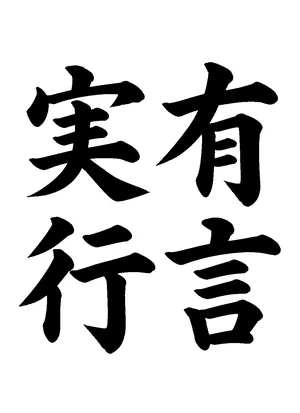 Do What You Say有言実行 · yūgen jikkō+ Semi-cursive
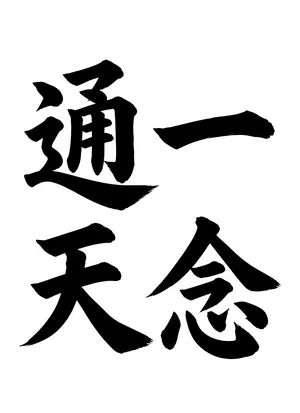 A Strong Will Reaches Heaven一念通天 · ichinen tsūten
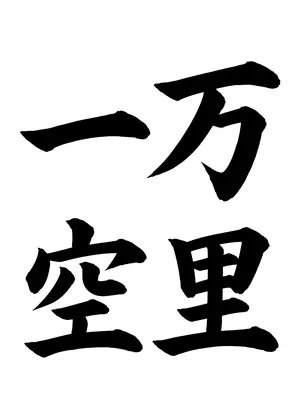 One Sky over Ten Thousand Miles万里一空 · banri ikkū
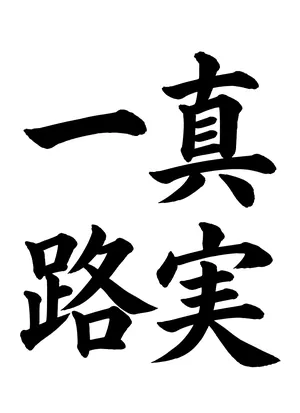 One Straight Path of Truth真実一路 · shinjitsu ichiro+ Semi-cursive
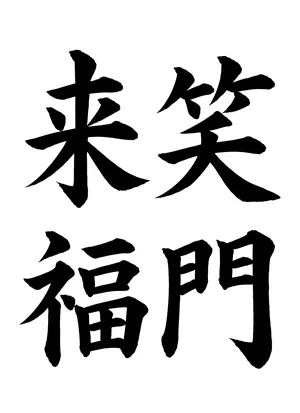 Laughter Brings Good Fortune笑門来福 · shōmon raifuku
While the sets are on their way
The book is out now.
Japanese Calligraphy for Beginners takes you from holding the brush to writing whole words, step by step, in English. Every model inside was brushed by our teachers.
Starter Set, $72.99 with the book, brush, ink and paper: coming soon.