In short
- Stroke order runs top to bottom and left to right. A horizontal comes before the vertical that crosses it, and a left sweep before a right sweep.
- Look at the model for a full minute, trace it in the air, then write it large with the brush: one character per half sheet of hanshi.
- Compare with the model: endings first, then lengths and angles, then balance. Choose one thing to improve, and write it again.
Stroke order rules
Stroke order in Japanese follows a few general rules. There are exceptions, so always check the numbers on the model, but these rules explain most characters.
- Top to bottom, and left to right.
- Horizontal before vertical. When a horizontal and a vertical stroke cross, the horizontal usually comes first.
- Left sweep before right sweep. When the two sweeps meet, write the left one first.
- Boxes: left side, then top and right together, then the inside, and close the bottom last.
- A stroke that pierces the whole character is often written last. The long vertical of 平 is an example.
How to practice each character
- Look at the model for a full minute
Notice where each stroke begins and ends, and the spaces between strokes.
- Trace it in the air
With your brush, following the numbers.
- Write it once with a pencil or brush pen
Still following the numbers.
- Write it with the brush, large
One character per half sheet of hanshi 半紙.
- Compare with the model
Put your sheet next to it: first the endings, then the lengths and angles, then the balance.
- Choose one thing to improve, and write it again
One point per sheet is enough.
The eight characters
These eight were chosen because they are simple, they use the basic movements from the strokes page, and they appear in the model words you will write next. Each one was written by our teachers.
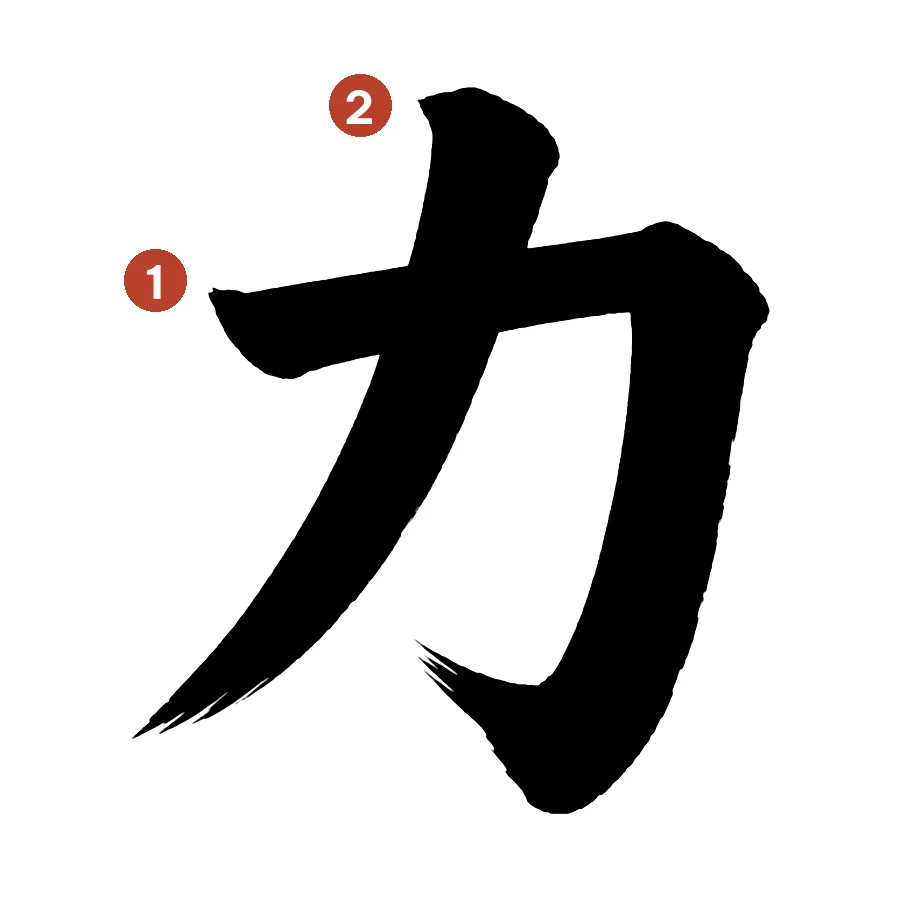
力 chikara · power
2 strokes
- A horizontal that turns firmly downward at the right, curves slightly, and ends with a hook to the upper left.
- A long left sweep that starts above the horizontal, crosses it, and sweeps out to the lower left.
Tip: A firm corner, a small sharp hook, and a long second stroke.
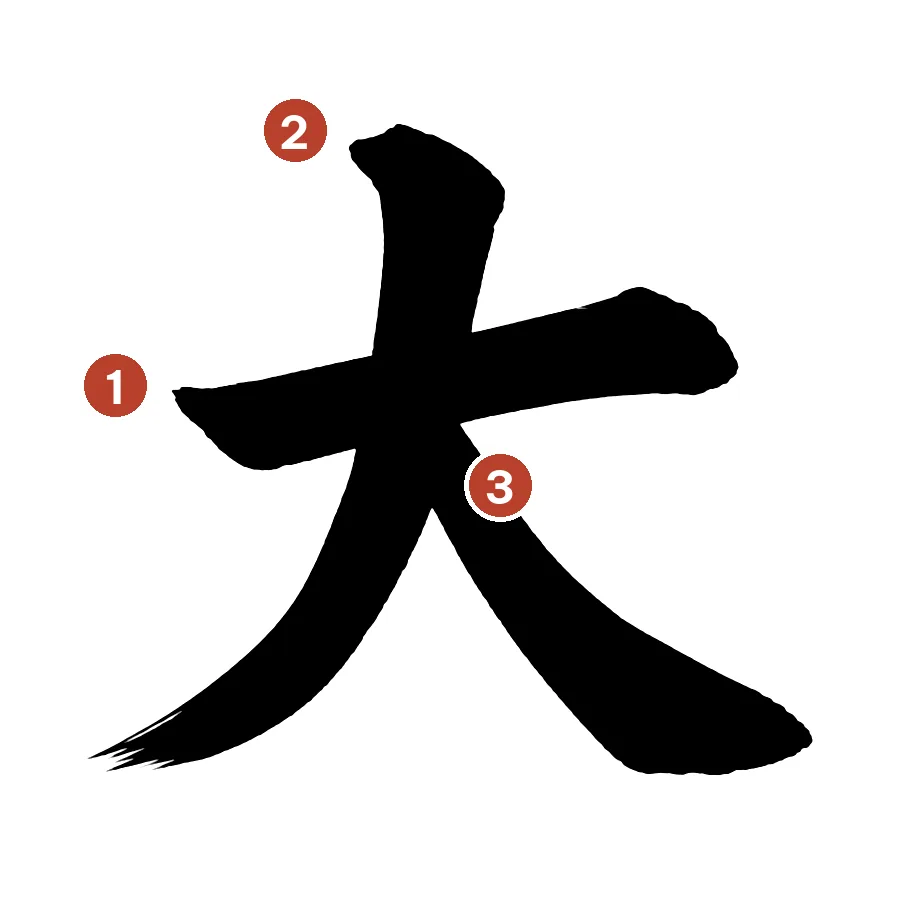
大 dai · big
3 strokes
- A horizontal, rising slightly to the right.
- A long left sweep from above the center of the horizontal to the lower left.
- A right sweep from the left sweep, just below the horizontal, widening toward the lower right.
Tip: Open the two sweeps wide and evenly, so the character stands firmly, like a person with arms and legs spread.
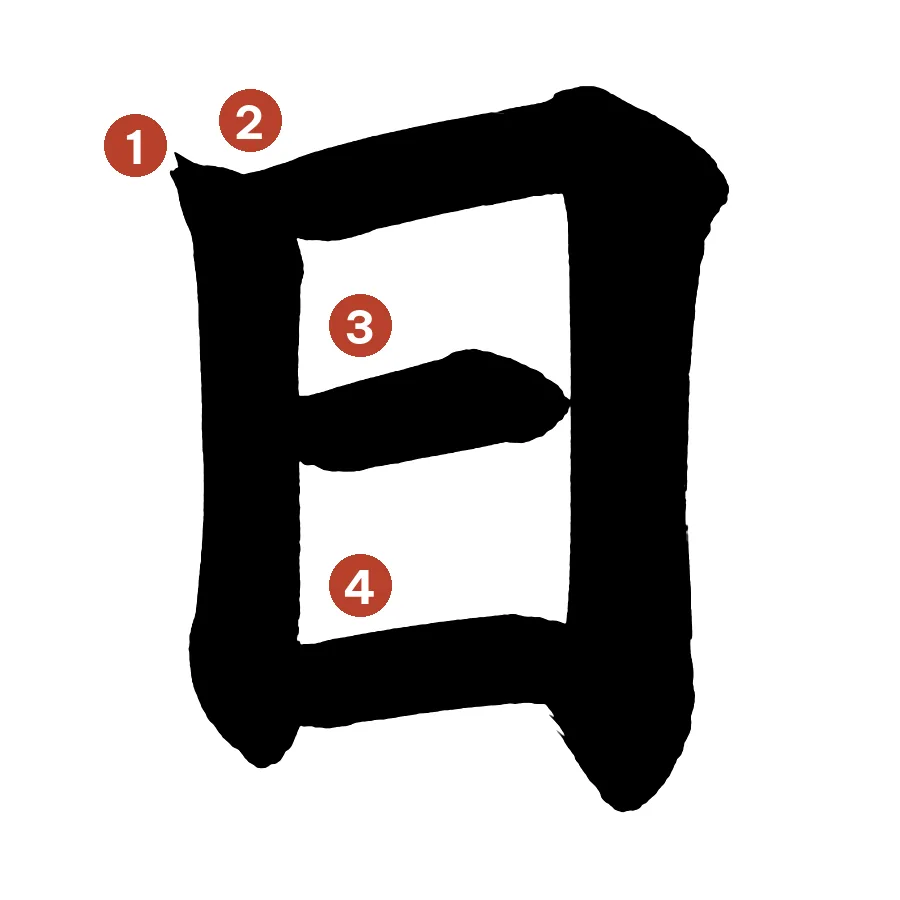
日 hi, nichi · sun, day
4 strokes
- The left vertical, top to bottom.
- The top horizontal, turning firmly at the corner into the right vertical.
- The middle horizontal.
- The bottom horizontal, closing the box.
Tip: 日 is a tall character. Keep both verticals straight, and space the three horizontals evenly.
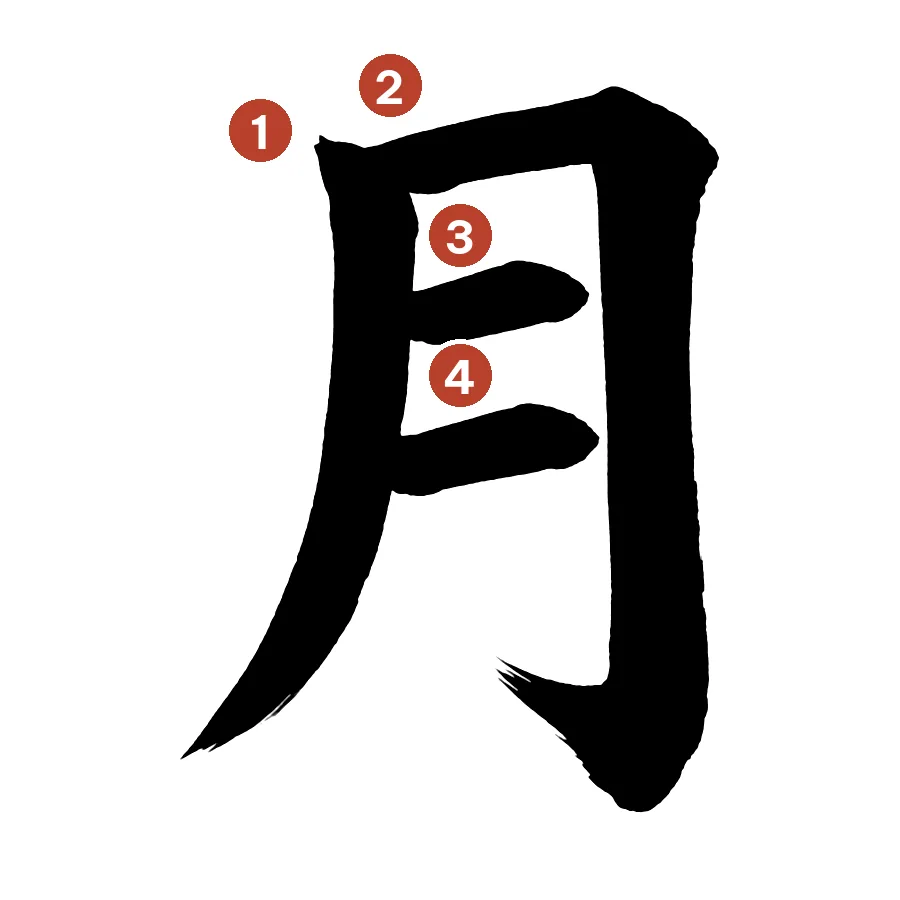
月 tsuki, getsu · moon, month
4 strokes
- The left stroke: down, then sweeping to the lower left.
- The top horizontal, turning into the long right vertical, which ends with a hook to the upper left.
- The upper inner horizontal.
- The lower inner horizontal.
Tip: Sweep the first stroke out, finish the second with a clear hook, and space the two inner horizontals evenly.
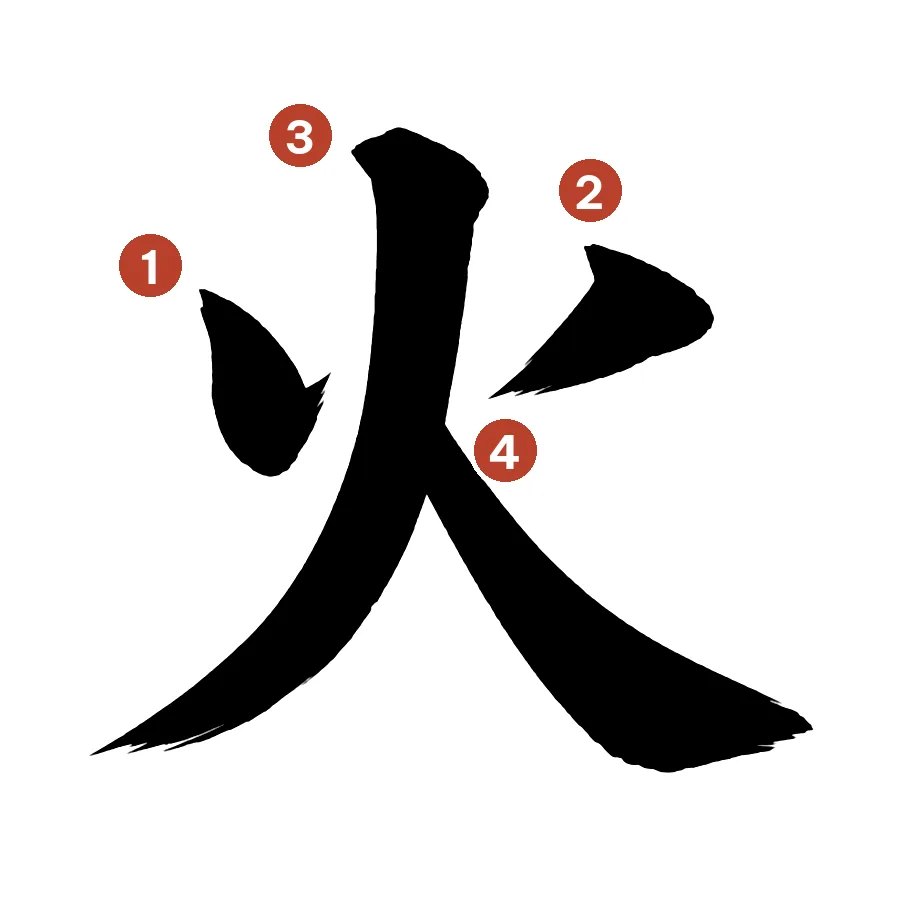
火 hi, ka · fire
4 strokes
- A short stroke on the left, like a dot.
- A short stroke on the right, moving down to the left, facing the first.
- A long left sweep from the top center.
- A right sweep, starting from the middle of the third stroke.
Tip: The two small strokes at the top face each other. Let the final right sweep stretch out freely.
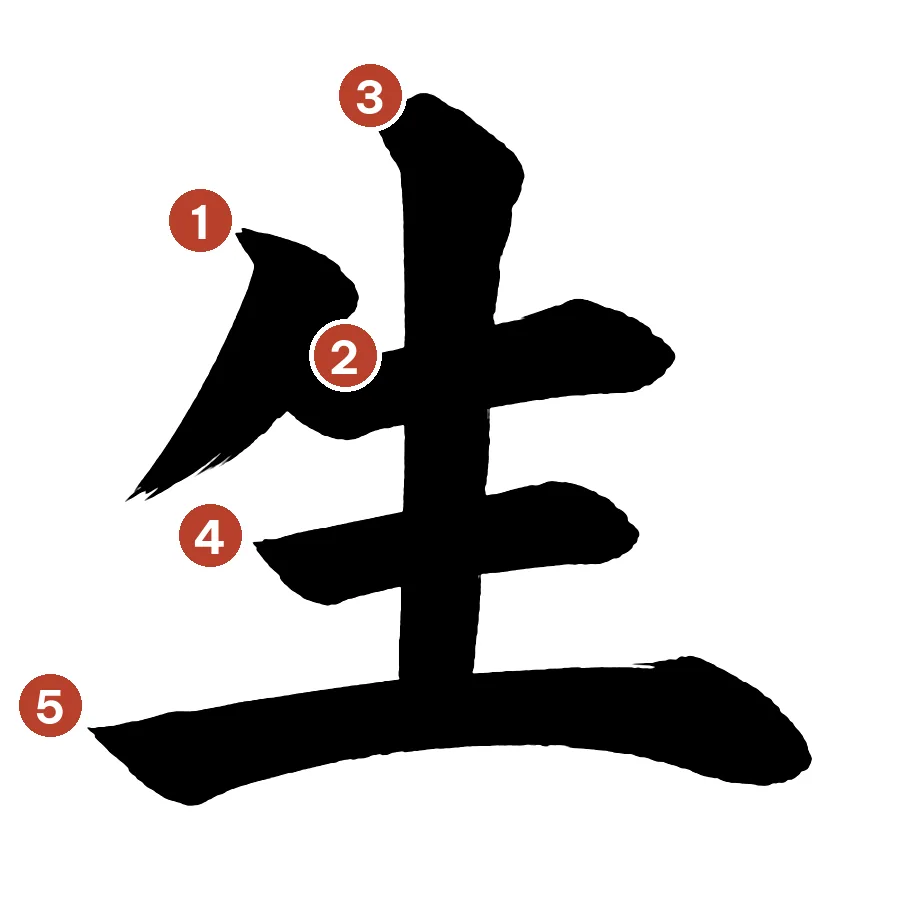
生 sei, iki(ru) · life, to live
5 strokes
- A short left sweep at the upper left.
- The short upper horizontal.
- The long center vertical.
- The middle horizontal.
- The long bottom horizontal.
Tip: The bottom horizontal is the longest stroke, a base for the whole character. Keep the center vertical straight.
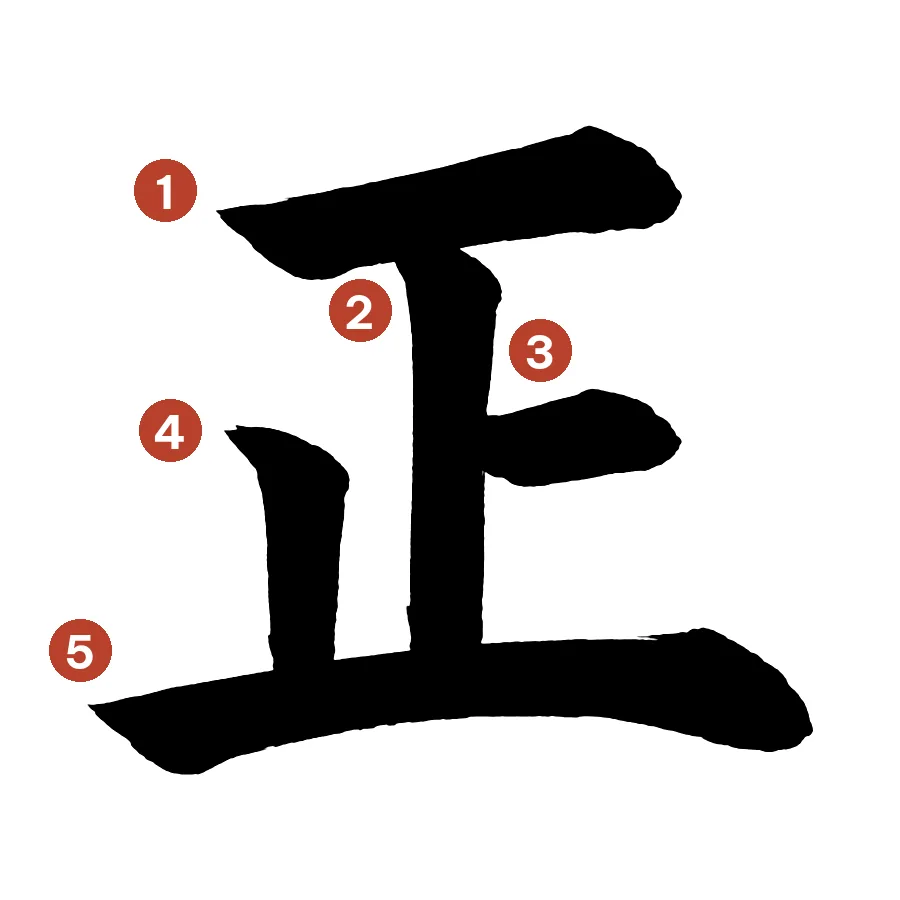
正 sei, tada(shii) · correct
5 strokes
- The top horizontal.
- The center vertical.
- The short horizontal to the right of the center vertical.
- The short vertical on the left.
- The long bottom horizontal.
Tip: Of the three horizontals, the bottom one is longest, as the foundation. Bring the second stroke straight down through the center, and keep the fourth stroke short.
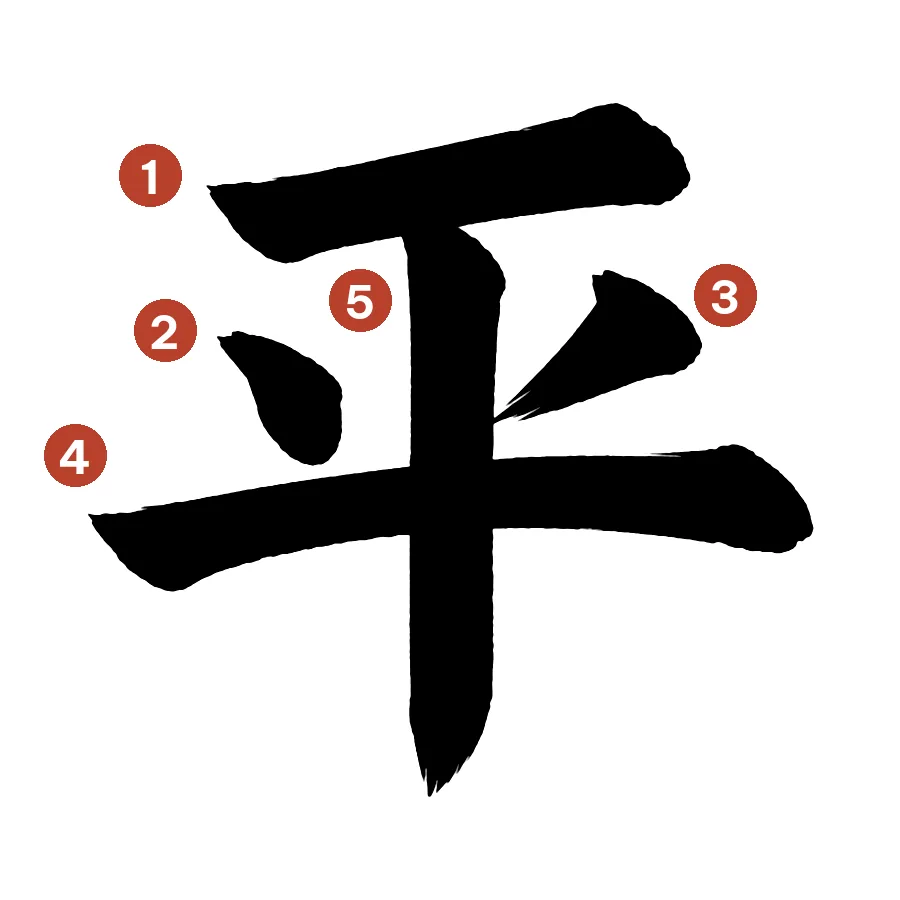
平 hei, taira · flat, calm
5 strokes
- The top horizontal.
- The dot on the left.
- The short stroke on the right, moving down to the left, facing the dot.
- The long lower horizontal.
- The center vertical, which pierces both horizontals and narrows to a point.
Tip: Make the lower horizontal longer than the upper one. Bring the vertical straight down through the center, and write it last.
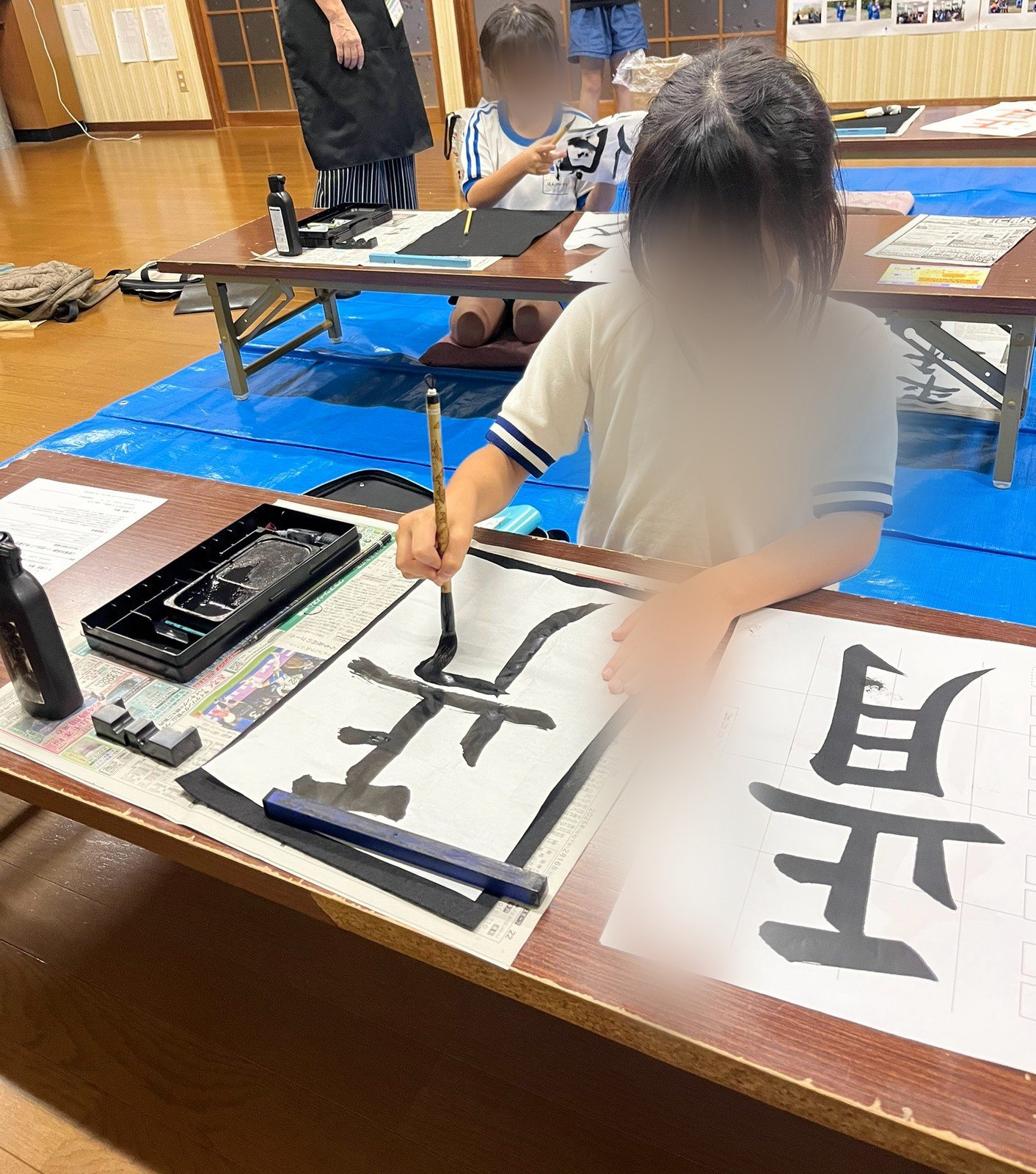
Try it now
Start with 大, then write the word.
The sheet for 大空 (ozora, the open sky) begins with 大. Trace it following the numbers, write it alone on a half sheet a few times, then try the whole word on one sheet of hanshi.
Questions
What are the stroke order rules for kanji?
Top to bottom, and left to right. When a horizontal and a vertical cross, the horizontal usually comes first. When a left sweep and a right sweep meet, the left sweep comes first. For a box, write the left side, then the top and right side together, then the inside, and close the bottom last. A long stroke that pierces the whole character is often written last. There are exceptions, so check the numbers on the model.
Which kanji should a beginner write first with a brush?
Simple characters that use the basic strokes: 力, 大, 日, 月, 火, 生, 正, and 平. They are simple, they use the movements you have practiced, and they appear in the model words. Write each one large, one character per half sheet of hanshi.
How many times should I write each character?
Five to ten times in a session, with a careful comparison after each one, is better than fifty times without looking. Compare the endings first, then the lengths and angles, then the balance. Keep your best sheet and date it.