In short
- Every stroke has three parts: the entry (the brush lands at an angle and presses), the travel (steady and calm), and the ending, which is a stop, a hook, or a sweep.
- Eight movements, the eiji happo (永字八法), hide inside the character 永: dot, horizontal, vertical, hook, rising stroke, long left sweep, short left sweep, right sweep.
- Warm up with rows of lines and endings, then practice two or three movements a day and compare them with the circled strokes below.
Anatomy of a stroke
Every stroke in kaisho 楷書, the regular script, has three parts: a beginning, a middle, and an end. Japanese teachers have names for each part, and once you learn to see them, you will notice them in every model.
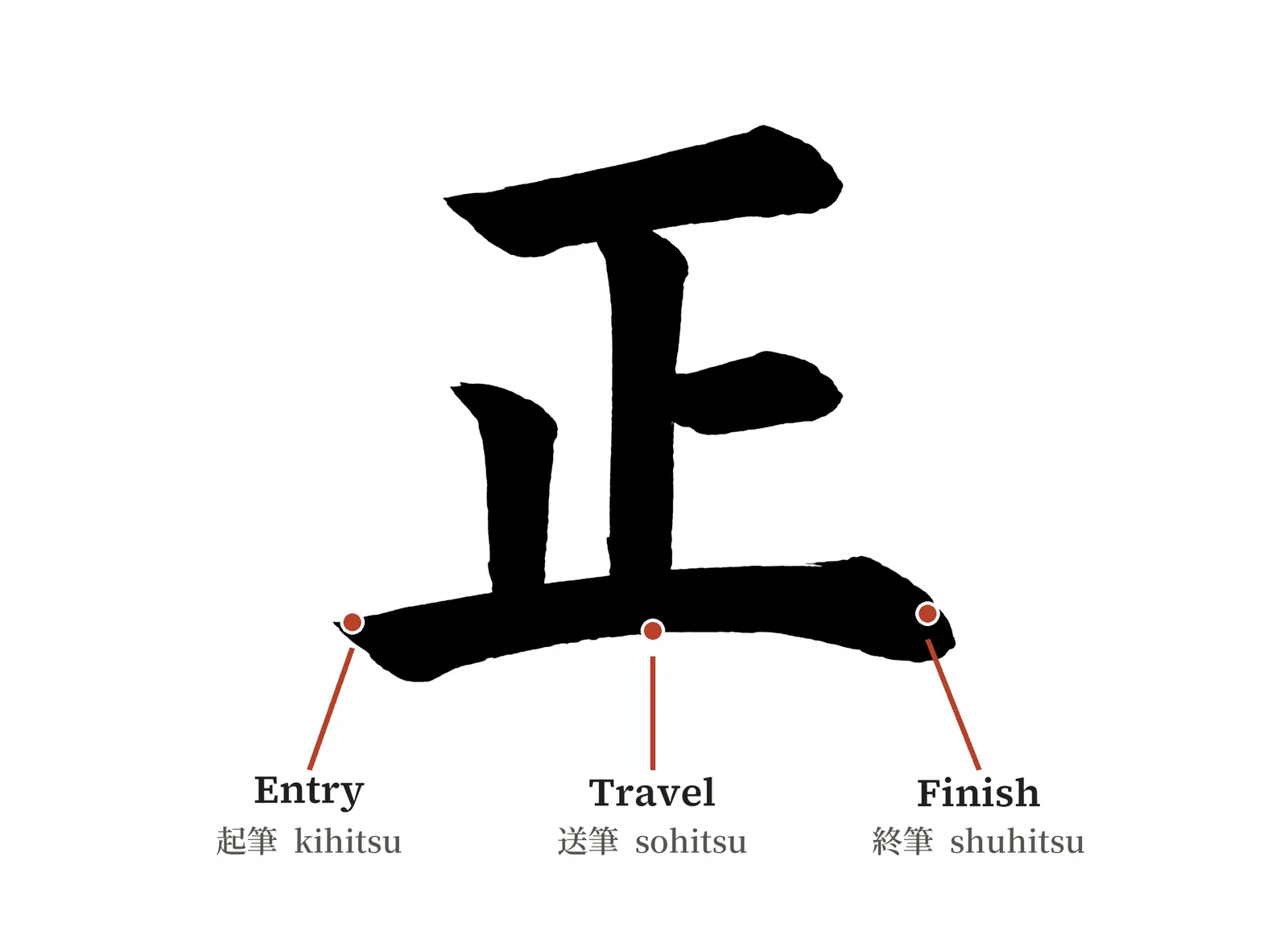
- The entry, kihitsu 起筆
The brush touches the paper and presses down firmly, usually at an angle. For a horizontal stroke, imagine the tip coming down toward the lower right at about 45 degrees. Do not drag the brush in from the side: let it land, press, and then start moving.
- The travel, sohitsu 送筆
Ease the pressure slightly and move the brush steadily, at an even, calm speed. Too fast, and the line becomes thin and dry; too slow, and the ink soaks in and the line wobbles. Horizontal strokes rise very slightly toward the right.
- The finish, shuhitsu 終筆
At the end, the brush either stops, hooks, or sweeps away. These three endings are the most important details in all of shodo.
The three endings
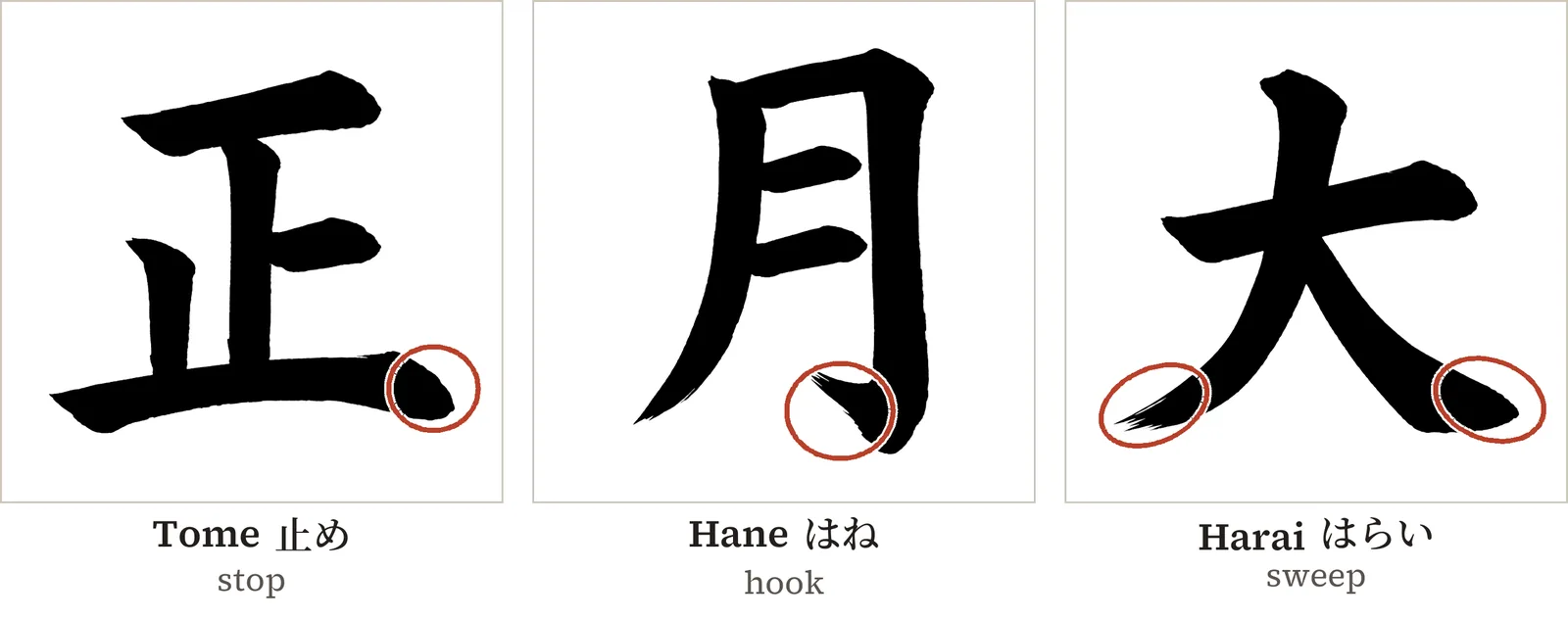
- The stop, tome 止め. The brush comes to a stop, presses down slightly, and lifts straight up. The end looks firm and rounded. Many horizontal and vertical strokes end this way.
- The hook, hane はね. The brush pauses and gathers itself, then flicks out quickly in a new direction, usually up and to the left, lifting off the paper as it goes. The hook should come to a sharp point.
- The sweep, harai はらい. The brush keeps moving while it slowly lifts away, so the line gets thinner and ends in a point. A right sweep usually becomes wider before it narrows, and ends with a gentle flat turn.
Warm-ups
Before writing any character, fill a few sheets of scrap paper or hanshi 半紙 with rows of lines. This simple practice is how our students warm up, and it is never wasted.
- Horizontal lines
Left to right, each ending with a stop.
- Vertical lines
Top to bottom, each ending with a stop.
- Vertical lines with a hook
Top to bottom, each ending with a hook to the upper left.
- Sweeps
To the lower left, and to the lower right.
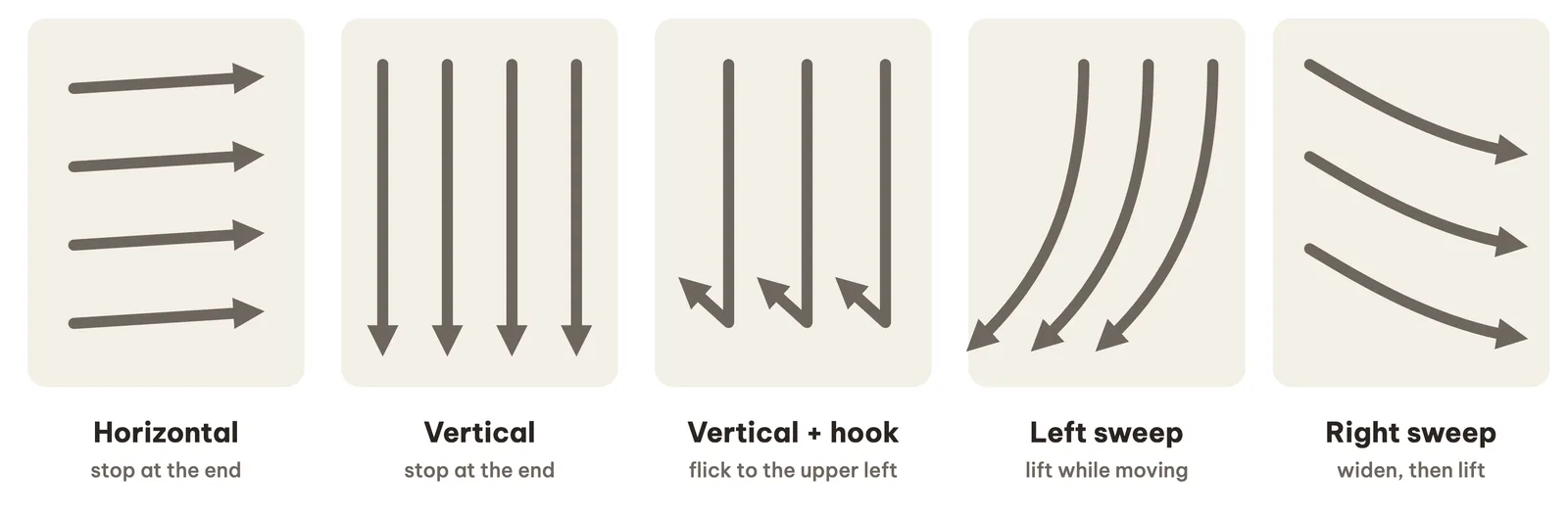
Write slowly, and breathe out as you move the brush. Try to make every line in a row look the same.
The eight movements
For centuries, calligraphers in China and Japan have taught the basic strokes through a single character: 永 (ei), which means “eternity” and contains eight different kinds of brush movement in just five strokes.
Our teachers did not write 永 for this guide. Instead, each movement is shown inside a character they did write, circled in red. This has an advantage: you can see that the same stroke appears again and again in different characters. Later you will find them on your own.
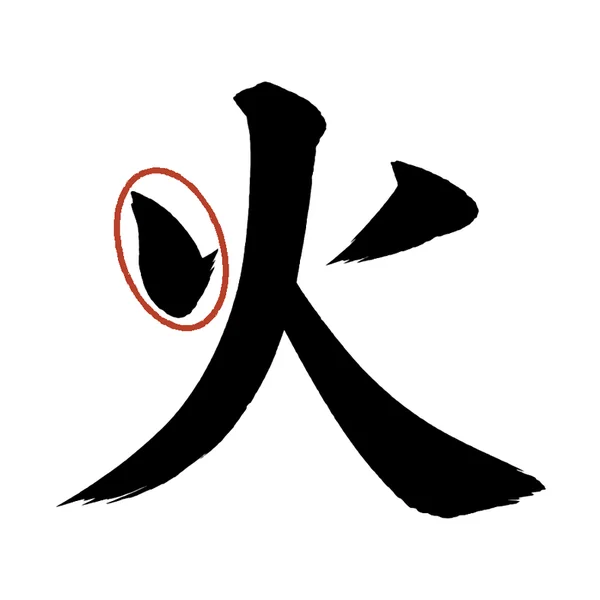 1 · The dotSoku側
A short stroke. The brush comes down at an angle, presses, and lifts with a small stop. Dots are small, but they carry a lot of weight in a character.
See the first stroke of 火 (fire).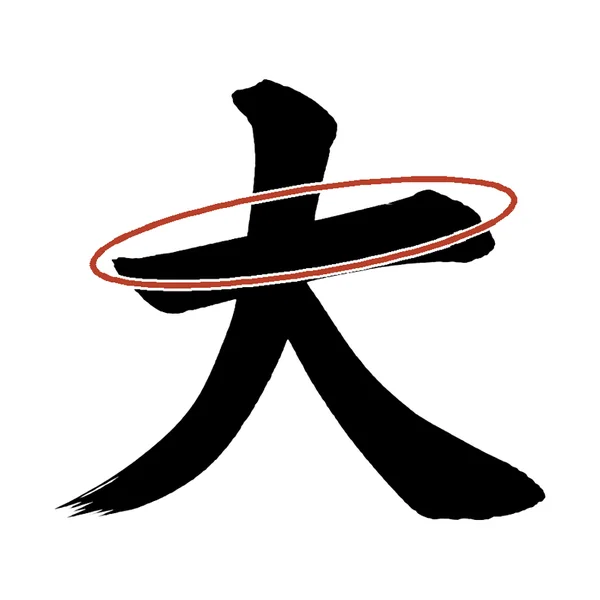 2 · The horizontalRoku勒
Enter at an angle, travel steadily, rising very slightly to the right, and finish with a stop.
See the first stroke of 大 (big).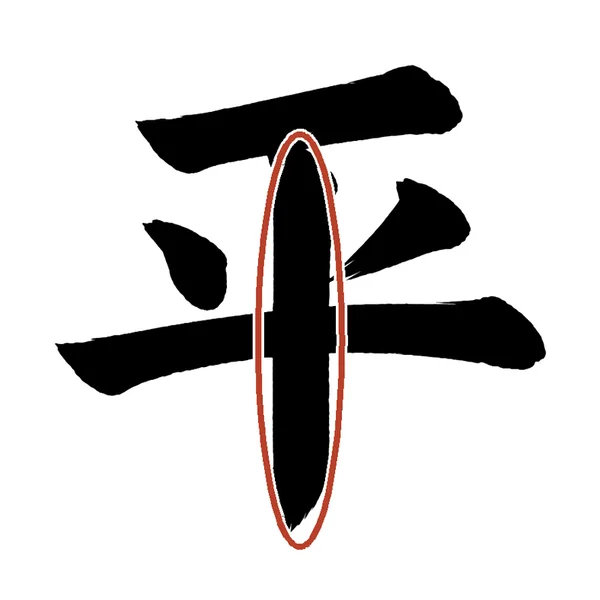 3 · The verticalDo努
Enter firmly, then pull the brush straight down. Some verticals end with a stop; others, like the long center stroke of 平, narrow to a sharp point.
See the center stroke of 平 (flat, peace).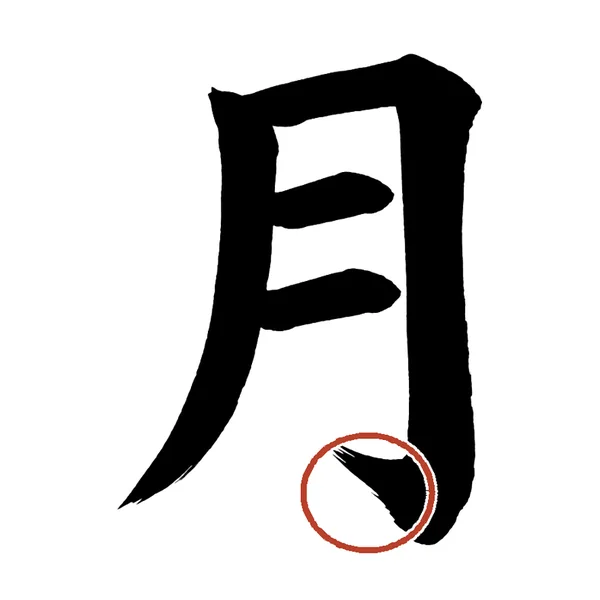 4 · The hookTeki趯
At the end of a stroke, pause, gather the hair, and flick quickly away, usually to the upper left.
See the end of the right side of 月 (moon).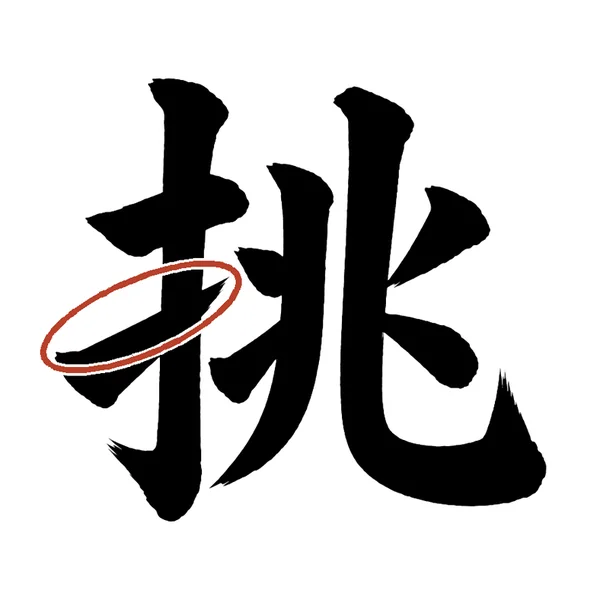 5 · The rising strokeSaku策
A short stroke that starts with a press and pushes up to the right, thinning as it goes.
See the rising stroke on the left side of 挑 (challenge).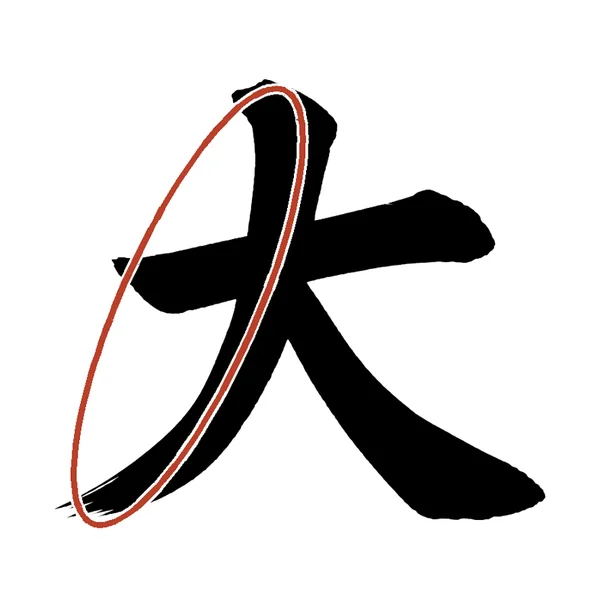 6 · The long left sweepRyaku掠
Starting from the top, the brush moves down and curves to the lower left, lifting gradually so the stroke ends in a fine point.
See the second stroke of 大.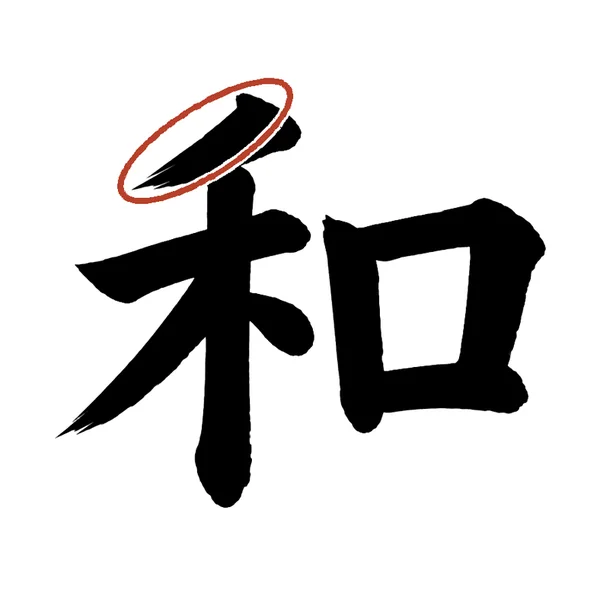 7 · The short left sweepTaku啄
A short, quick sweep to the lower left, like a bird pecking.
See the first stroke of 和 (harmony).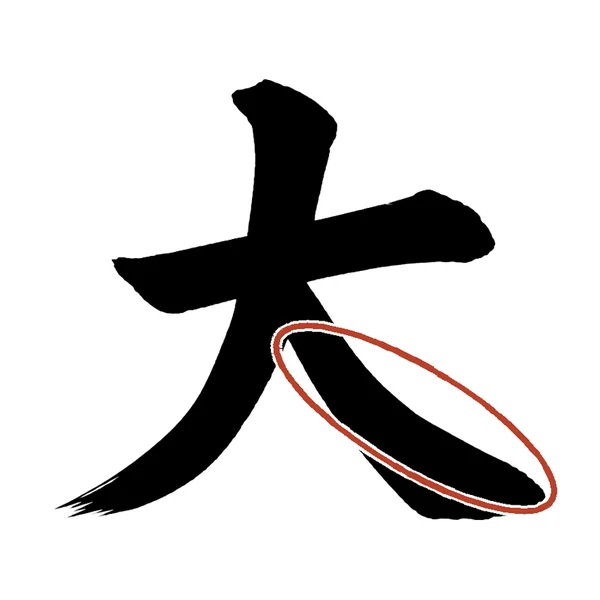 8 · The right sweepTaku磔
The brush moves down to the lower right, pressing gradually so the stroke widens, then turns slightly flat and lifts away to a point. It is often the last stroke of a character.
See the last stroke of 大.
Turns and bends
Besides the eight movements, two more shapes appear very often:
The turn折れore
A horizontal stroke that turns sharply and continues downward, as in the top right corner of 日 (sun) and 月. At the corner, the brush pauses, lifts a little, presses again, and changes direction.
The bend曲がりmagari
A stroke that curves smoothly from vertical to horizontal, as at the bottom of 元 (origin) and 光 (light). These strokes often finish with a hook pointing up.
How to practice
- Pick two or three movements
Choose two or three of the eight for today. Straight lines first: that is how our students begin.
- Write a row of each
On scrap paper or hanshi, write the same movement across a row, reloading the brush when the line turns scratchy.
- Compare with the circled stroke
Look especially at the entry and the ending. When a movement feels comfortable, move on to the next one.
Check yourself
- Every stroke has a clear entry: the brush lands at an angle, presses, then travels.
- Every stroke has a clear ending: a stop, a point, or a hook, never a blunt stump.
- Sweeps keep moving while the brush lifts, so the stroke leaves the paper in motion.
Try it now
Three movements in one word.
大空 (ozora, the open sky) begins with 大, which holds the horizontal, the long left sweep, and the right sweep. Print the sheet and trace 大 slowly, one movement at a time.
Questions
What are the eight principles of 永 (eiji happo)?
The eight basic brush movements that all appear in the single character 永: the dot, the horizontal, the vertical, the hook, the rising stroke, the long left sweep, the short left sweep, and the right sweep. Learn these eight, and you can write almost any character.
Which stroke should I practice first?
Straight lines: the horizontal and the vertical. That is how students in Japan begin. Add the two sweeps next, then the dot, the hook, and the rising stroke.
Why do strokes 7 and 8 have the same name?
Both are pronounced taku, but they are written with different characters, 啄 and 磔, and they are different movements: a short, quick sweep to the lower left, and a long pressing sweep to the lower right.