In short
- Pour a little bottled ink into the sea of the inkstone, enough to fill it about halfway, and close the bottle right away.
- Dip the brush to the root, then stroke it gently along the land while turning it slowly, until the tip forms a neat point.
- Test with a short horizontal line on scrap paper: a fuzzy edge means too much ink, white streaks mean too little.
- Large brush
- Bottled ink or an ink stick
- Inkstone or a small dish
- Scrap paper
- Paper towel
Bottled ink
An inkstone, suzuri 硯, has two parts: the flat “land” (oka) and the deeper well at one end, the “sea” (umi). With bottled ink, the sea holds the ink, and the land is where you adjust how much is on your brush. The parts are shown on the tools page.
- Shake the bottle gently
Then pour a small amount into the sea of the inkstone, enough to fill it about halfway. You can always add more.
- Start small
Leftover ink should not be poured back into the bottle, so pour only what you will use.
- Close the bottle right away
Ink thickens and spills easily.
Grinding an ink stick
Traditional ink, sumi 墨, is a solid stick that you rub with a little water on the inkstone. Start with bottled ink, and try grinding when you are ready.
- A few drops of water on the land
Use clean water, on the flat part of the inkstone.
- Rub the stick in slow, gentle circles
Hold the ink stick upright and rub it on the land in circles or back-and-forth strokes, without pressing hard.
- Push the dark water into the sea
When the water turns dark and slightly thick, push it down into the sea. Add a few more drops of water and repeat until you have enough ink.
- Dry the end of the stick
Wipe it with a paper towel when you finish, so it does not crack.
Grinding takes time, often ten minutes or more for a practice session. Many people enjoy it as a quiet ritual before writing.
Loading the brush
- Dip the brush into the sea
Let the hair soak up ink all the way to the root. Let it sit for a moment so the ink spreads through the whole bundle.
- Adjust the amount on the land
Lift the brush and stroke it gently along the land, or the edge of your dish, while turning it slowly. Extra ink runs back into the sea, and the tip forms a neat point.
- Check the tip
The hair should be full of ink but not dripping, and it should come to a single point.
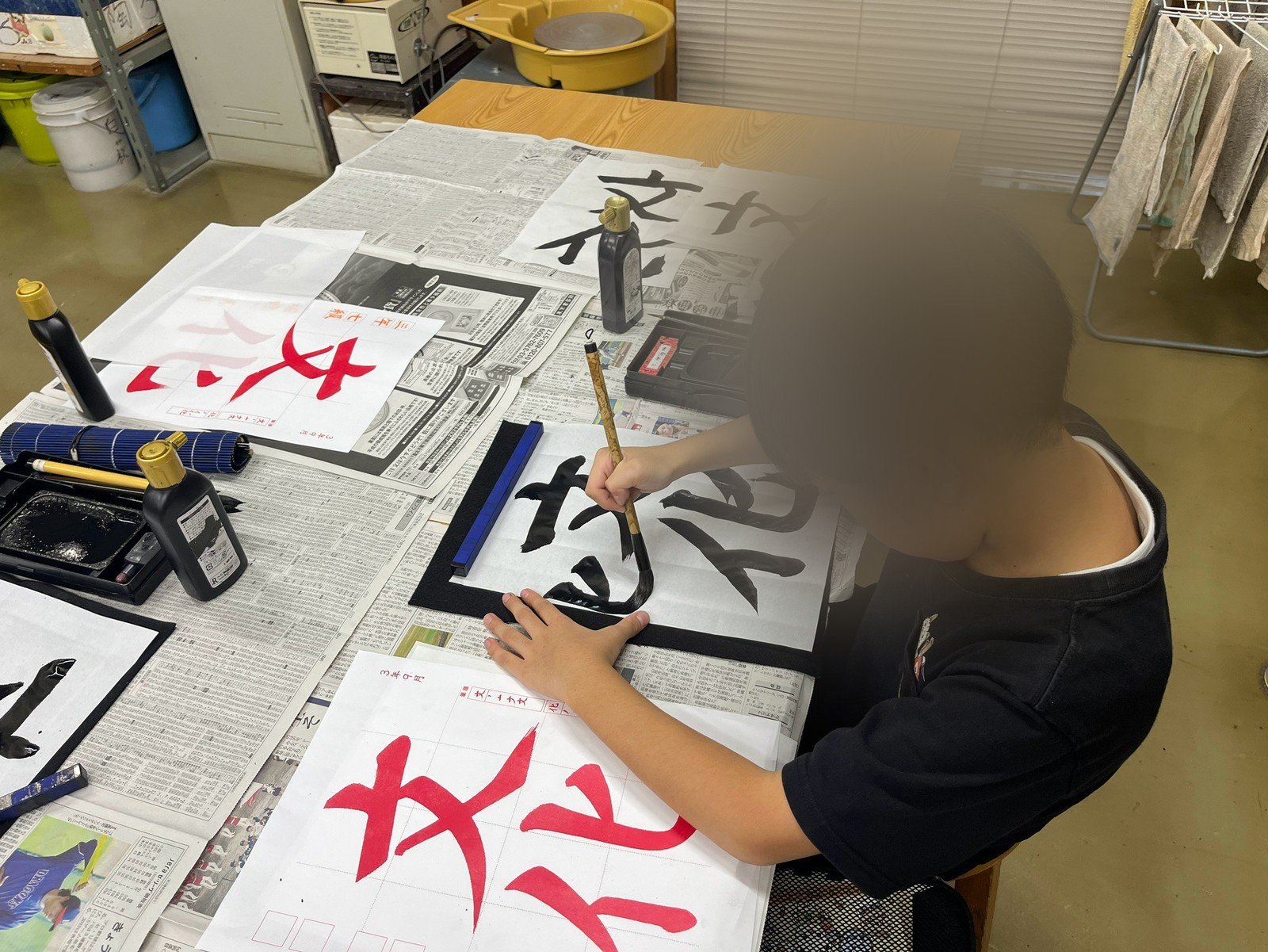
A student writes in class, with the inkstone close at hand.
How much is right?
A simple test: write a short horizontal line on a piece of scrap paper, and look at the edge of the line.
The line spreads with a fuzzy edge, or there is a blot where the stroke begins.
Wipe a little more off on the land, turning the brush, and test again.
The line shows white streaks after only a short distance.
Dip again, and shape the tip on the land before you write.
For a two-character word on hanshi 半紙, you will usually reload the brush once for each character, and sometimes in the middle of a character with many strokes.
Try it now
Load, test, then write one line.
Load the brush and test it on scrap paper. Then print the sheet for 大空 (ozora, the open sky) and write the long horizontal stroke of 大 in one steady movement. Reload, shape the tip, and write 空.
Questions
Can I pour leftover ink back into the bottle?
No. Leftover ink should not go back into the bottle, so pour a small amount, about half the sea of the inkstone, and add more if you need it. Close the bottle right away, because ink thickens and spills easily.
How much ink should be on a calligraphy brush?
The hair should be full of ink all the way to the root, but not dripping, and the tip should come to a single point. Test with a short horizontal line on scrap paper. A fuzzy edge or a blot at the start means too much: wipe a little off on the land. White streaks after a short distance mean too little: dip again.
How long does it take to grind ink with an ink stick?
Often ten minutes or more for a practice session, and many people enjoy it as a quiet ritual before writing. Start with bottled ink and grind when you are ready. When you finish, dry the end of the stick with a paper towel so it does not crack.