In short
- Japanese children study brush writing at school, usually from the third grade of elementary school. Many also go to a weekly after-school class like ours.
- Every lesson is the same simple cycle: copy a model written by a teacher, have it corrected in red ink, and try again.
- Students take tests to move up in rank, and they write works for calligraphy competitions.
Two places to learn
At school
Japanese children study brush writing at school, usually from the third grade of elementary school, as part of their Japanese language lessons.
Their brush writing is often displayed on classroom walls.
After school
Many children also attend after-school classes like ours, where they practice every week and take tests to move up in rank.
Our school, Kodomo School, in Toyohashi, has taught children since 1976: abacus, handwriting and brush calligraphy, and art. Today it has 750+ students.
A weekly lesson, step by step
Every week, children who have never touched a brush sit down at a desk, dip it in ink, and slowly learn to write characters that are steady, balanced, and alive. The way they learn is simple and patient.
- Straight lines first
Before any character, they write straight lines.
- How to sit, and how to hold the brush
Back straight, brush upright, movement from the arm. The same lesson is here: posture and how to hold the brush.
- How to begin and end a single stroke
One stroke at a time, with a clear entry and a clear ending. See the strokes.
- Copy a model written by a teacher
The model sits beside the paper, where the child can glance at it often.
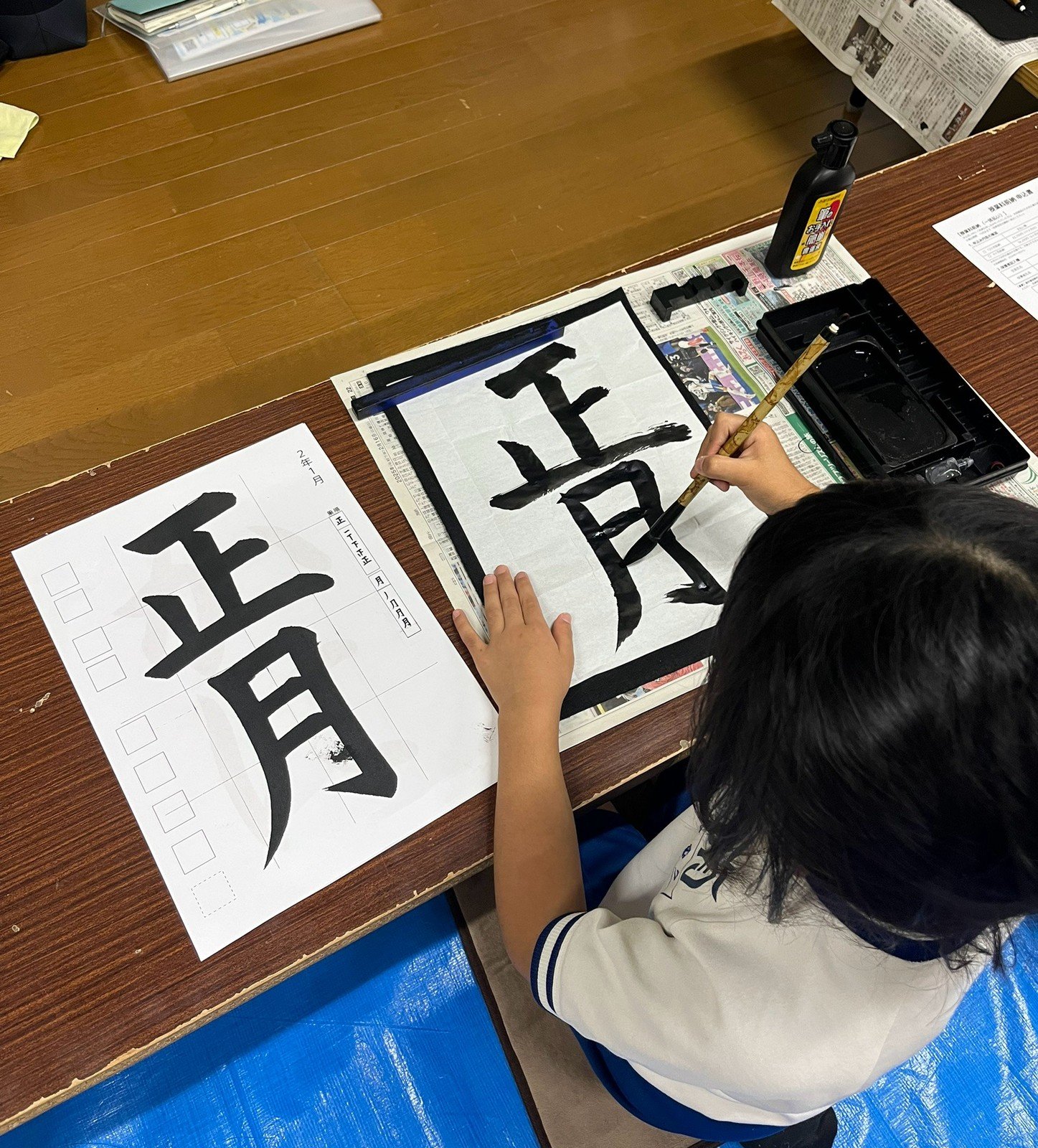
A student in our class copies the model on the left, free hand resting on the paper. - The teacher corrects the work in red
Directly on the sheet, with red ink. More on this below.
- Try again
Many of our students study their corrected sheets carefully before writing again, and you can see their work improve within a single lesson.
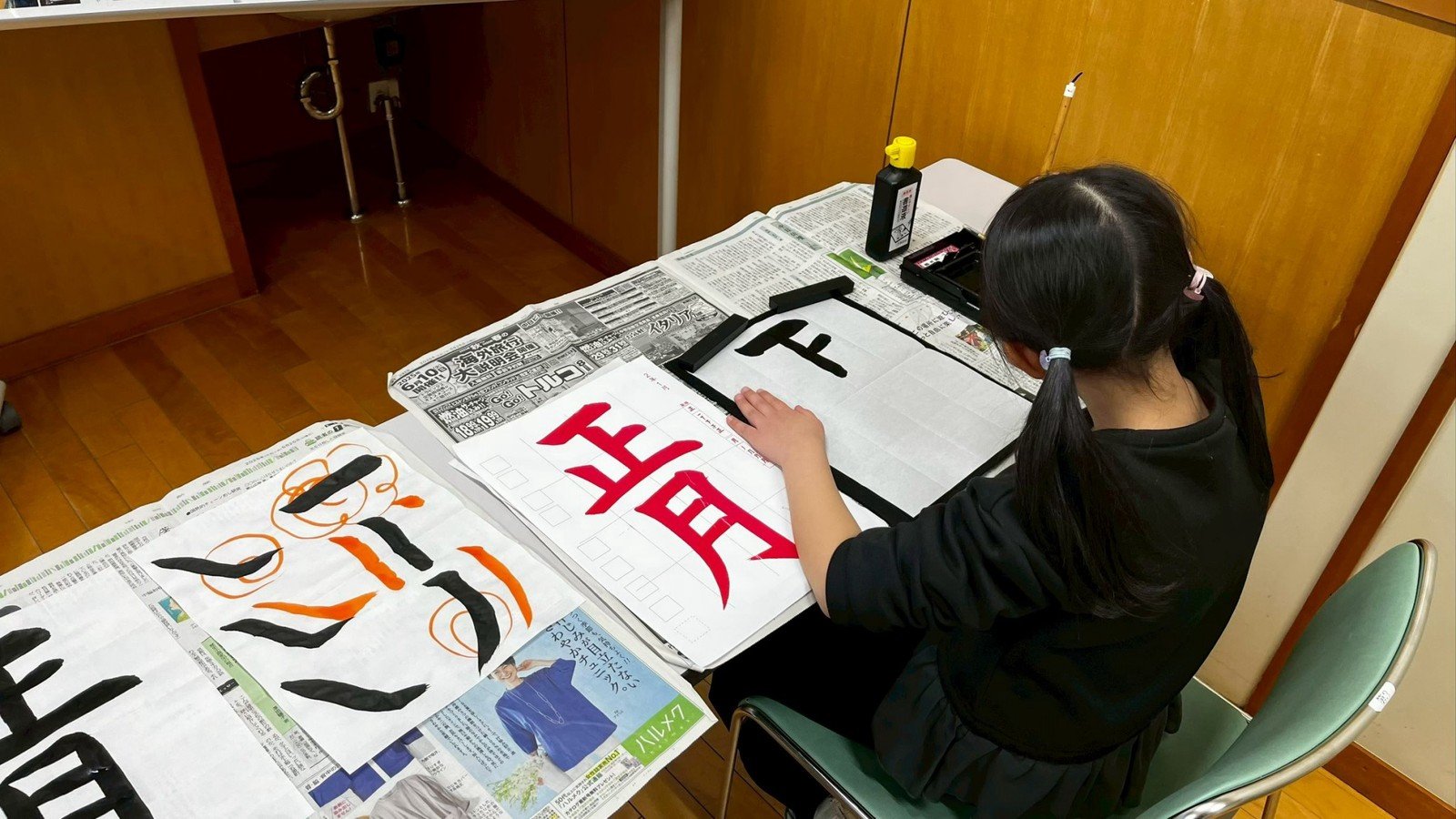
A student writes again, with corrected sheets beside her.
Red ink
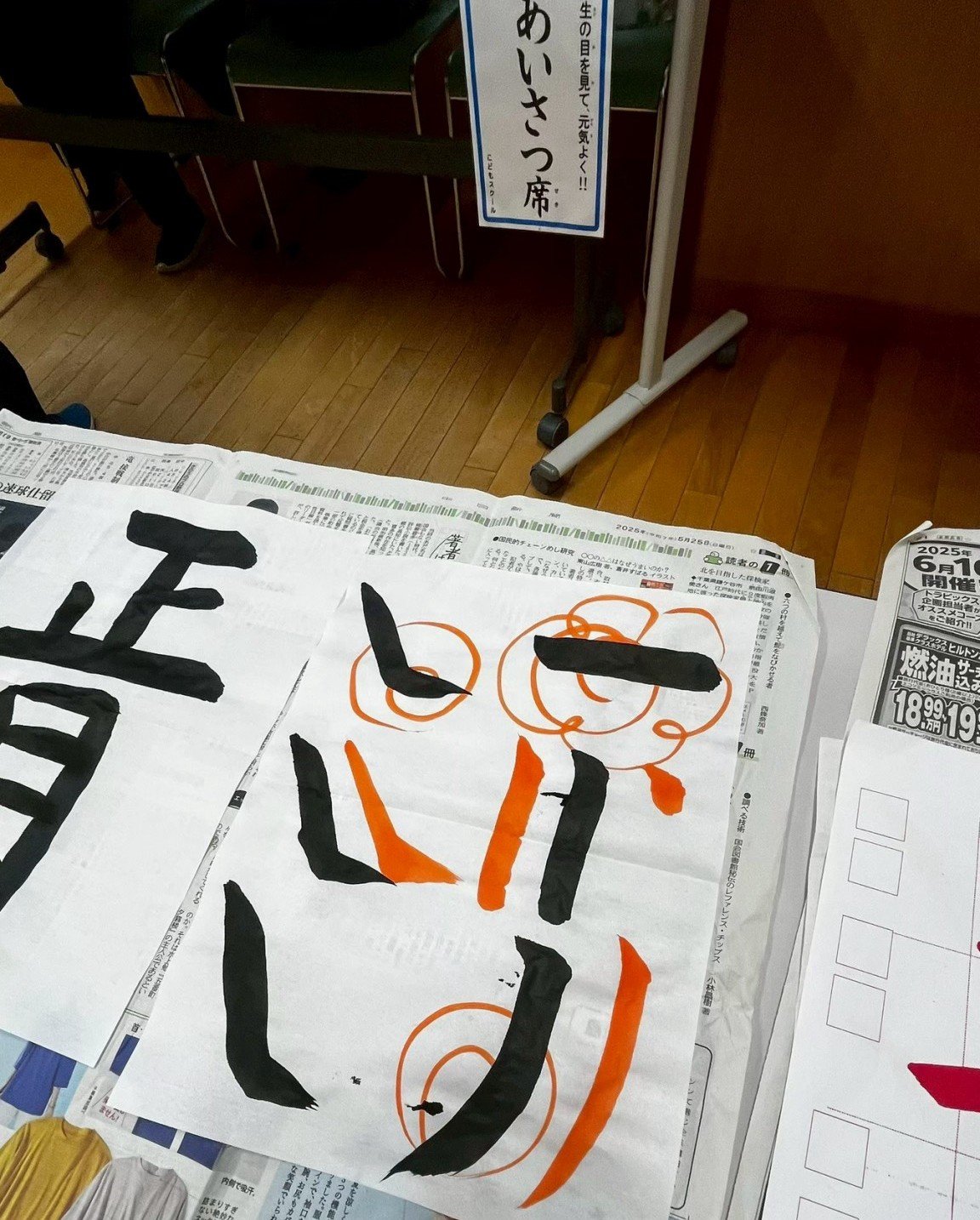
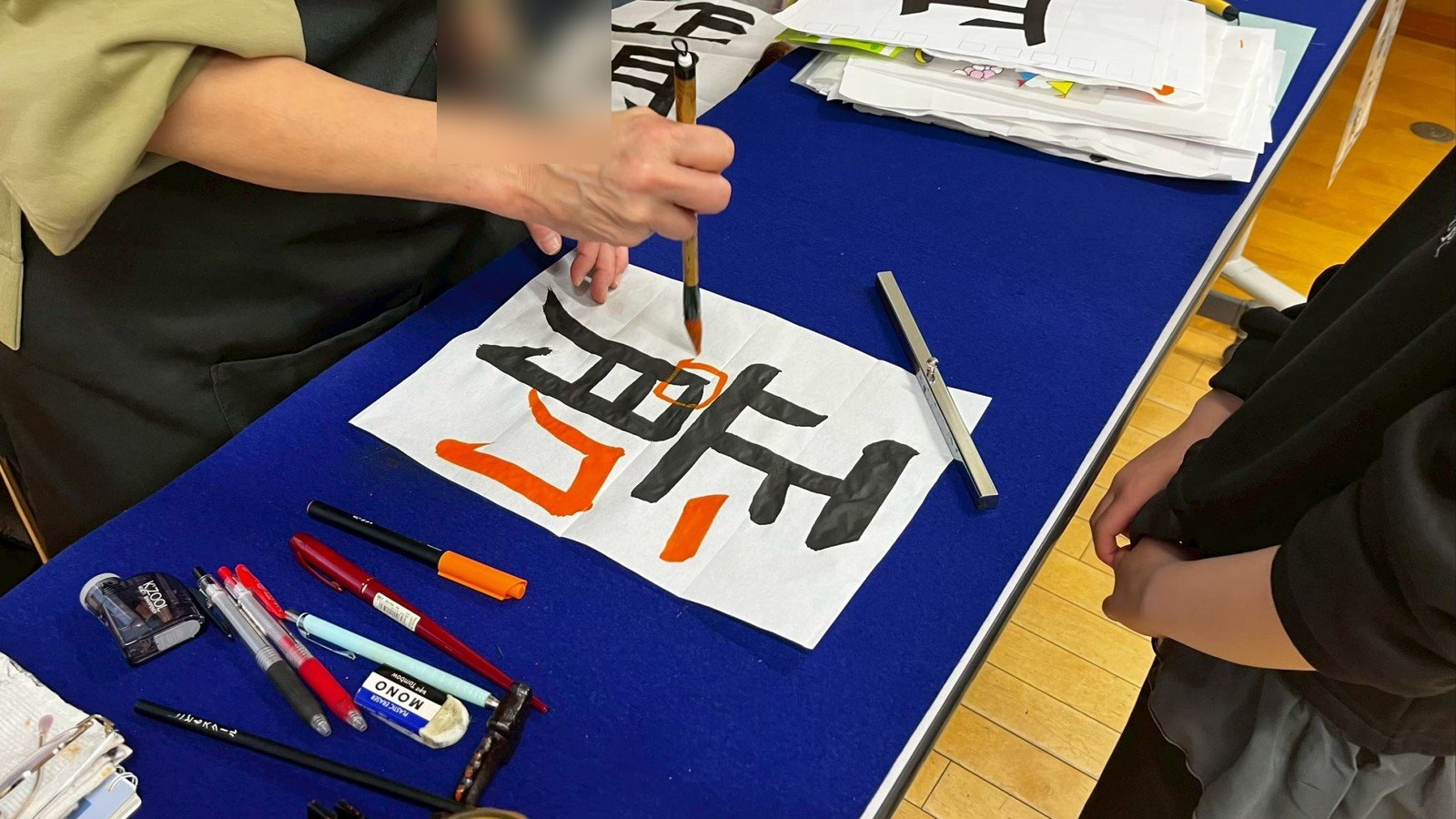
Teachers correct work with a vermilion red ink called shuboku (朱墨). Correcting work this way is called shu o ireru (朱を入れる), “putting in red.”
The teacher writes directly on the student’s sheet.
- A red line shows where a stroke should have gone.
- A circle around an ending marks one that should have been a sweep instead of a stop.
- A small stroke written over the student’s shows the right angle.
- A red circle, or a flower-like double circle, means good work.
Ranks and competitions
In after-school classes like ours, the weekly practice leads to tests to move up in rank.
Students also write works for calligraphy competitions, and many schools hold a kakizome event in January, when everyone writes a word or phrase that expresses a hope for the year ahead.
Our students’ work
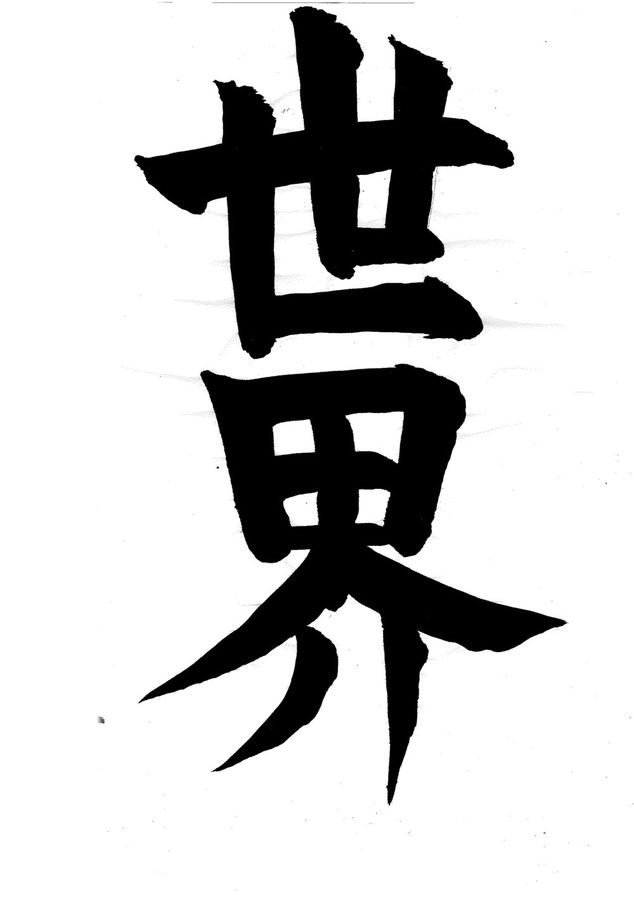
Three works written by students in our classes for calligraphy competitions. We have removed the students’ names. Notice how clearly every stroke begins and ends, and how the characters fill the paper with confidence.
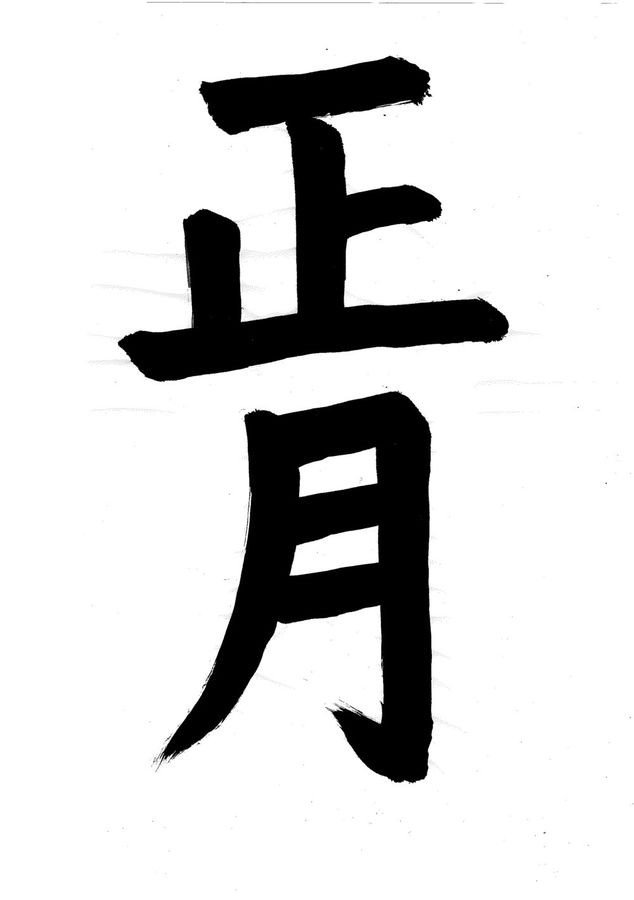
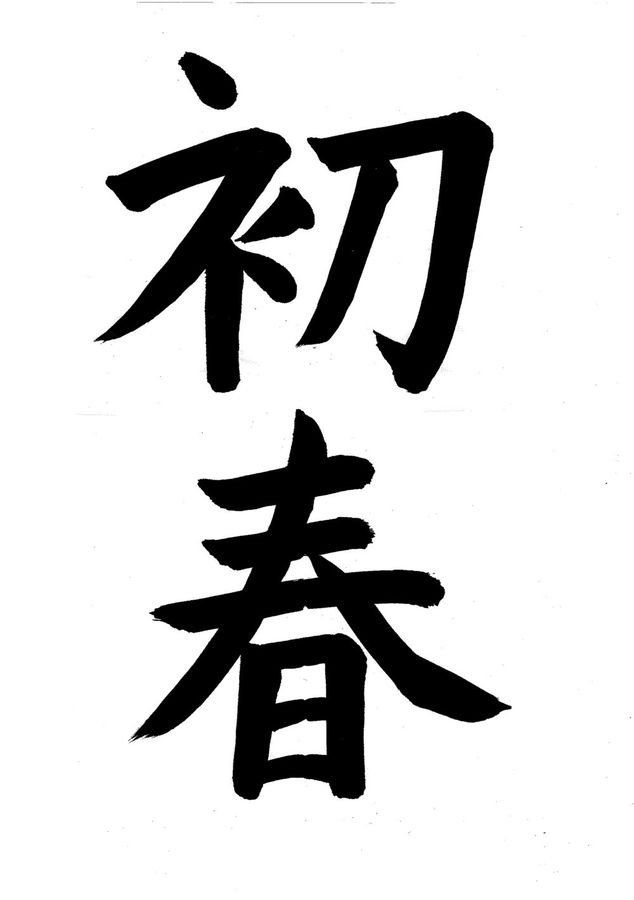
Our teachers’ models for 正月 and 初春 are among the free practice sheets, if you would like to write them yourself.
Being your own teacher
If you are learning on your own, you can borrow this method.
- Let the sheet dry, then lay it next to the model
Look at the two side by side.
- Mark one or two things in red
With a red pencil or a red pen, mark the one or two things that differ most from the model: a stroke that is too short, an ending that is wrong, a part that is too big.
- Write the next sheet with only those points in mind
It is surprisingly effective.
- Or take a photo
Looking at a photo of your sheet on a screen, next to a photo of the model, can also help you see the differences more clearly.
For the mistakes our teachers see most often, and how to fix them, see common problems and fixes. When you are ready to have a teacher look at your work, next steps has places to look.
Questions
At what age do Japanese children start calligraphy?
At school, usually from the third grade of elementary school, as part of their Japanese language lessons. Many also attend after-school classes like ours, where they practice every week and take tests to move up in rank.
What is the red ink Japanese calligraphy teachers use?
A vermilion red ink called shuboku (朱墨). Correcting work with it is called shu o ireru, “putting in red.” The teacher writes directly on the student’s sheet: a line where a stroke should have gone, a circle around an ending that needs changing, or a small stroke over the student’s to show the right angle. A red circle, or a flower-like double circle, means good work.
Can I learn Japanese calligraphy without a teacher?
Yes. You can borrow the teacher’s method: lay your dry sheet next to the model, mark one or two differences in red, and write the next sheet with only those points in mind. If you can hold a pencil and sit quietly for twenty minutes, you can begin. Having a teacher look at your work later can make a big difference, and online classes make that possible wherever you live.