
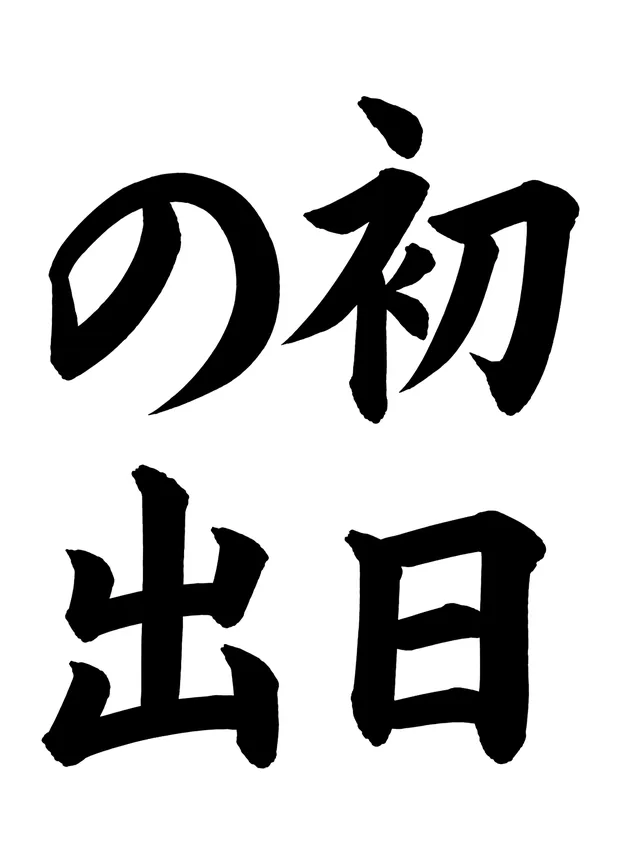
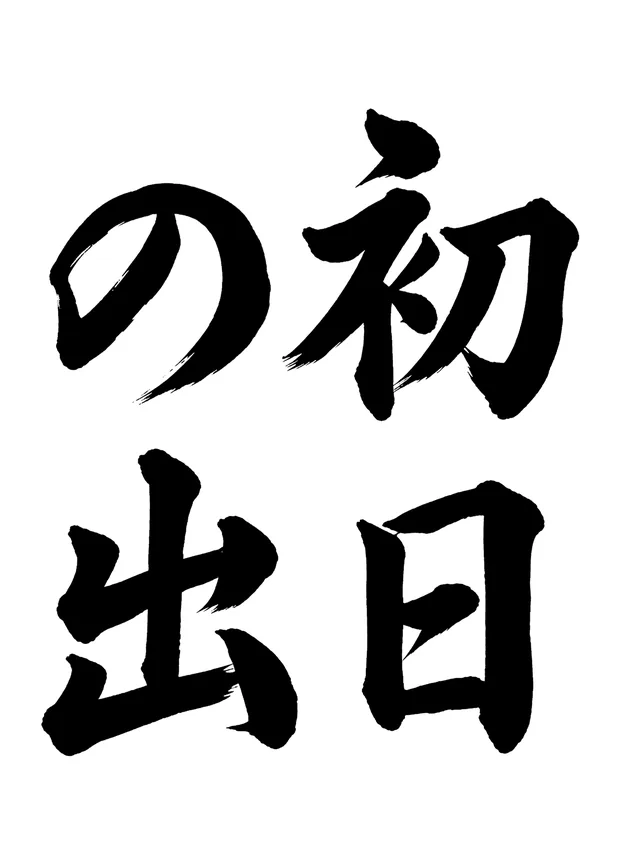
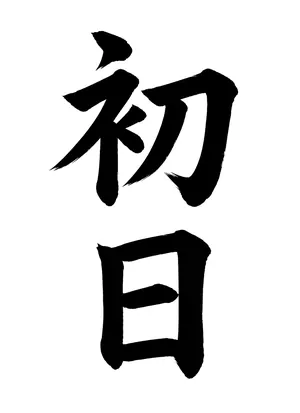
First Sunrise of the Year 初日の出
hatsuhinode4 characters17 strokes
初日の出 (hatsuhinode) means the first sunrise of the year: the sun rising on the morning of New Year's Day, January 1.
Free practice sheet
Print at 100%, actual size. Enter your email once and every free sheet downloads right away.
Meaning 意味
What 初日の出 means
The Japanese word for First Sunrise of the Year, written in kanji and kana, read hatsuhinode.
LiterallyThe first sun's rising.
Hatsuhinode is the first sunrise of the year, seen on the morning of New Year's Day. Many people in Japan watch it from the mountains or the sea and wish for happiness in the new year.
When people write it in Japan. Hatsuhinode is a popular word for kakizome, the first calligraphy of the New Year, and for pieces about watching the New Year's Day sunrise with family.
Japanese children know every kanji here by 4th grade.
How to write it 書き方
Brush tips for 初日の出
Regular script (kaisho)
- In 初, keep the clothing radical on the left (koromohen) narrow. In the 刀 (sword) on the right, flick the 6th stroke to the upper left and sweep the 7th stroke down to the left.
- Shape 日 tall and narrow. In 出, set the center vertical stroke (the 1st stroke) firmly upright, and keep the left and right sides even.
- Write の a size smaller than the kanji. Circle it round in one stroke, leaving plenty of white space inside.
Semi-cursive script (gyōsho)
- In 日, a thin line runs from the middle horizontal stroke down to the left and into the bottom horizontal stroke, showing the movement of the brush.
- Write の a little smaller than the kanji, leaving a clear space inside. Stretch the end long toward the lower left and let it taper off.
- In 出, make the bottom part wider than the 山 shape at the top. Let the center vertical stroke hold the character up firmly.
Stroke order
Follow the vermilion stroke, frame by frame.
Stroke order data: KanjiVG by Ulrich Apel, CC BY-SA 3.0.
How to practice 練習
Trace first, then copy
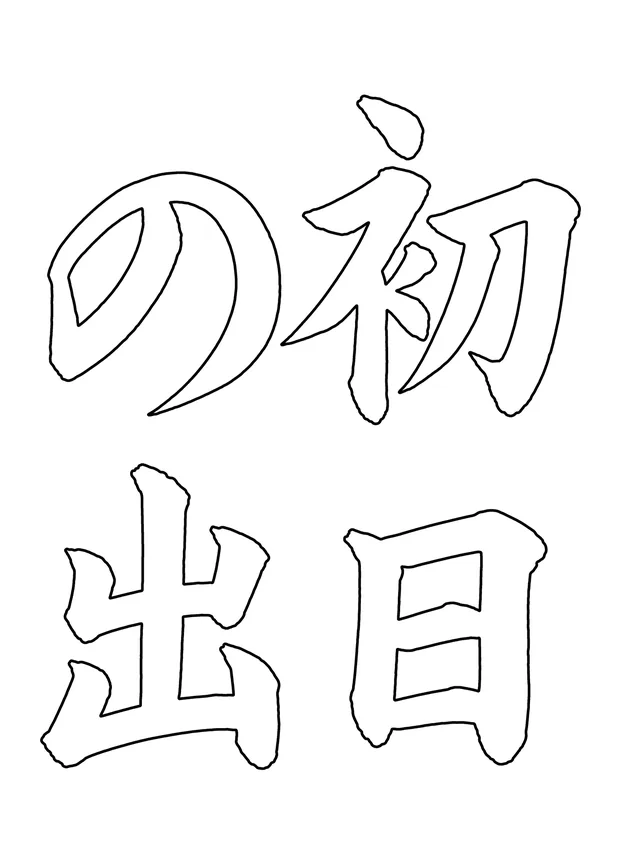
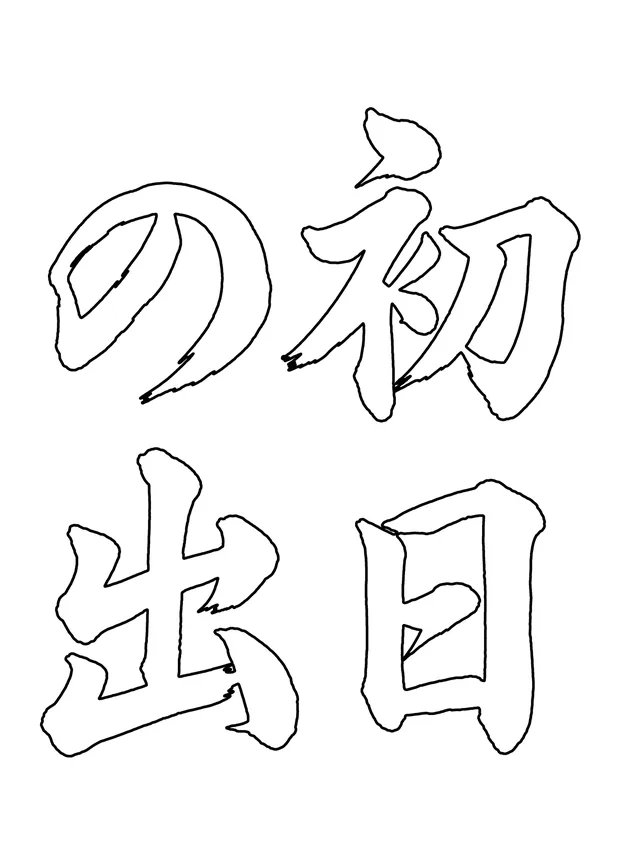
- PrintPrint both pages at actual size, on US Letter or A4. Page 1 is the model. Page 2 is the tracing sheet.
- TraceTrace the outlines with a brush pen. Or lay thin hanshi paper over the page and trace with brush and ink.
- CopySet the model beside your paper and copy it stroke by stroke. Look at the model more than at your own paper.
Free for personal practice and classroom use. Please do not sell or re-post the files. Share a link to this page instead.
While the sets are on their way
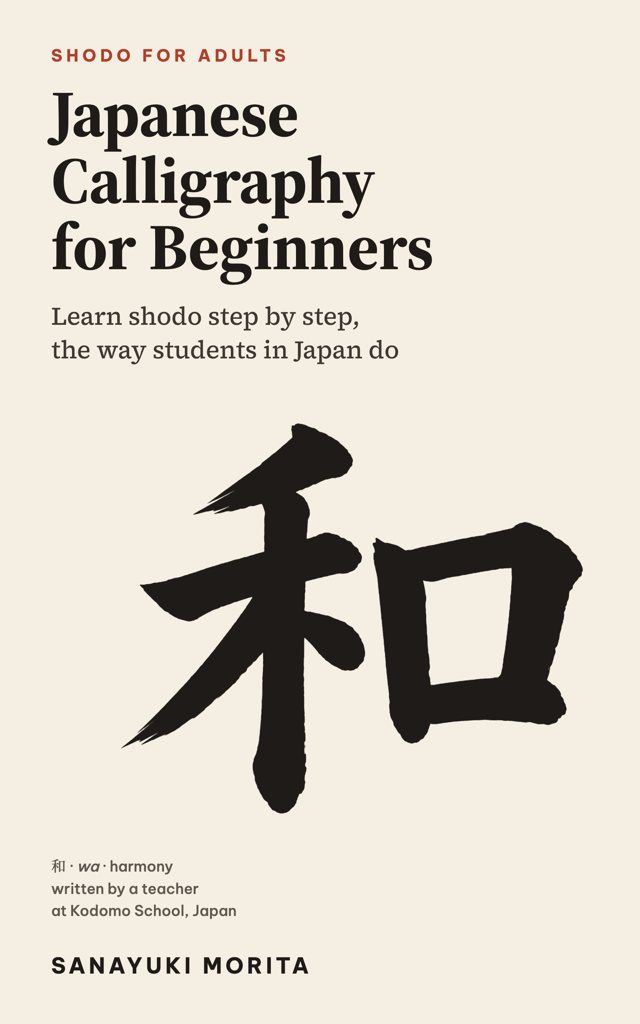
The book is out now.
Japanese Calligraphy for Beginners takes you from holding the brush to writing whole words, step by step, in English. Every model inside was brushed by our teachers.
Starter Set, $72.99 with the book, brush, ink and paper: coming soon.